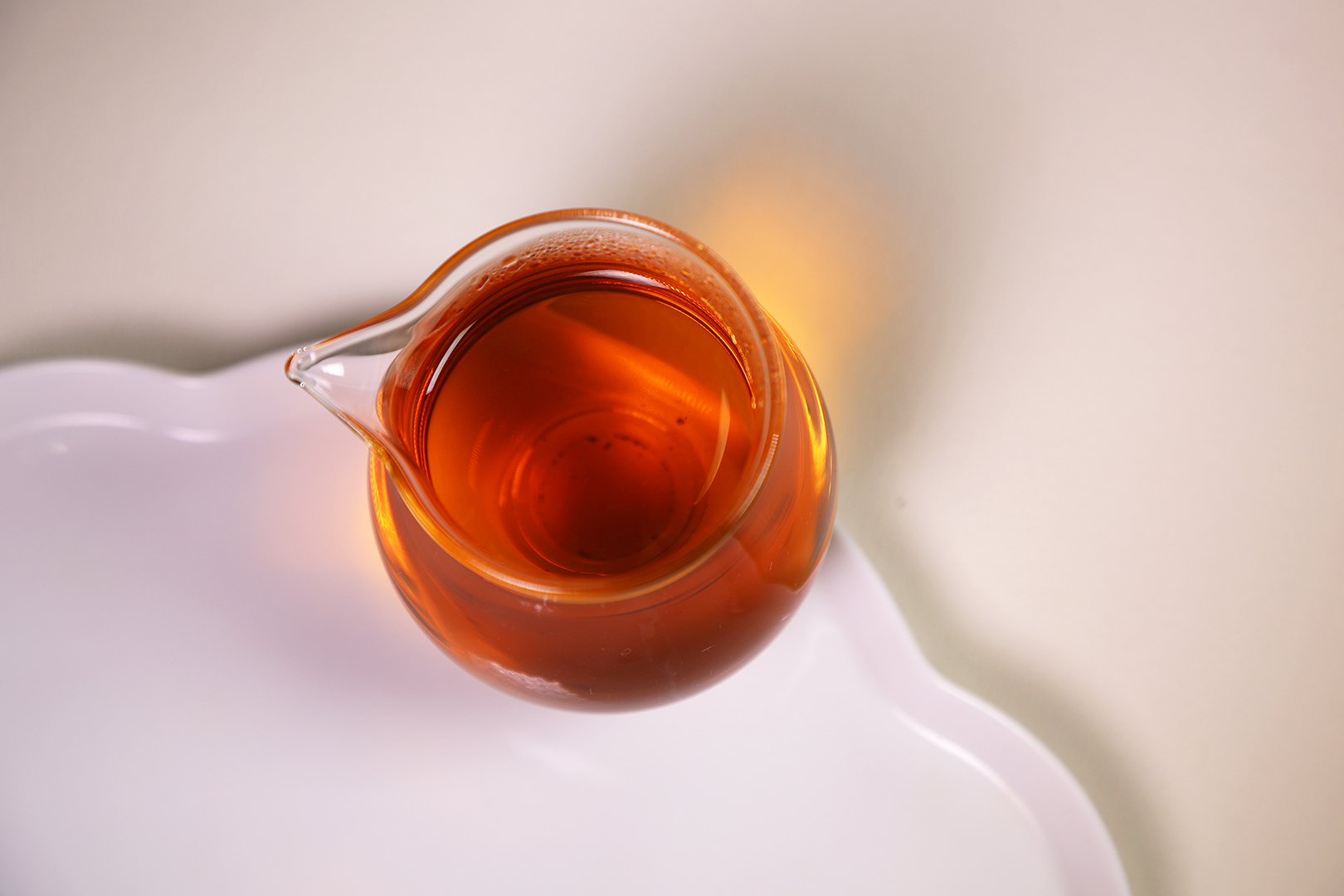
Summer has already arrived in many parts of the world.
A few days ago, I asked a question in a gongfu tea group:
“Do you still drink hot tea in summer?”
The answers came from many different tea friends. Some said they drink hot tea all year long, but switch to green and white tea during the hottest months because of the cooler steeping temperatures and what they called “cooling qi.” A tea friend in Italy said they switch to cold brew in summer, otherwise they probably would not drink tea from June to September because the weather is too hot and humid. Another tea friend from Poland simply said they had to drink cold tea. “Do you know how hot it is here?” I even looked up the temperature in Poland and told them I completely understood.
Of course, some people still prefer hot tea in hot weather. One tea friend said they believe hot liquid can help the body absorb fluids and sweat more easily.
That conversation reminded me of a simple question: in summer, how should we drink Chinese tea in a way that feels refreshing, balanced, and still respectful to the tea itself?
Traditional Chinese medicine does not usually encourage drinking very cold tea, but real life is not always so neat. When the weather is humid and hot, when you are sweating heavily, or when you are trying to avoid carbonated drinks and added sugar, even someone who cares deeply about health may not want to drink tea that is burning hot.
So I went back and reread some Chinese medicine ideas around cold drinks and body balance. My takeaway is this: cold tea is not simply “good” or “bad.” It depends on the situation, the method, and your body state. The principle is not to force one rule onto every season, but to find balance between the body and the environment.
So today, I want to share three ways to make cold Chinese tea at home for summer.
The simplest method is to put dry tea leaves into room-temperature or cold water and refrigerate them for a few hours. Another method is to use tea leaves and ice cubes, letting the ice slowly melt and extract the tea at a low temperature. The third method is to brew the tea with hot water first, bring out the aroma and taste, and then quickly add ice to cool it down, making a more aromatic and flavorful cold tea base.
These three methods do not produce the same tea liquor.
Daily cold brew is the most convenient and refreshing. Slow ice brew is softer and more delicate. Hot brew flash-chill tea base is better for preserving aroma, and it is also more suitable for making iced tea, milk tea, or fruit tea.
This guide introduces three simple ways to make cold Chinese tea at home, which teas are suitable, and how to choose according to different situations.
- Note: I do not recommend using tea dust or broken tea leaves for cold brewing, as the concentration can become too strong too easily. In this guide, “tea leaves” refers to whole loose leaf tea.

> Quick Answer: What Are the 3 Ways to Make Cold Chinese Tea?
There are three common ways to make cold Chinese tea at home: daily cold brew, slow ice brew, and hot brew flash-chill tea base.
Method | How It Works | Time | Best For | Taste Direction |
|---|---|---|---|---|
Daily Cold Brew | Tea leaves slowly steep in room-temperature or cold water | 2–3 hours | Daily cold tea, beginners, office hydration and cooling | Refreshing, clean, light |
Slow Ice Brew | Tea leaves are slowly extracted as the ice melts | 6+ hours | Glassware, slow tea, tea rituals, visual cooling scenes | Soft, delicate, low bitterness |
Hot Brew Flash-Chill Tea Base | Brew hot first, then cool quickly with ice | Hot brew + at least 45 minutes refrigeration | Iced tea, milk tea, fruit tea, mixed drinks | Clearer aroma, stronger tea flavor |
Which method you choose depends on what kind of tea you want to drink.
If you are completely new to cold Chinese tea, I usually recommend starting with daily cold brew. It requires almost no equipment, is easy to control, and works with many Chinese teas.
Slow ice brew is beautiful and delicate, but it takes patience. Hot brew flash-chill is my preferred method when I want the tea aroma to remain clearly present, especially when I plan to make iced tea, milk tea, or fruit tea.
The benefit of cold brew tea is that, at lower temperatures, amino acids that contribute sweetness and freshness are released relatively easily, while tannins and caffeine that create bitterness and astringency are extracted more slowly. As a result, the tea often tastes smoother and less bitter.
No matter which cold brewing method you use, it is best to drink the tea within 6 hours after brewing is finished, and no longer than 24 hours. If the tea leaves are still inside, filter them out once the flavor is strong enough.
Cold brew tea is refreshing and easy to drink, but it may not suit every body state. People with weak digestion, diarrhea, or discomfort during menstruation may want to drink less, drink slowly, choose room-temperature tea, or avoid cold tea depending on how the body feels.
Method 1: Daily Cold Brew Tea
Daily cold brew is the simplest way to make cold Chinese tea at home.
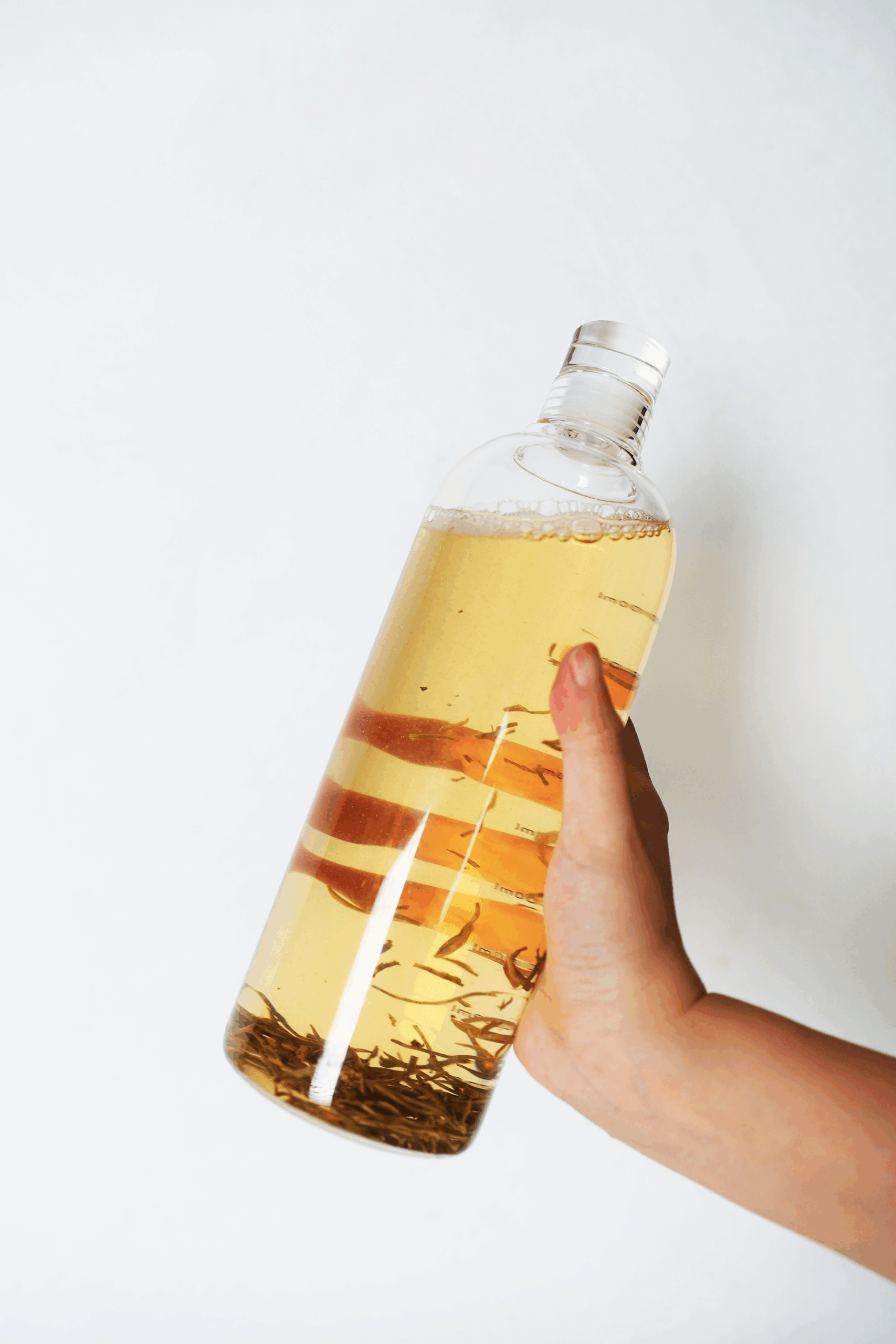
You only need tea leaves, water, and a clean bottle or glass container. Put the dry tea leaves into room-temperature or cold water, then refrigerate at around 4°C for 2–3 hours. This will give you a refreshing cold brew tea.
The benefit of this method is that it does not require special teaware. You do not need a gaiwan, teapot, or complicated steps. A glass bottle, mineral water bottle, water jar, cold brew pitcher, or travel cup can all be used.
How to Make Daily Cold Brew Tea
- Put the dry tea leaves into a clean glass bottle or cold brew pitcher.
- Add room-temperature or cold water.
- Refrigerate at around 4°C for 2–3 hours.
- Take it out and taste it first. If the flavor is too light, continue steeping for a while.
- You can filter out the tea leaves, or wait for the leaves to settle and pour the tea directly.
Basic Ratio for Daily Cold Brew
Tea Type | Tea Amount | Water | Time | Taste |
|---|---|---|---|---|
Green tea | 3–5g | 500ml | 2–3 hours | Fresh, clean |
White tea | 4–6g | 500ml | 3–4 hours | Soft, sweet |
Jasmine tea | 3–5g | 500ml | 2–3 hours | Gentle floral aroma, not astringent |
Oolong tea | 5–7g | 500ml | 4–6 hours | Floral, fruity, or lightly roasted |
Black tea | 4–6g | 500ml | 3–5 hours | Soft floral honey notes |
If you only want a simple and refreshing daily cold tea, 2–3 hours is usually enough. If you want a deeper flavor, oolong tea and black tea can be steeped longer. For white tea, avoid choosing compressed tea.
What Does Daily Cold Brew Tea Taste Like?
Daily cold brew tea usually tastes lighter and smoother than hot brewed tea. The aroma will be softer, but the bitterness is usually lower. For beginners, this is a very friendly method, especially when the weather is hot and you want tea, but do not want it to feel too heavy.
This method is most suitable for daily drinking, especially in summer when you want something refreshing but do not want carbonated drinks or sugary drinks.
Method 2: Slow Ice Brew Tea
Slow ice brew means placing tea leaves and ice cubes together, allowing the ice to melt slowly and release the tea flavor at a low temperature.
This method is slower than daily cold brew and usually takes more than 6 hours. Because the temperature is lower and the extraction is slower, the tea liquor is usually softer, more delicate, and lower in bitterness.
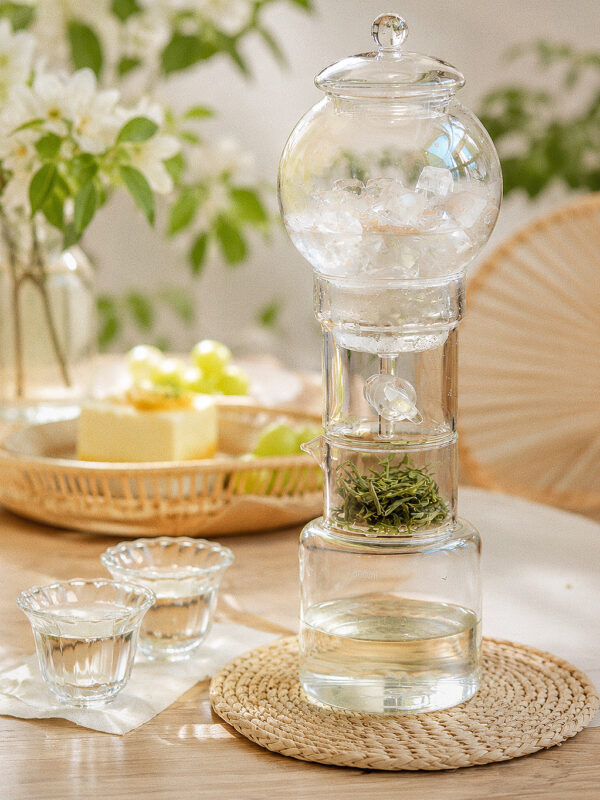
Ice brew also has another feature: it looks beautiful. In glassware, the tea leaves slowly open as the ice melts. It is very suitable for creating a quiet summer tea setting.

How to Make Slow Ice Brew Tea
Put the dry tea leaves into glassware, a cold brew pitcher, or a drip-style vessel.
Add ice cubes above the tea leaves. The ratio of tea leaves to ice is usually 1g tea to 35–40ml ice.
Let the ice slowly melt at room temperature or in the refrigerator.
Wait at least 6 hours. The exact time depends on the amount of ice and tea.
When the tea liquor looks clear and has enough flavor, pour it out and drink.
Teas Suitable for Ice Brew
Ice brew is more suitable for teas with clear aroma and a soft taste.
Tea Type | Ice Brew Result |
|---|---|
Green tea | Very fresh, light, and clean |
White tea | Soft, sweet, and mellow |
Jasmine tea | Clear floral aroma, gentle, cooling |
Lightly oxidized oolong | Delicate aroma, smooth, layered |
Lightly roasted oolong | Soft with a gentle roasted note |
Heavily roasted teas can also be tried with ice brew, but the tea liquor is usually much lighter than hot brewing. If you want to taste the deeper roasted structure and body of Wuyi rock tea, hot brewing or hot brew flash-chill will show its character more clearly.
If you want to understand more deeply how roasting affects the structure and flavor of Wuyi rock tea, you can read this article: What Does Roasting Really Mean in Wuyi Rock Tea?
What Does Slow Ice Brew Taste Like?
Ice brewed tea is usually softer than regular cold brew. It is not the fastest method, but the tea liquor has a quiet, clean, and delicate feeling.
This method is suitable when you want to slow down and drink tea, or when you want to use glassware to make a more ritual-like cold tea.
Method 3: Hot Brew Flash-Chill Tea Base
The third method is different from cold brew in the traditional sense.
Hot brew flash-chill means brewing tea with hot water first, then quickly adding ice to cool it down and filtering it. After that, you can refrigerate it for at least about 45 minutes, then drink it directly or use it as a tea base for mixing.
This method is also the tea base logic often used by many modern tea drink shops, including milk tea shops. It does not wait for cold water to slowly extract the tea leaves. Instead, it uses hot water first to extract the aroma and flavor of the tea, then uses ice to cool it down quickly.
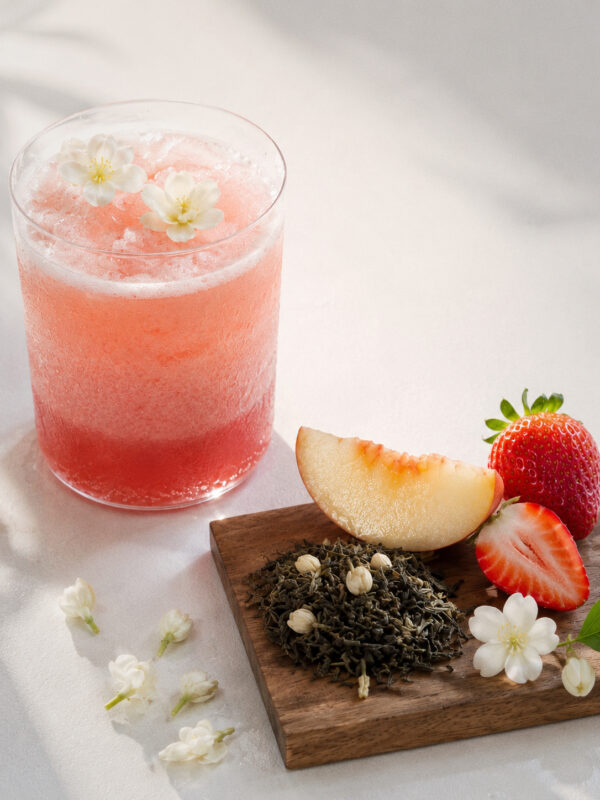
The finished tea liquor can be served directly as iced tea, mixed with milk to make milk tea, or combined with fruit to make fruit tea.

How to Make Hot Brew Flash-Chill Tea
- Put the tea leaves into a teapot or a large heat-safe container. Quickly rinse the tea with a small amount of hot water, then pour out this rinse.
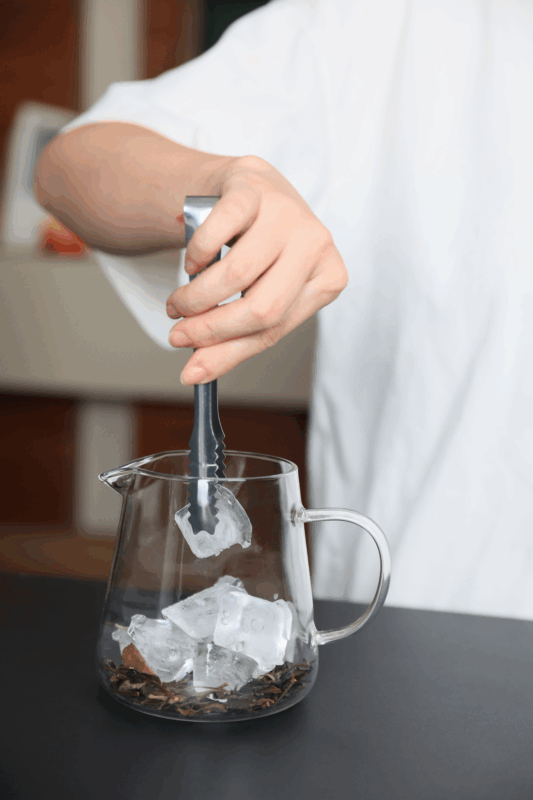
- For the second infusion, use hot water at around 75–80°C and steep the tea for 3 minutes. The concentration can be slightly stronger than your normal hot tea. The tea-to-water-to-ice ratio is usually 1g tea : 20ml hot water : 20ml ice. For example, use 5g tea with 100ml hot water, then add the same amount, 100ml, of ice.
- Pour the hot tea into the ice, or add ice directly into the tea liquor.
- Stir quickly to cool the tea down. After the ice melts, filter out the tea leaves.
- Refrigerate for about 45 minutes, then drink directly or use it for mixing.
Why Is This Method Suitable for Making Tea Base?
Hot brew flash-chill can preserve more tea aroma than slow cold brewing. The reason is simple: many teas need a certain water temperature to release their aroma. By brewing the tea hot first and then adding ice immediately, the quick cooling helps lock the aroma into the tea liquor, while making the taste fuller and more structured.
This is also one of the reasons why tea bases in many modern tea drink shops taste more aromatic and concentrated. They are not simply made by soaking tea leaves in cold water. Instead, the tea is often brewed hot first to bring out the aroma and flavor, then cooled quickly to create a clearer, stronger tea base.
This method is especially useful when you later add milk, fruit, ice, or other ingredients, because the taste of the tea itself will not be completely covered.
Use | Tea Concentration | How to Finish | Adjustable Ratio |
|---|---|---|---|
Iced tea | Normal or slightly stronger | Add ice, refrigerate, then drink | 1:20:20 |
Milk tea | The tea base needs to be stronger | Add milk after cooling | 1:15:15 |
Fruit tea | Clear tea aroma, more refreshing, not bitter | Add fruit, juice, or syrup after cooling | 1:25:25 |
When making milk tea, the tea base needs to be stronger because milk will soften the tea flavor. When making fruit tea, the tea liquor should have clear aroma but should not be too bitter, so it can support the fruit flavor instead of becoming harsh.
If you want to see specific and tasty fruit tea recipes, you can read this article: Top 3 Fruity Chinese Iced Teas for Summer. It uses jasmine tea, Wuyi rock tea, and Tongmu black tea as summer fruit tea bases.

Cold Brew, Ice Brew, and Hot Brew Flash-Chill: How Should You Choose?
Each method has its own role.
Method | Suitable When You Want... | Best For | Taste Direction |
|---|---|---|---|
Daily Cold Brew | A simple cold tea with little effort, replacing carbonated or sugary drinks | Daily drinking, office, quick summer hydration | Refreshing, clean, light |
Slow Ice Brew | A softer and more delicate cold tea | Glassware, slow tea moments, quiet tea setting | Soft, smooth, low bitterness |
Hot Brew Flash-Chill Tea Base | A tea base with clearer aroma and stronger tea flavor | Iced tea, milk tea, fruit tea, aromatic cold drinks | More fragrant, fuller, more expressive |
You do not need to use only one method forever. The same tea, with different water temperatures, time, and cooling methods, can show a lighter, softer, or more aromatic side. It is also very interesting to taste the same tea side by side using all three methods.
Which Chinese Teas Are Suitable for Cold Brew?
Many Chinese teas can be made into cold tea, but different tea types behave differently. A good cold tea depends not only on the tea leaves themselves, but also on the brewing method you choose.
Green Tea
Green tea becomes fresh and light when cold brewed, making it suitable for hot weather. Daily cold brew and ice brew both work well, but green tea should not be steeped for too long, or it may develop a grassy or sharp taste.
White Tea
White tea is very suitable for cold brew and is friendly to beginners. Cold brewed white tea usually becomes softer and more mellow, with a light sugarcane sweetness and fresh floral aroma. It works well with daily cold brew and slow ice brew.
Jasmine Tea
Jasmine tea is one of the easiest teas to enjoy cold. Its floral aroma remains clear even when chilled. It can be made with daily cold brew, ice brew, or hot brew flash-chill, and it also works well as a fruit tea base.
Oolong Tea
Oolong tea has a wide range of expressions, from floral and fruity to roasted and mineral. Lightly oxidized and floral oolongs are usually suitable for cold brew. Roasted oolongs can also be brewed cold, but the tea liquor will often become softer and less structured than when brewed hot.
If you want to preserve more aroma and tea character, oolong tea is often better with the hot brew flash-chill method.
If you are still learning about oolong tea as a category, you can read this article: How Oolong Tea Has Evolved
Wuyi Rock Tea
Wuyi rock tea, also called Yancha, is a Chinese oolong tea from Wuyi Mountain in Fujian. It is usually known for roasted aroma, minerality, tea liquor structure, and returning sweetness.
Rock tea is not the first tea many people think of for cold brew, but it can be interesting when the method is suitable. Daily cold brew makes rock tea softer and easier to drink. Hot brew flash-chill preserves more roasted depth and structure.
When Wuyi rock tea is brewed cold, the roast often moves into the background. The tea can feel softer and easier to drink, while the deeper structure becomes quieter than in hot brewing. It feels like meeting a familiar tea in a different season.
If you are just beginning to understand rock tea, you can start with these two articles: What Does Wuyi Rock Tea Taste Like? and Why a Baseline Tea Helps Beginners Understand Yancha.
Black Tea
Chinese black tea is very suitable for making smooth cold tea with sweetness. Floral black tea, honeyed black tea, and lighter black tea styles are all comfortable when served cold.
Black tea is also a good choice for milk tea because it has enough body for the tea flavor to remain present after milk is added. Tongmu-style black tea is especially suitable for making a cold tea base that is smooth, aromatic, but not too heavy.
Teas Not Recommended for Cold Brew
I do not recommend using aged tea, ripe Pu’er tea, Liubao tea, or other dark teas for cold brew.
What Tea Should You Use for Cold Tea, Milk Tea, and Fruit Tea?
If you have ever been impressed by the fruit teas and milk teas from tea drink shops, and want to recreate them at home in a faster and lower-cost way, the most important step is choosing the right tea base.
Instead of choosing tea only by category, choose it by the drink you want to make.
Drink You Want to Make | Recommended Tea | Suggested Method |
|---|---|---|
Daily refreshing pure cold tea | White tea or jasmine tea | Daily cold brew |
Gentle slow cold tea | White tea or light oolong | Slow ice brew |
Floral fruit tea | Jasmine tea | Hot brew flash-chill tea base |
Iced black tea | Floral Chinese black tea | Daily cold brew or hot brew flash-chill |
Milk tea | Stronger black tea base or rock tea | Hot brew flash-chill tea base |
Lemon tea | Wuyi rock tea or roasted oolong | Hot brew flash-chill tea base |
Aromatic iced oolong | Floral oolong or Wuyi rock tea | Hot brew flash-chill tea base |
For fruit tea, jasmine tea is usually the easiest place to start. It stays floral and clean when chilled, and it pairs well with pineapple, citrus, lychee, peach, and coconut water. For Teaviews, Jasmine Piao Xue is a good choice when you want a clear floral tea base for fruit tea. If you want specific recipes, you can also read our guide: Top 3 Fruity Chinese Iced Teas for Summer.
-
Hengxian Jasmine Scented Tea
$30.00 – $84.00
For a gentle daily cold tea, white tea is a good choice. It becomes soft, lightly sweet, and easy to drink with daily cold brew or slow ice brew. For Teaviews, Jianyang Bai Mudan is suitable when you want a mild white tea for a clean, soft, and refreshing cold brew.
-
White tea-Bai Mu dan (White peony)
$26.00 – $45.00
For iced black tea and milk tea, Tongmu-style black tea is one of the styles I would naturally choose. Its floral aroma remains noticeable after chilling, while the tea liquor keeps enough body to work well with ice or milk. For Teaviews, Tongmu Floral Fragrance Souchong is suitable when you want a smooth Chinese black tea base with floral aroma and a light sweetness.
-
Tongmu Floral Fragrance Souchong
$25.00 – $62.00

For lemon tea or iced oolong, Wuyi rock tea works better with hot brew flash-chill than with slow cold brew. This method helps preserve more roasted depth and structure, so the finished cold tea will not just taste like light tea water. For Teaviews, Da Hong Pao is a good choice when you want a roasted oolong base for lemon tea, iced oolong, or a stronger cold tea drink.
-
Da Hong Pao Rated 4.00 out of 5$26.00 – $62.00
For a light floral cold tea, lightly oxidized or floral oolong can also be refreshing and aromatic. Use slow ice brew for a softer version, or hot brew flash-chill if you want the aroma to be clearer.
Cold Tea Does Not Replace Hot Tea
When summer comes, should we drink tea hot or cold?
I don’t think there is one fixed answer.
Some mornings still feel right for a warm cup of tea. Some afternoons are too humid and heavy, and a bottle of cold brew from the refrigerator feels much more natural.
Cold brewing does not replace traditional hot brewing. It simply shows another side of the same leaf.
Hot tea often brings out more aroma, body, warmth, and structure. Cold tea tends to feel lighter, softer, and more refreshing. The same tea can become quieter, sweeter, or easier to drink when the temperature changes.
Perhaps this is also part of the joy of Chinese tea: it does not stay in one fixed form.
The method changes what we notice. This is part of the joy of Chinese tea: the same leaf can meet us differently in different seasons. And in summer, that change can be exactly what we need.
Common Problems When Making Cold Chinese Tea
Using Too Much Tea
Cold tea should not taste heavy or harsh. If the tea liquor is too strong, reduce the tea amount or dilute it with water.
Steeping Too Long
Although cold brew is slower than hot brew, longer is not always better. Green tea and jasmine tea usually do not need too much time. Oolong tea and black tea can be steeped a little longer.
Choosing the Wrong Method
If you want clear tea aroma, daily cold brew may feel too light. You can try hot brew flash-chill instead. If you want a soft and delicate taste, slow ice brew may be more suitable.
Adding Fruit, Milk, or Sugar Too Early
When making fruit tea or milk tea, it is better to prepare the tea base first. After the tea has cooled down, add milk, fruit, or sweetener. This gives you better control over the final taste and also avoids excessive fermentation or spoilage too early.
Expecting Cold Tea and Hot Tea to Taste Exactly the Same
Cold tea is usually softer and lighter. Some aroma, body, and warmth that appear in hot tea may become quieter when served cold. This is not a problem. It is simply another expression of the tea leaf.
Final Takeaway
If you remember only one thing from this guide, let it be this:
Cold brew, ice brew, and flash-chill are not competing methods.
They simply highlight different qualities of the same tea.
The best choice depends on the season, the tea, and the experience you want.
FAQ
What container should I use for cold brew tea?
Cold brew tea is usually not picky about the container, but it must be clean, free from oil, water residue, and odors, and convenient for sealed storage.
Is cold brew tea the same as iced tea?
Not exactly. Cold brew tea is usually made by slowly steeping tea leaves in cold or room-temperature water. Iced tea is usually brewed hot first, then cooled with ice or refrigeration. Hot brew flash-chill tea is closer to iced tea because it is brewed hot first and then cooled quickly.
What is the easiest way to make cold Chinese tea at home?
The easiest method is daily cold brew. Put dry tea leaves into room-temperature or cold water, refrigerate for 2–3 hours, and drink once the tea liquor tastes refreshing and flavorful.
What is ice brew tea?
Ice brew tea is made by placing tea leaves and ice cubes together, waiting for the ice to melt slowly and release the tea flavor at a low temperature. It usually takes more than 6 hours. The tea liquor is softer, more delicate, and lower in bitterness.
What is hot brew flash-chill tea?
Hot brew flash-chill tea is made by brewing tea with hot water first, then quickly adding ice to cool it down. It is often used to make a tea base with stronger tea flavor, suitable for iced tea, milk tea, or fruit tea.
Which cold tea method preserves the most aroma?
Hot brew flash-chill usually preserves aroma more easily than slow cold brew, because the tea leaves are first extracted with hot water. This method is suitable for teas with clear aroma, such as jasmine tea, oolong tea, and black tea, and also for mixed tea drink bases.
Can Chinese tea be used to make milk tea?
Yes. Chinese black tea and some oolong teas can be used to make milk tea. It is recommended to brew a tea base slightly stronger than usual, cool it down, and then add milk.
Can Chinese tea be used to make fruit tea?
Yes. Jasmine tea, green tea, floral black tea, and some oolong teas can all be paired with fruit. It is recommended to first prepare a clear and aromatic tea base, then add fruit after the tea has cooled down. For specific methods, you can refer to this article: Top 3 Fruity Chinese Iced Teas for Summer.
Which Chinese teas are most suitable for cold brew?
Green tea, white tea, jasmine tea, floral oolong, and smooth black tea are all suitable for cold brew. Roasted oolong and Wuyi rock tea can also be tried, especially with the hot brew flash-chill method for iced oolong or lemon tea base.
How long can cold brew tea stay in the refrigerator?
It is recommended to drink it within 24 hours, so the tea liquor stays clean and refreshing. If the tea leaves are still inside, it is better to filter them out once the flavor is strong enough.
Does cold brew tea contain caffeine?
Yes. Cold brew tea still contains caffeine. The amount of caffeine is affected by the tea type, tea amount, water temperature, and steeping time.
Is colder cold brew tea always better?
Usually, the recommended refrigeration temperature is around 4°C. If the temperature is too low, it will slow down the release of flavor from the tea leaves and may also be more stimulating to the body.