





















A Tea Friend in Transition
A few days ago, a tea friend I hadn’t properly caught up with in about half a year sent me a message from overseas.
The last time we sat down together for tea, she was already in the middle of a transition, although neither of us fully understood it at the time.
When we first met in Shenzhen, she was already very interested in tea. She told me tea had always existed somewhere in the background of her family life, together with a quiet sense of Chinese culture. Her parents drank tea every day, usually very strong and heavy teas. She never really enjoyed drinking tea with them growing up, but she also never fully separated from tea either. It kept returning to her life in different forms.
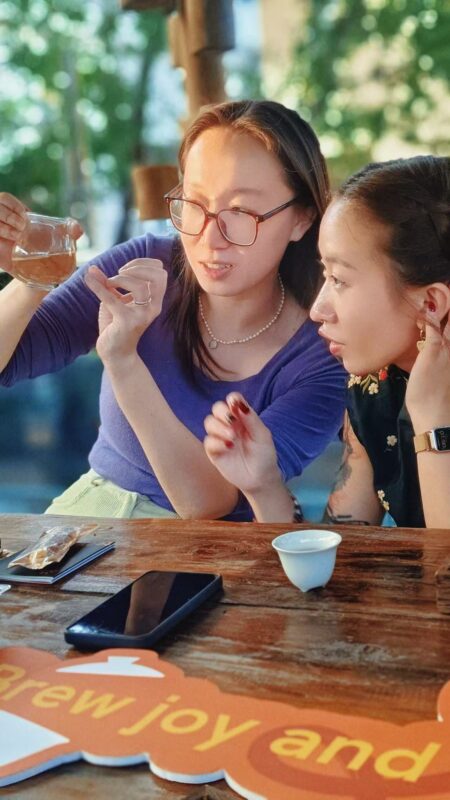
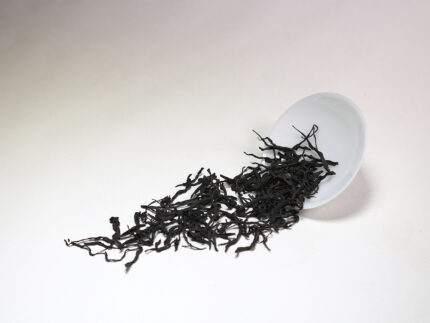
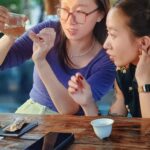
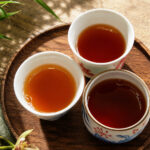
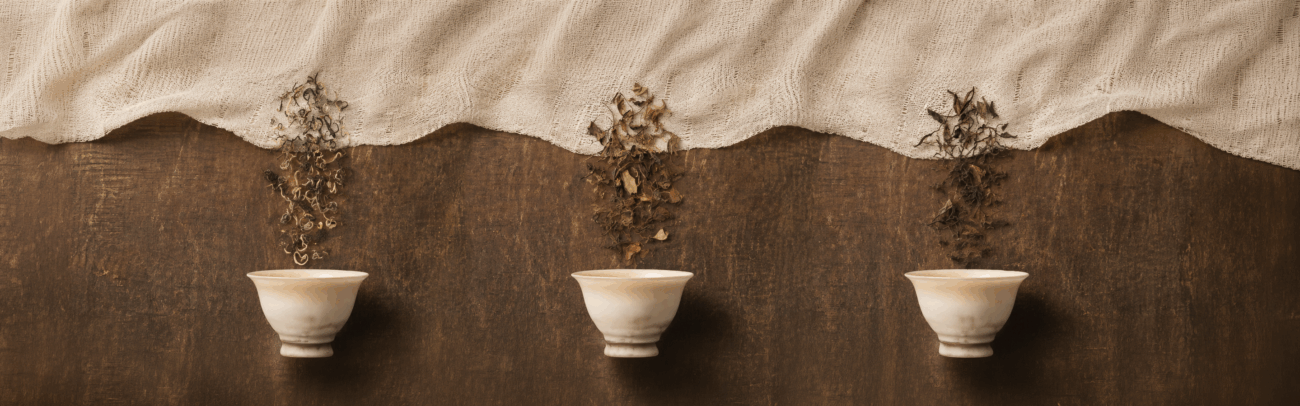
Most of the teas we drank together were Tongmu black teas. She especially liked the floral styles.
We usually met at night after work, and she often arrived apologizing for being late because she had stayed too long at the office again. Some evenings, she seemed tired from the pace of work and city life.
At first we talked about ordinary things: her cat, places she had traveled, work, relationships, small frustrations from daily life. She told me she genuinely liked her career, but there was also a kind of exhaustion in modern life that she didn’t really know how to deal with.
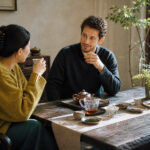
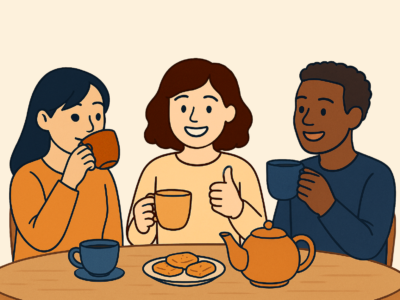
Tea conversations unfold differently from ordinary conversations. They move more slowly. As the tea continues, people gradually become less guarded.
Eventually we found ourselves talking about music, martial arts, philosophy, mindfulness, and the strange feeling of living too far away from one’s own body for too long.
Somewhere during those evenings, we stopped feeling like strangers.
We became the kind of friends who could understand each other’s choices, even when those choices were difficult to explain to other people.
Tea, Body, and Attention
This time, she told me she had left China for a while and was now living more slowly near the sea. She had started learning about local tea, spending more time outdoors, practicing yoga again, and trying to rebuild a gentler rhythm for herself.
At one point in the conversation, she said something that stayed with me afterward:
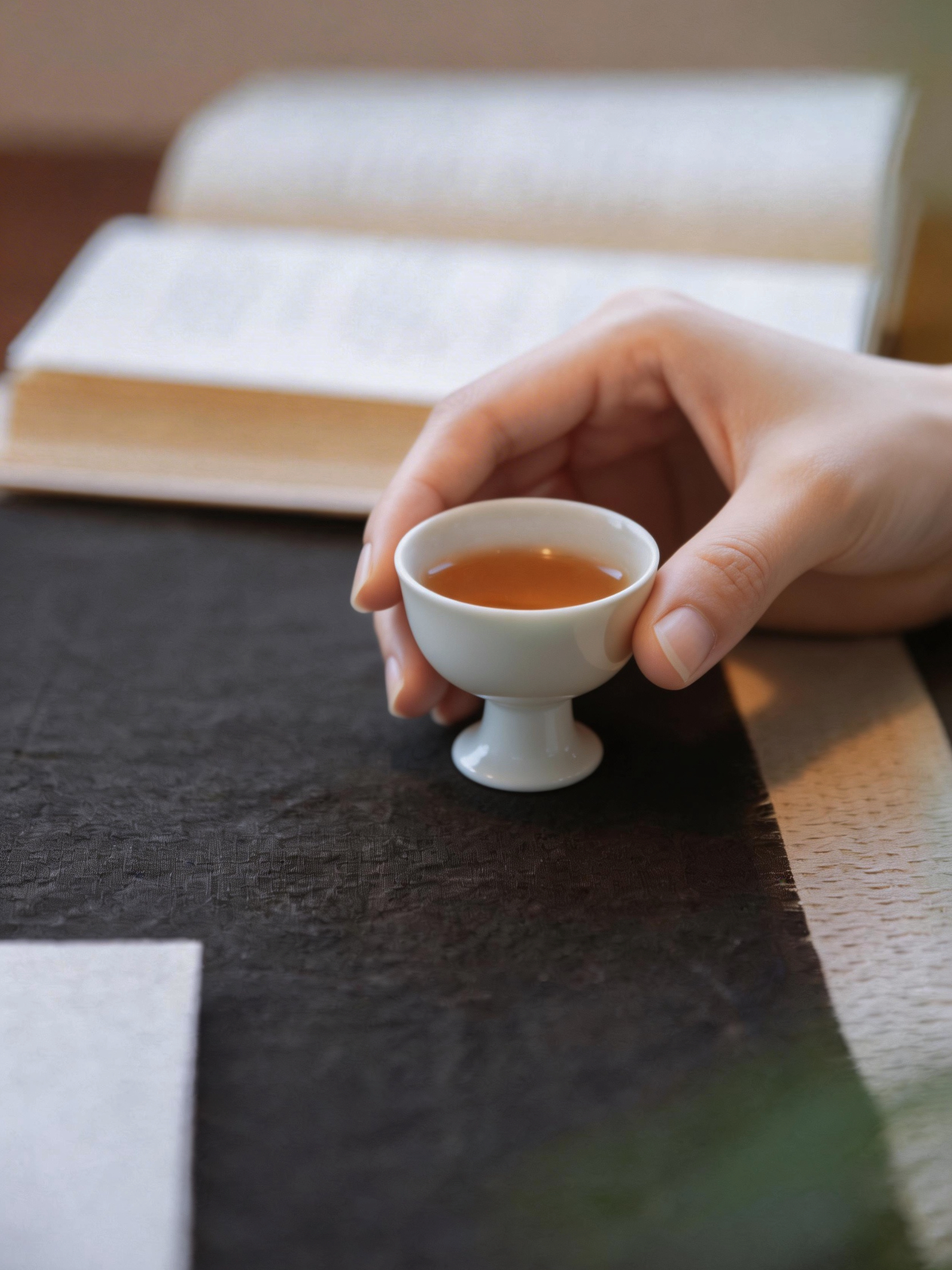
“To brew tea, you have to stay connected to your senses. You can’t let your mind wander too far away.”
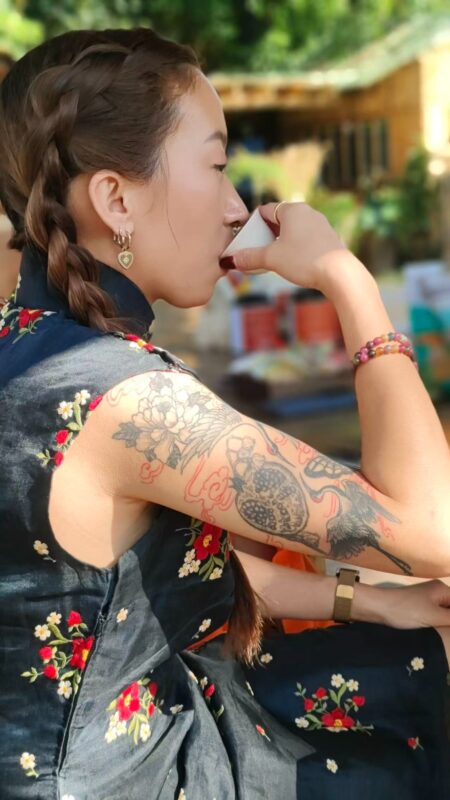
I kept thinking about that sentence because it felt true far beyond tea itself.
She also told me more about her life over the past few years. As a child, she practiced martial arts and learned musical instruments, although she said she didn’t really understand those experiences at the time. Later, in university, she studied human culture more seriously and became interested in Daoism, Buddhism, and Confucian thought.
But it wasn’t until after a serious illness in her family that those ideas stopped feeling purely intellectual.
She told me something I immediately understood: tea, martial arts, meditation, breathing practices, music — they all seemed connected somehow. Not in a mystical way, but in a very physical one. They all required attention, breath, awareness, and slowness.
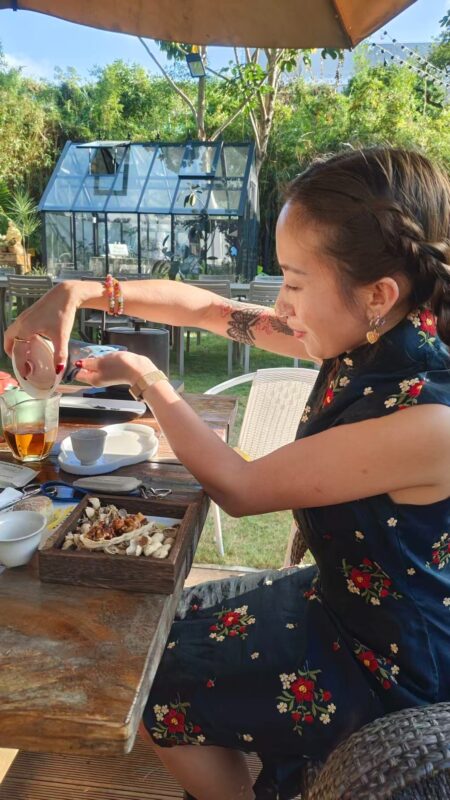
Then she asked me a question I had also been thinking about myself: can these practices still become part of modern life? And if they can, what kind of effect do they actually have on people?
Over the past few years, I’ve found myself moving toward similar things too. Tea was part of it, but not the only part. So were Daoist exercises, meditation, sword training, and learning the xiao flute.
I think both of us, in our own ways, were trying to build a different relationship with modern life. Not by escaping reality, but by slowly adjusting the balance of our daily lives and paying closer attention to what actually made us feel healthy, grounded, and fully present.
At some point we started talking about Chinese wuxia stories — that distinctly Eastern fantasy of wandering through the world with a sword and a flute, meeting people, collecting experiences, constantly moving between solitude and connection. She said she loved that feeling.
I joked that although I had only recently started learning and could still barely play more than one song on the xiao, maybe I was slowly turning into one of those wandering swordswomen myself.
A Conversation That Stayed
But what surprised me most during our conversation wasn’t the philosophy.
It was how much she remembered.
She remembered specific tea gatherings from years ago. The atmosphere of those evenings. Conversations I had almost forgotten myself.
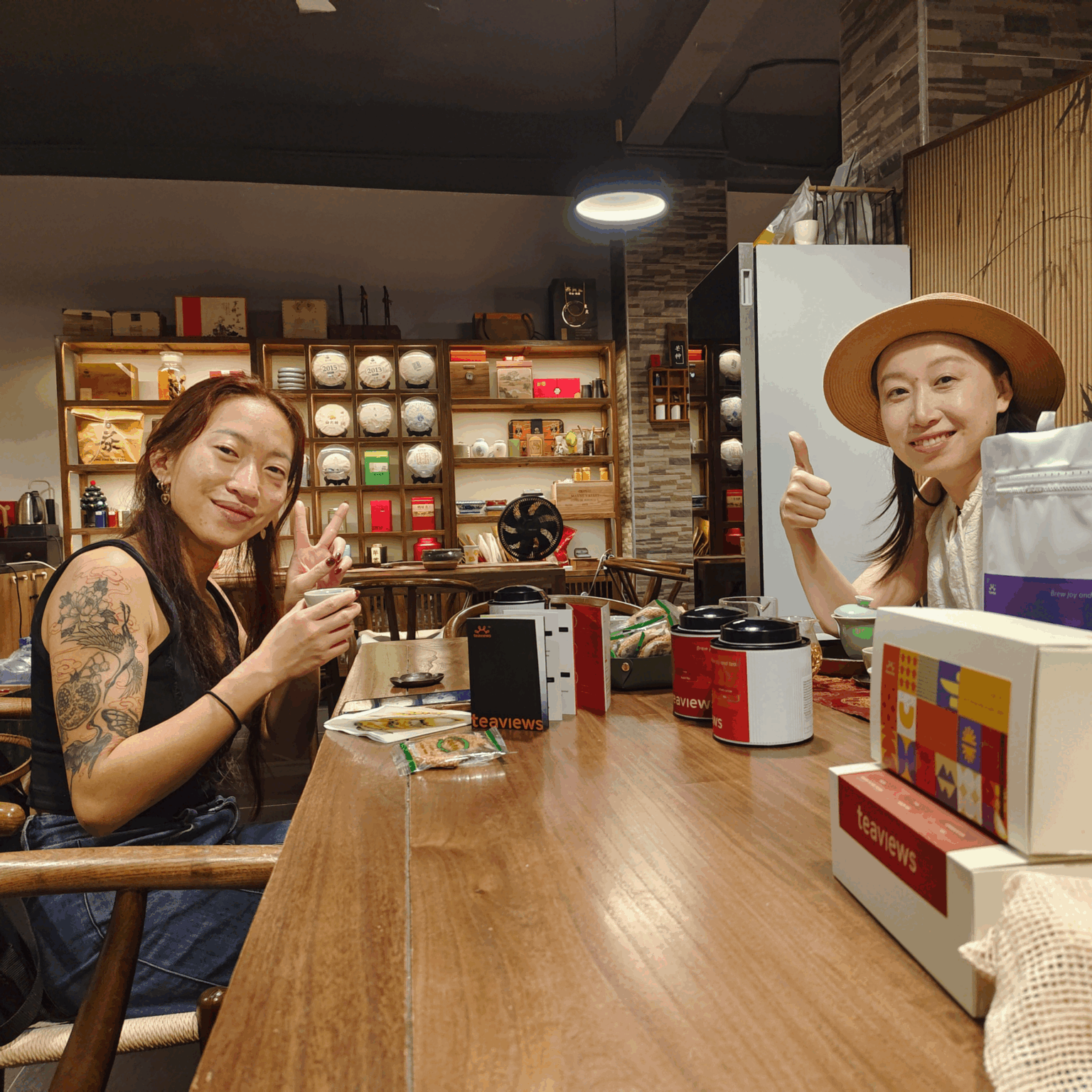
Later she told me that those tea sessions had stayed with her during an important period of her life, especially when she was deciding whether to leave a lifestyle that no longer felt healthy for her.
I didn’t really know how to respond after reading that.
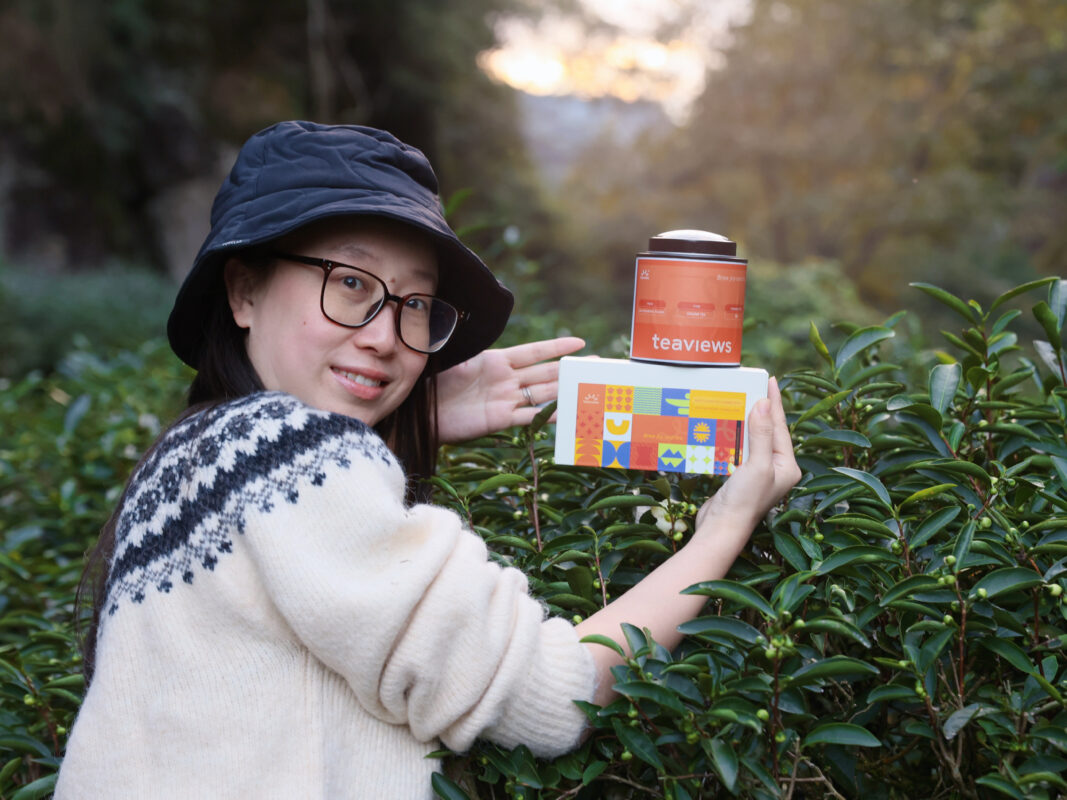
I think most people who work with tea assume they are selling flavor, craftsmanship, origin, or knowledge. Of course those things matter deeply to me too. When we first started Teaviews, we spent a long time thinking about what kind of tea we wanted to share and what kind of experience people were actually looking for.
But over time, I realized we cared just as much about whether tea could become part of someone’s real life — part of their emotional world, their health, their choices, their relationships, and their sense of balance.
Sometimes the lasting part of tea has very little to do with tasting notes.
Tea changes the way people speak to each other. Or maybe the way they listen.
People soften around tea. Conversations become less performative. There is less pressure to immediately explain yourself.
When Tea Enters Real Life
Last Christmas, she brought some of my floral Tongmu black tea back to America for her family. Later she messaged me saying it had become one of her favorite teas because of its soft floral sweetness and creamy texture.
I remember reading those messages and realizing my happiness had very little to do with “customer satisfaction.”
The tea had entered her actual life: her home, her family, and her memories. That feels very different from simply completing an online order.
When Tea Arrives at Someone’s Home
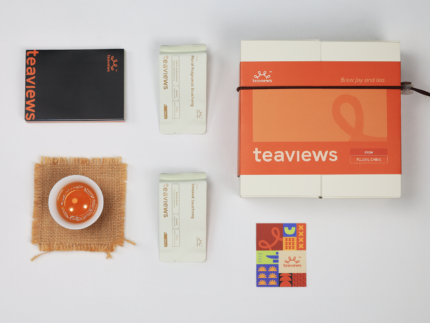
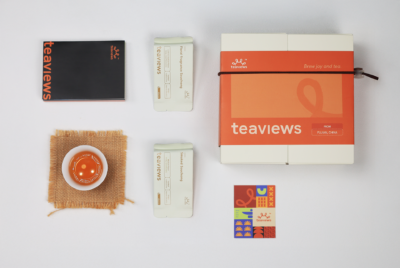
A tea friend later sent me this unboxing video after receiving our Tongmu black tea. What stayed with me was not only the tea itself, but the feeling that it had quietly entered someone’s real daily life — their home, their routine, their family conversations.
Before publishing this story, I asked her whether she felt comfortable sharing parts of these conversations through Teaviews.
She replied:
“I’m a bit shy by nature, but I’d be happy to share my story of sharing tea with friends and using tea ceremonies as a way to self-reflect in a mindful and positive way.”
I thought that described tea beautifully too.
She also told me that a serious illness in her family had completely changed the way she thought about health, work, and daily life. Until then, she said, it had been easy to take things like time, energy, and inner peace for granted. But once those things become fragile, people begin looking at life differently.
I think many people quietly arrive at this realization eventually.
Modern life teaches people how to keep functioning inside society, but not always how to live honestly as themselves.
Tea doesn’t solve those problems.
But I do think tea creates small moments where people hear themselves more clearly again.
And sometimes, years later, they still remember those moments.
This story is part of our Teaviews Journey — a growing record of tea, origin, people, and the lives that gather around them.
Now she’s living near the sea with her cat, drinking tea while watching the sunset, sending me messages that say:
“We should have tea together again sometime — even if it’s over video.”