Opening note

This is my real personal experience, not medical advice. Tea is not a treatment for depression.

People often ask me at tea gatherings how I started drinking tea. And as the founder of a tea brand, I’m also often asked why I left the media industry and somehow ended up making tea my work. Every time I answer, I find myself going back to this part of my life.

When I Felt Disconnected From the World

Rain running down a car window at dusk, blurring city lights during a personal experience of depression, anxiety and feeling disconnected from the world.

Last night, I was on my way home after meeting a friend. It was raining heavily outside. The car windows were covered with mist and streaks of water. Rain gathered and ran down the glass. Buildings, streets, billboards and light boxes outside turned into strange patches of light. The rain and thunder were loud. They cut off most of the other sounds from outside, making the small space inside the car feel even more closed in. Seeing and hearing both seemed to stop working properly. When I noticed that my attention had nowhere to settle, my heartbeat and breathing also started to speed up.

It reminded me of the period when I was depressed. God, it was almost exactly like that. You see, now I can describe it very clearly. But during that time, I did not know what was happening to me. I only vaguely felt that I had lost my connection with the world and with my surroundings. I had very little awareness of time, light, or even my own actions. I simply cried helplessly from morning to night.

Crying, Sleeping, and the Hardest Part of the Day

At that time, there were only two things I could do: cry and sleep. If you have ever gone through a period like that, you probably understand what sleep means. It is simply a way to force yourself to shut down. Now I would not call that avoidance. Looking back on that period, I understand it more as a form of self-protection during an unusual and difficult time. But repeating these two things again and again also brought other problems: headaches, acid reflux, and the feeling that my blood sugar and adrenaline were moving like a roller coaster. My relationship with food also changed, from having no interest in eating to finding it increasingly difficult to eat at all.

Evening was the hardest part of the day. When the sky started getting dark, I would feel extremely helpless. I did not know what to do. There was also nothing to do. I could not even force myself to go to sleep.

The Ordinary Cup of Tea

Around that time, a close friend happened to send me something she had made during her first time learning tea-making in the mountains: a bag of Lapsang Souchong black tea. She said, “Thank you for supporting my decision to go to the tea mountains. I’ve finished my first batch. Please make sure you taste it and give me your feedback.” As for the story of how I supported her decision to leave the city and go into the mountains to learn tea-making, that is another story, and I won’t go into it here.

At that time, I had not told the people around me about my condition. I could not explain it clearly, and I did not want to explain it. I was afraid that it would bring even more information and attention that I did not have the capacity to deal with. So, in order to pretend that nothing had happened and continue supporting her as usual, I decided to taste the tea one evening as it was getting close to dusk. There was nothing else to do anyway.

At this point, I am not going to tell you that a miracle happened that day. It was just an ordinary tea session. Because I wanted to give her serious feedback, I took out tea ware that I had not used for a long time and boiled some water. The aroma of the tea was wonderful. The taste was fragrant and sweet. It reminded me of certain flowers and certain fruits, things I felt I had encountered somewhere before, or at some point in my life. I thought about it for a long time. Then I remembered that when I was a child, I used to pick a kind of trumpet-shaped flower and suck the base of the petals. It tasted a little like spring flower nectar.

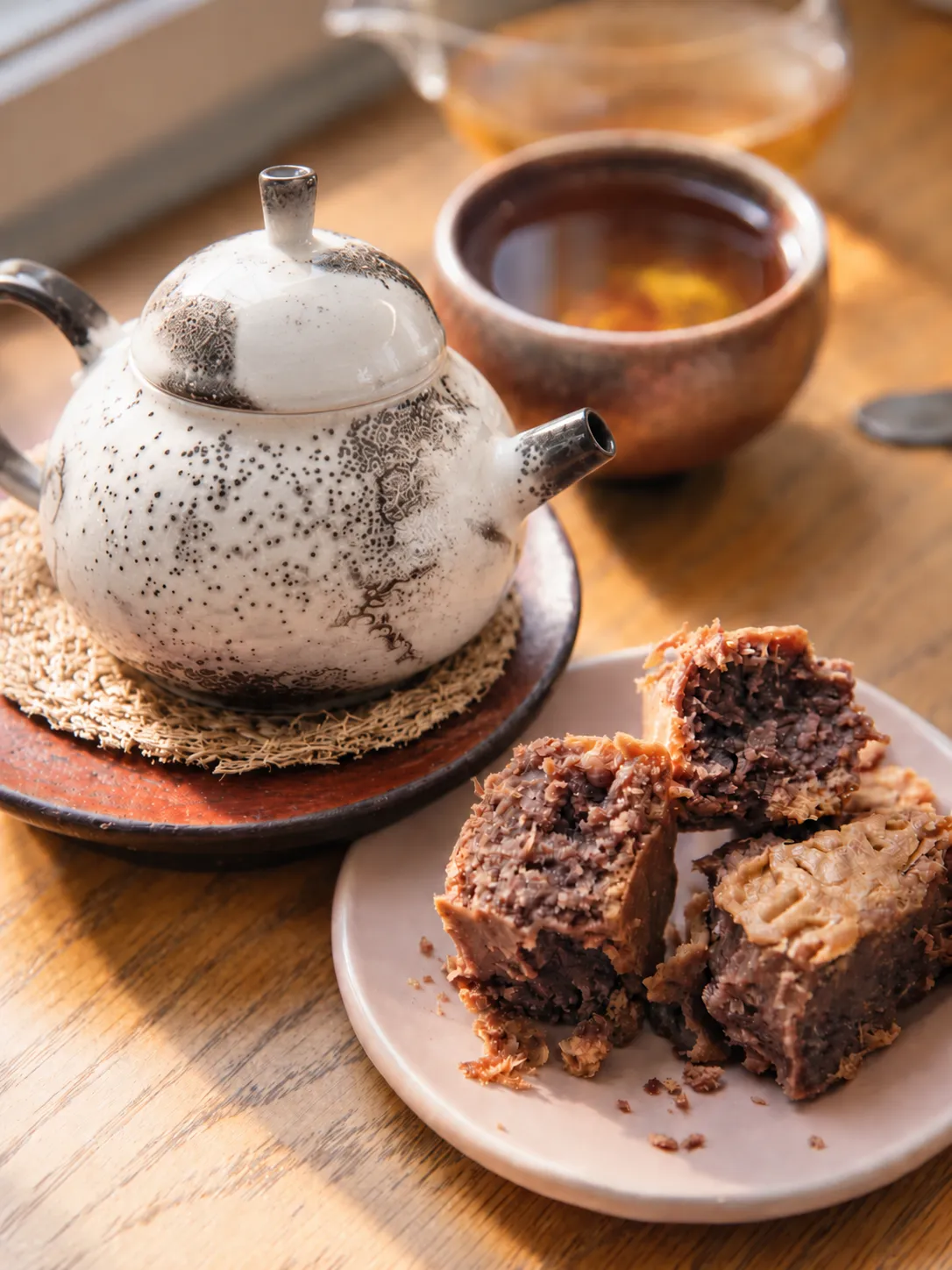
The color of the tea was beautiful. When I held it up to the light, it shimmered like amber. After a few cups, I started to sweat on my forehead. My body slowly began to feel warm. My stomach started making little noises. I wanted to find a few biscuits. Then I noticed that outside the window, the sky had already gone completely dark. Evening had passed. I was not in that same tense and frightened state anymore. Instead, I had an appetite, and I was getting ready to eat the snack in my hand.

It was such a simple process. You could even say it was one of the most ordinary things that happens when drinking tea. But that day, without me really noticing, it carried me through the hardest part of the day.

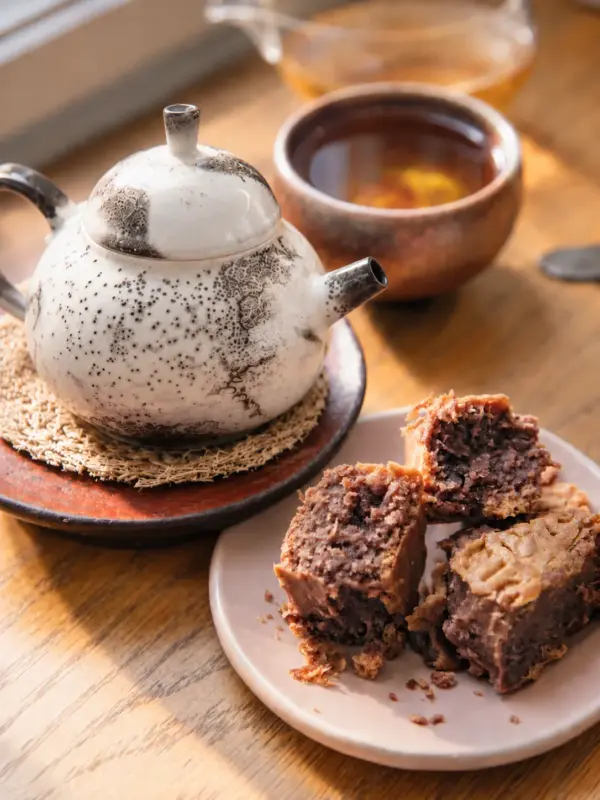
A ceramic teapot, cup of tea and pastries in warm light, representing tea, body awareness and sensory grounding during depression.

I Started Noticing My Body Again

It was simple, and it was good. After that day, I understood that maybe I had another choice, something that could make me feel a little better: warmth, sweetness, being surrounded by aroma, the feeling of something beautiful, and pleasant memories bringing a sense of comfort. What happened after that felt as natural as a drop of water finding its way to the sea.

These moments slowly became more frequent. I would choose a cup I liked. I would prepare different snacks. Maybe the tea would go well with the freshly baked croissant from the shop on the corner. Maybe I could go out and buy a piece of cake. One day, the tea looked so beautiful in the evening light that I could not help taking a photo and posting it on social media. A lot of friends liked it and replied. Some asked me what tea I was drinking.

And just like that, without me really noticing, my body woke up. Like a dead branch beginning to sprout again, it started growing outward in every direction.

Amber tea glowing in evening light, representing a tea ritual, sensory awareness and reconnecting with everyday life.

Looking back now, I think what mattered was not only the tea itself. It was that I had started noticing things again: warmth in my hands, aroma, sweetness, color, appetite, memory, light, and the passage of time. At the time, I did not have a name for any of this. I was simply drinking tea.

I’ve written before about the connection between tea and meditation, and how tea can become a way of paying closer attention to the present moment.

Back to the Rain

Back to me sitting in the car at the beginning of this story: now I understand that it was only rain. For a while, it stopped me from seeing the real world clearly. I could not make the rain stop immediately, but it would stop eventually.

The most important thing is that before the rain stops, the person sitting inside that car, confused and afraid, may need some help from the body. Maybe some warmth. Some fragrance. A little sweetness. Something beautiful enough to let attention settle somewhere again, and to let the body slowly wake up. And then, perhaps at some point, the rain stops.

The Black Dog and the White Dog

We often say that depression is a black dog. It causes trouble. It can stay in your heart for a very long time. After I made it through that period, I came to think of the help tea gave me as a white dog. It does not fight with the black dog. When I am staring at the black dog, frightened and powerless, it simply comes over and brushes against me, turning my attention away so that I can hug it and play with it for a while.

There may still be a black dog in my room now. There is also a white dog, and dogs of other colors too. But at least, in this room, I am not alone anymore.

* A Note on Sensory Grounding

Years after this experience, I learned about the idea of sensory grounding — using what we can see, hear, smell, taste and feel to bring attention back to the present moment.

The language helped me understand part of what I had experienced, although I did not know the term at the time. I was simply making and drinking tea.

Grounding techniques commonly use the five senses to redirect attention toward the immediate environment and present moment. They can be useful for some people experiencing anxiety or emotional distress, but they are not a substitute for professional mental health care. Cleveland Clinic describes the 5-4-3-2-1 grounding technique as a way of engaging sight, touch, hearing, smell and taste to bring attention back to the present; NHS guidance similarly presents five-senses grounding as a calming technique for periods of anxiety.

That does not mean tea itself is a treatment. For me, tea happened to contain many of those sensory elements naturally: warmth, aroma, taste, color, touch, memory and time.

Oh, Hello👋Nice to meet you.

Join us for tea inspiration and 10% off your first order.

We are not spam! Read our privacy policy for more information.

Leave a Reply