A few days ago, a friend asked me if I could send him some black tea. He is not really a tea drinker, so I was curious and asked why.

He told me the weather had started getting cooler. During summer, he was perfectly happy drinking room-temperature water or something cold, but once the temperature dropped, cold drinks no longer felt quite right. At the same time, he did not want to spend the whole day drinking plain hot water. He wanted something warm, flavorful, easy to drink while working, and something that simply felt right for this time of year.

I understood what he meant. Sometimes the weather changes before we consciously change our habits. The air becomes cooler, the days get shorter, and suddenly the drink that felt refreshing a few weeks ago no longer feels quite as satisfying.

So I told him I would send him some black tea. Then I realized the harder question was not whether to send black tea, but which black tea.

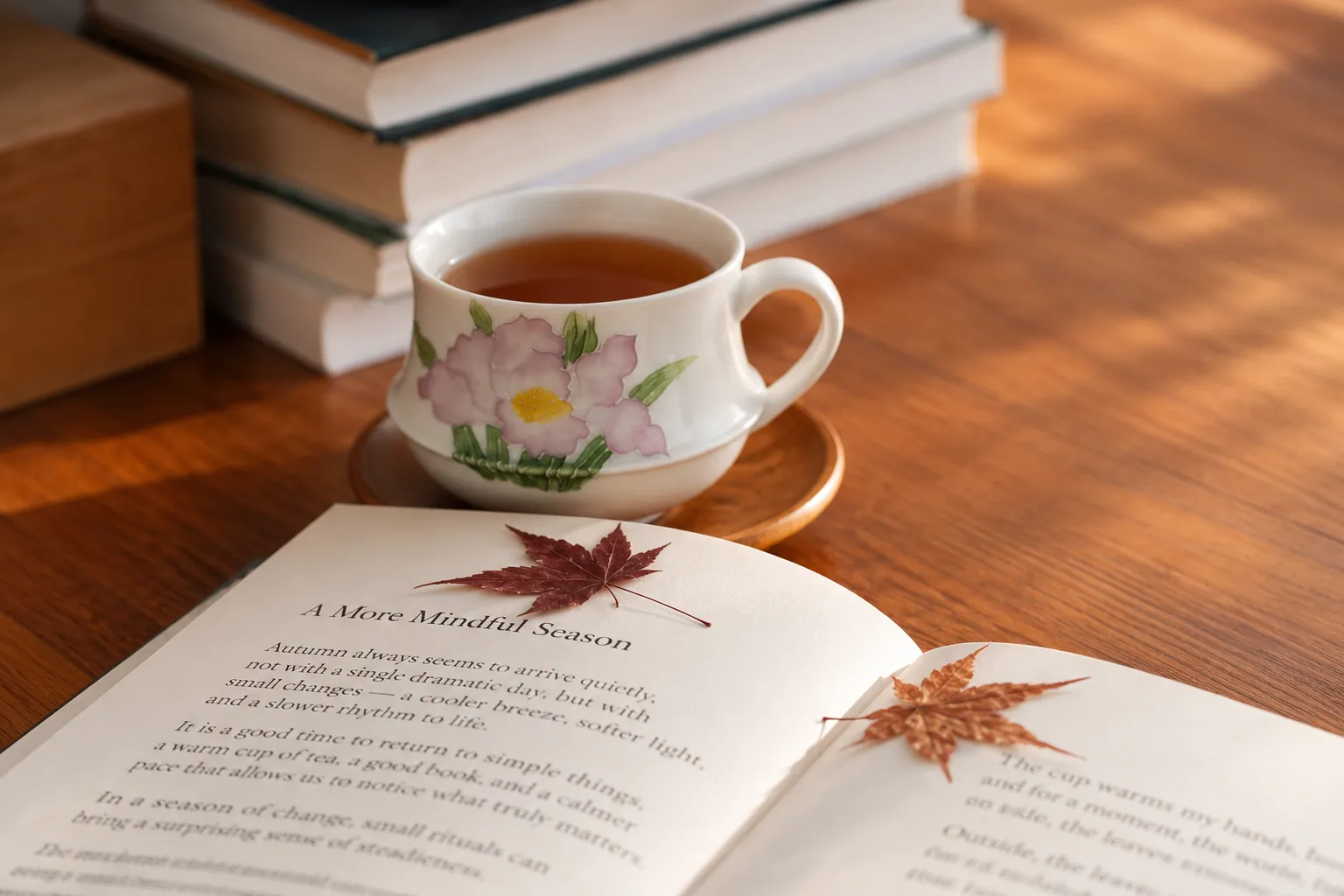
A cup of amber tea beside an open book and autumn leaves on a wooden table.

> Quick Answer

If the weather is getting cooler and you want to try Chinese black tea, choose by flavor and drinking style, not simply by the name on the package.

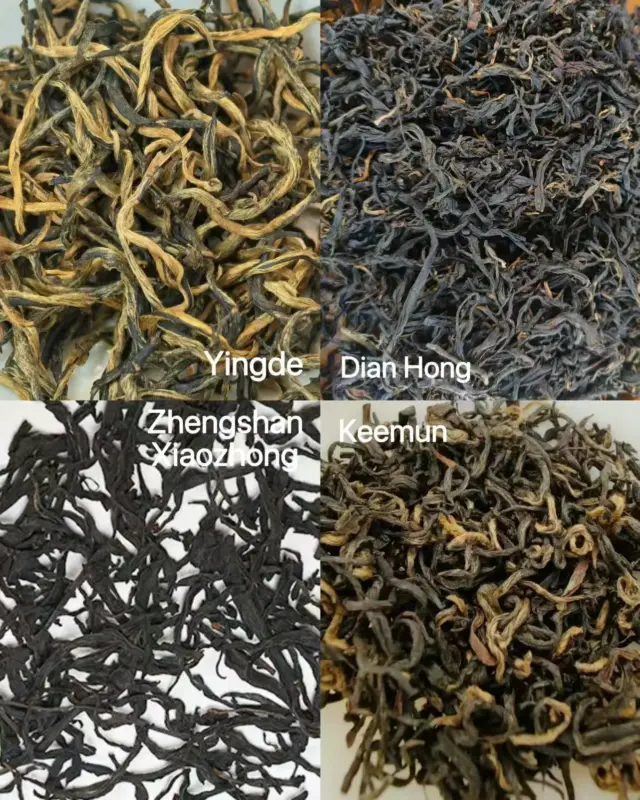
Dian Hong can be bold and powerful, with tropical-fruit aromas and the more rugged character associated with Yunnan's large-leaf tea material. Keemun is often intensely floral, complex and smooth. Zhengshan Xiaozhong can be elegant yet full, with flowers, honey, dried-longan sweetness and very little astringency in well-made examples. Yingde black tea is often highly aromatic but fresher, lighter and thinner on the palate.

All four are black teas, but they can taste remarkably different.

Why Black Tea Feels So Natural When the Weather Gets Cooler

Black tea is one of the easiest teas to move toward when the weather begins to cool. Part of that comes from the way it is made. Chinese black tea, or hong cha (红茶), is a highly oxidized tea. During oxidation, compounds naturally present in fresh tea leaves, including catechins, undergo chemical changes that contribute to the formation of pigments such as theaflavins and thearubigins.

These changes help create the darker liquor, sweeter aroma and softer, rounder taste commonly associated with black tea. Well-made black tea can be highly aromatic, naturally sweet and relatively forgiving to brew. Depending on the tea, you may find flowers, honey, tropical fruit, dried fruit, malt, caramel, wood or smoke. Compared with many lighter tea styles, the cup can feel fuller and less sharply astringent.

For someone moving away from cold water but not particularly excited about plain hot water, black tea gives you something very simple: warmth, flavor and very little difficulty.

There is also a traditional Chinese way of understanding this seasonal change. In Chinese food and tea culture, black tea is generally described as warming, or xing wen (性温). In traditional Chinese medicine, the colder and darker parts of the year are associated more with preserving warmth and conserving yang (阳) than with dispersing it. This is a traditional cultural framework rather than a medical claim, but it helps explain why warmer, more fully oxidized teas have long felt seasonally appropriate to many Chinese drinkers as daylight decreases and the weather becomes cooler.

There is one more practical reason I like black tea at this time of year: it is flexible. You can brew a good black tea in a mug, steep it in a thermos, simmer it gently in a pot, or make it gongfu style. The result changes, but you do not need perfect technique to get an enjoyable cup.

Black Tea Is a Category, Not a Flavor

Among Chinese black teas, Dian Hong from Yunnan, Keemun from Anhui, Yingde black tea from Guangdong, and Zhengshan Xiaozhong from Fujian are four of the most commonly encountered styles on the market.

They grow in very different places. The tea plants and leaf material can be different, and producers make different choices during withering, rolling, oxidation and drying. Those differences matter. One black tea can be floral and silky, another can be strong, fruity and almost wild. One can feel clear and light, while another can be deeply sweet and full.

This is why I find the question “What is the best black tea?” difficult to answer. I would rather ask: What kind of cup do you want today?

A Simple Guide to Four Common Chinese Black Teas

Four labeled close-up panels of dry tea leaves: Yingde, Dian Hong, Zhengshan Xiaozhong and Keemun.

Chinese black tea

Origin

Typical flavor direction

Texture & body

A good choice if you want…

Dian Hong 滇红

Yunnan

Tropical fruit, ripe fruit, deep aroma

Bold, strong, rugged

A powerful, fuller cup

Keemun / Qimen Hong Cha 祁门红茶

Anhui

Rich, concentrated, complex floral aroma

Smooth and refined

Fragrance and complexity

Zhengshan Xiaozhong 正山小种

Wuyi Mountains, Fujian

Elegant flowers, honey, dried longan, fruit; some styles are smoky

Clean, full, highly sweet, very low astringency in good examples

Sweetness, depth and balance

Yingde Black Tea 英德红茶

Guangdong

High, lifted aroma

Fresh, light and relatively thin

A refreshing, lighter black tea

These are not fixed tasting rules. Cultivar, growing environment, harvest, producer and brewing method can all change the final cup. But if someone is new to Chinese black tea and wants a place to begin, this is roughly how I would explain the differences.

One tea that often causes the most confusion is Zhengshan Xiaozhong, especially because many people outside China know it mainly as smoky Lapsang Souchong. If you want to understand why Tongmu black tea can taste so different around the world, read Why Does Lapsang Souchong Taste Different Around the World?

For a deeper look at Tongmu itself, its traditional smoking process and the story of a fourth-generation tea maker, you can also read Tongmu Lapsang Souchong: The Story of Fourth-Generation Tea Maker Wen Changjing.

Which Chinese Black Tea Should I Choose?

The easiest way to choose is to start with the experience you want rather than the tea name.

If you want…

Start with…

Something bold, strong and fruity

Dian Hong

Rich floral aroma and a smooth texture

Keemun

Elegant flowers, honey, dried longan and high sweetness

Zhengshan Xiaozhong

High aroma but a lighter, fresher cup

Yingde black tea

Wood, pine smoke and deeper roasted character

Traditional smoked Zhengshan Xiaozhong / Lapsang Souchong

This is more useful to me than trying to rank the teas. Someone who loves the power of Dian Hong may think Yingde is too light. Someone who loves the floral complexity of Keemun may have no interest in smoke. Another person may fall in love with traditional Lapsang Souchong precisely because it tastes unlike anything else they normally drink.

They simply want different things from the cup.

A green mountain valley with forested slopes beneath a cloudy sky.

Want to Taste the Differences Side by Side?


One reason I find Tongmu black tea especially interesting is that a single origin can produce very different expressions, from floral and honeyed styles to deeper, traditionally smoked ones.

If you would rather taste those differences than just read about them, our The Mythos of Deep – Wuyi Tongmu Mountain Black Tea Combo brings several Tongmu styles together for side-by-side tasting.

It is designed less as a “best tea” set and more as a way to notice how much variation can exist within one tea tradition.

Four Easy Ways to Brew Chinese Black Tea

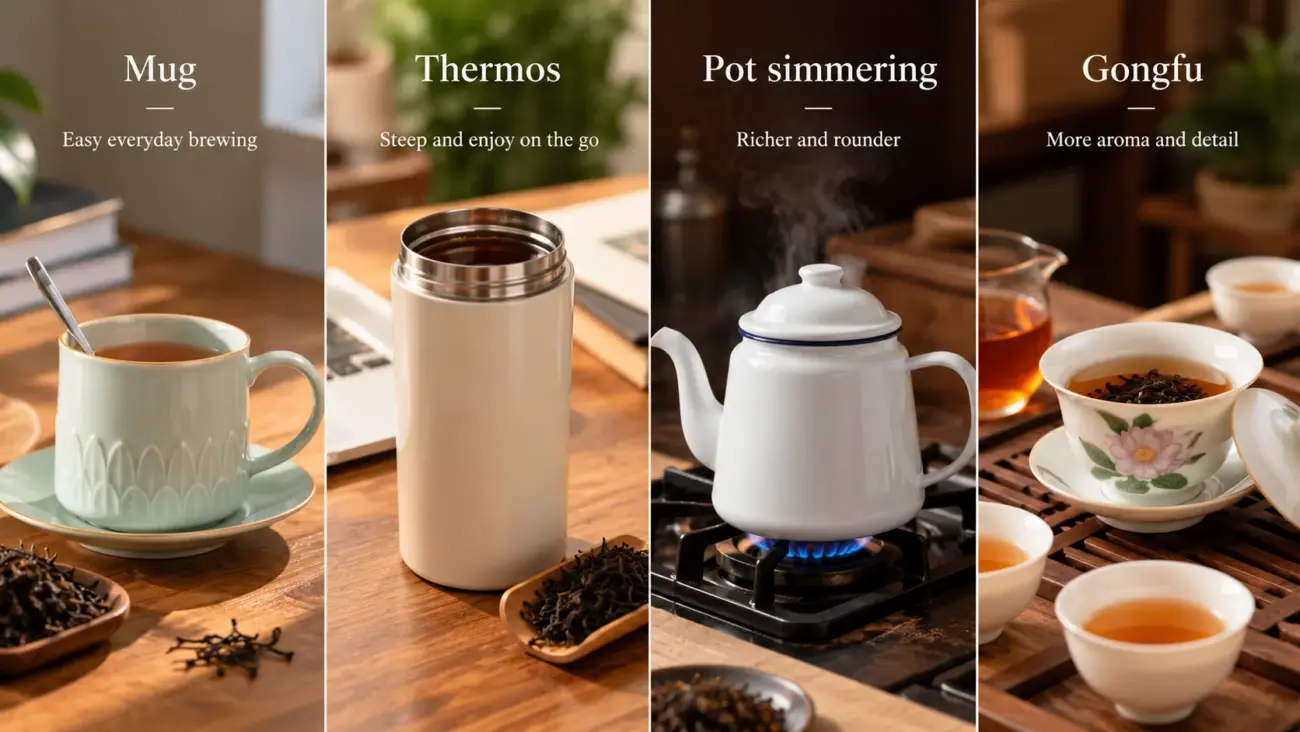
Good black tea is flexible. You can brew it in a mug, steep it in a thermos, simmer it in a pot, or make it gongfu style. The method changes the aroma, body and sweetness, but none of these ways is more “correct” than the others.

Another reason I find black tea so easy to live with is that it is not especially demanding about water temperature. I can brew most Chinese black teas anywhere from about 85–100°C. Lower temperatures usually give me more sweetness and less astringency; hotter water brings out more aroma and a stronger, fuller taste.

Four labeled panels show black tea prepared in a mug, a thermos, a simmering pot and a gongfu tea setting.

Brewing style

Tea amount

Water

Time

What it brings out

Mug brewing

3–4g

300–400ml

3–5min

Softer, simpler, easy everyday sweetness

Thermos steeping

3–5g

500–800ml

About 20min

Fuller body and deeper sweetness, with less emphasis on high aroma; a little bitterness or astringency may appear with longer steeping

Pot simmering

4–5g

500–1000ml

Gentle simmer 3–5min

Richer and rounder, with deeper cooked-fruit, malt and caramel-like notes

Gongfu brewing

3–5g

100–120ml

5–15sec to start

The most detailed aroma, smooth texture and the clearest changes across infusions

These are practical starting points rather than fixed rules. Leaf size, tea style, water temperature and personal taste will all change the ideal ratio and brewing time.

And What Did My Friend End Up Drinking?

A few days later, I saw a photo he posted on social media. There was a cup of Zhengshan Xiaozhong on his desk next to his computer.

The caption said:

“Autumn arrived before I even noticed.”

I smiled when I saw it.

What would you choose to keep you company this autumn?

Frequently Asked Questions

Why do people drink black tea when the weather gets cooler?

Black tea is highly oxidized, which contributes to its darker liquor, aromatic sweetness and generally rounder, less sharply astringent taste. Many people also enjoy its floral, fruity, honeyed, malty or smoky flavors in cooler weather. In traditional Chinese food culture, black tea is also generally described as warming (性温).

What are some of the most common Chinese black teas?

Dian Hong from Yunnan, Keemun from Anhui, Yingde black tea from Guangdong and Zhengshan Xiaozhong from Fujian are four of the most commonly encountered Chinese black tea traditions.

Which Chinese black tea has the strongest flavor?

Dian Hong often gives a bolder and more powerful impression, particularly because large-leaf tea material is commonly used in Yunnan. Individual teas still vary considerably by cultivar, producer and brewing method.

Which Chinese black tea is most floral?

Keemun is well known for complex floral fragrance, while many modern Zhengshan Xiaozhong teas from Tongmu can also show elegant floral and honeyed aromas.

Is Lapsang Souchong always smoky?

No. Traditional pine-smoked Lapsang Souchong is one style of Zhengshan Xiaozhong. Many modern Tongmu black teas are lightly smoked or unsmoked and emphasize flowers, honey, fruit and dried-longan sweetness instead.

Can I brew Chinese black tea in a thermos?

Yes. A useful starting point is 3–5 grams of tea in 500–800 ml of water for around 20 minutes. Thermos steeping tends to increase body and deeper sweetness while reducing some high aroma. Longer extraction may introduce a little bitterness or astringency.

Can black tea be simmered?

Yes. Try around 4–5 grams of tea in 500–1000 ml of water and simmer gently for 3–5 minutes. This can produce a rounder, deeper cup with cooked-fruit, malt and caramel-like notes.

Is gongfu brewing the best way to brew black tea?

Not necessarily. Gongfu brewing reveals more detail across multiple infusions, but mug brewing, thermos steeping and simmering each show different aspects of the same tea. The best method depends on what you want from the cup.

Oh, Hello👋Nice to meet you.

Join us for tea inspiration and 10% off your first order.

We are not spam! Read our privacy policy for more information.

Leave a Reply