


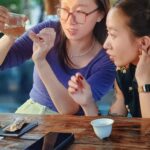
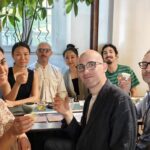
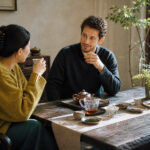















The story of Ling Chen, a Chinese tea culture advocate in Milan and a longtime friend and collaborator of Teaviews.
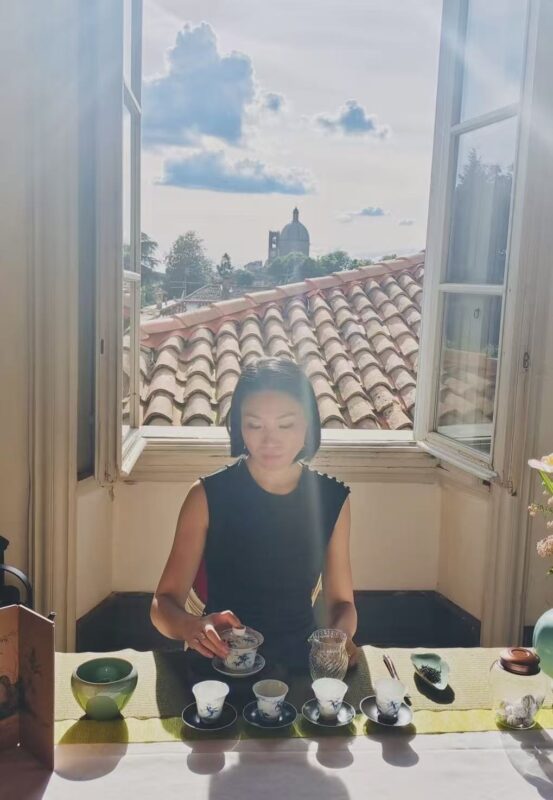
Ling Chen is a Chinese tea culture advocate based in Milan and a longtime friend and collaborator of Teaviews. Through tea gatherings, cultural events, and direct exchange, she introduces Italian audiences to gongfu tea, Wuyi Yancha, and the people and places behind Chinese tea.
A Tea Friend I Knew I Had to Meet
In the summer of 2024, I was in another city taking a course on pairing tea with mixed drinks. The course explored how tea could enter more everyday settings—how it could move beyond the formal tea table and become part of people’s daily lives.
While I was there, I received a message. Someone told me that a tea enthusiast visiting from Milan had heard about my work introducing Chinese tea to people overseas and wondered whether we could meet.
I did not yet know who she was, but I had a very clear instinct: I had to meet her. So I hurriedly changed my plans and returned.
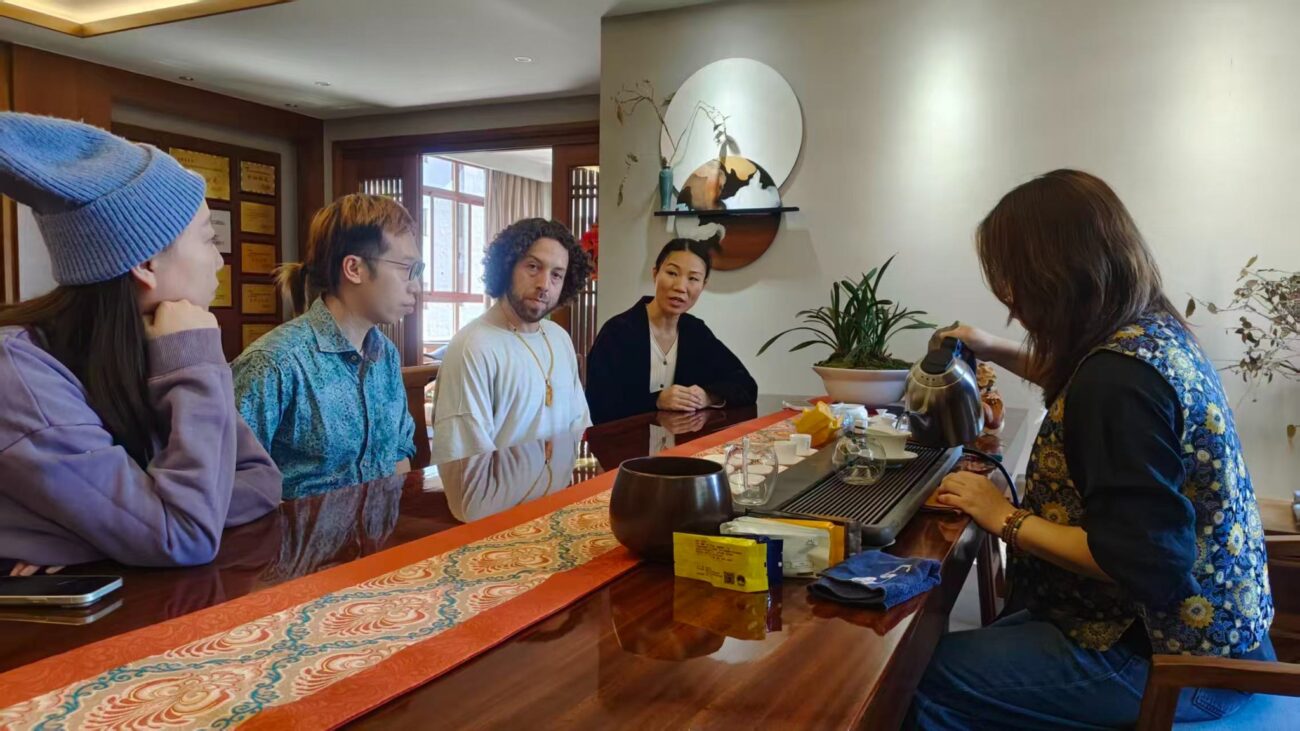
When I met Ling Chen, her husband and daughter were with her. Her friends also call her A-Ling. As we talked about tea, her young daughter felt uneasy in the unfamiliar surroundings and kept clinging to her, so our conversation was often interrupted. I said, “Come on, let me look after her. You make the tea.”
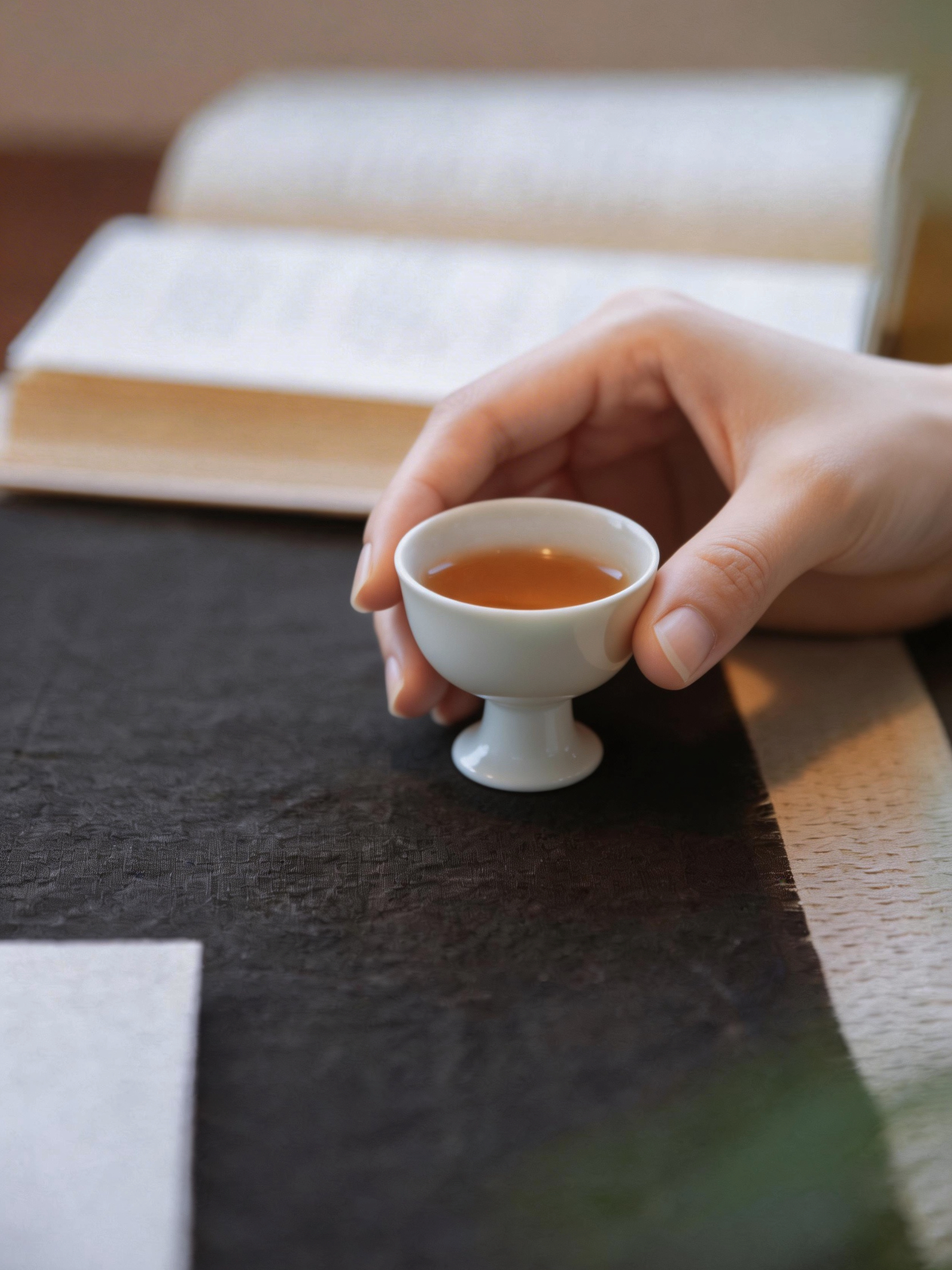
The moment Ling picked up the kettle, her entire expression changed, and so did the atmosphere around her. The voices in the room, her daughter’s movements, and all the surrounding noise seemed to fall away. She became completely focused and very precise. Her eyes followed the stream of water as it slowly opened the tea leaves.
That image stayed with me for a long time. I remember thinking: Yes, this is exactly the person I came back to meet.
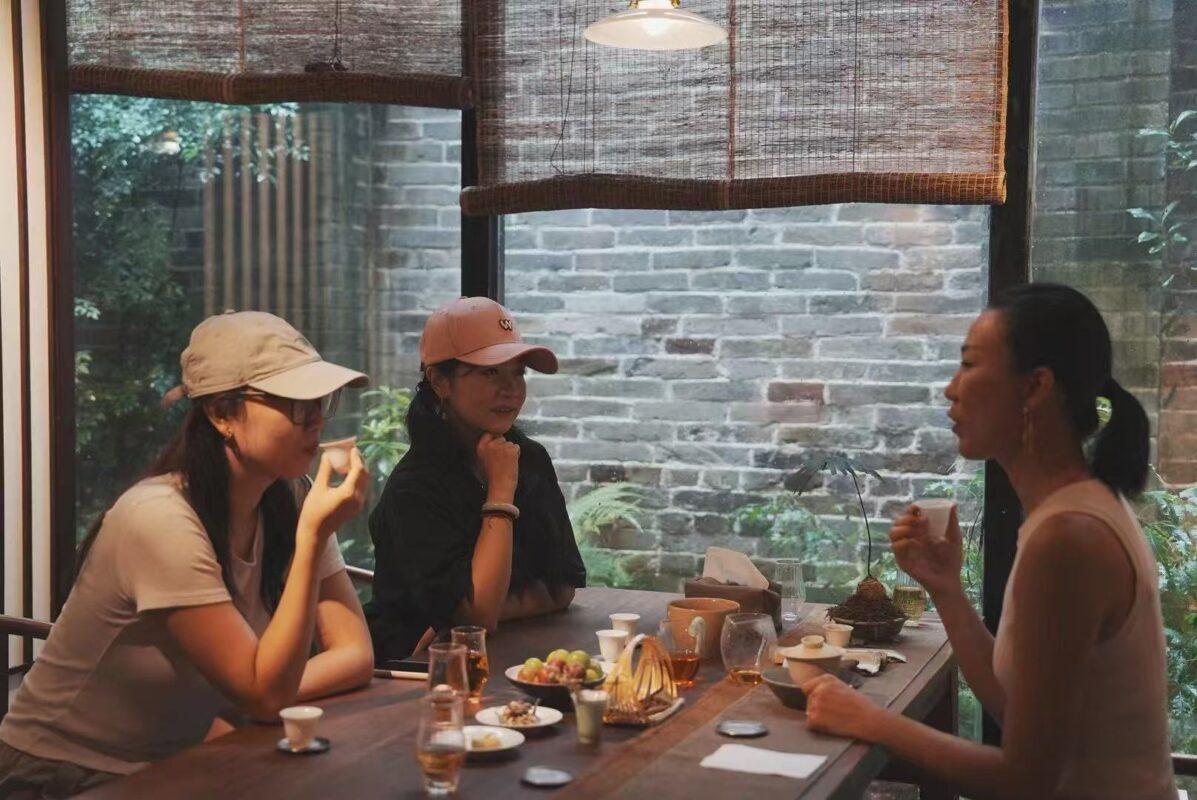
When we later talked about that first meeting, she reflected:
“So many things in my relationship with tea were not things I consciously chose. It was almost as though they were meant to appear in my life. One thing would emerge, and then lead to another. Meeting you happened in the same way.”
After she returned to Milan, we often shared updates about our work. We discussed how people from different cultures and with different tea-drinking habits might come to understand Chinese tea that truly comes from its place of origin. We worried over the challenges, exchanged ideas, and encouraged each other.
She often sent me voice messages filled with conviction:
“I still have great confidence in the future of Chinese tea overseas. It may be a long road, and we will need to spend more time bringing tea culture into local communities—sharing its flavours, connecting with people through tea, and helping more people understand Chinese tea and find a way of brewing that works for them. When you sit down and drink tea with people face to face, their immediate responses are the strongest form of trust.”
For this edition of Teaviews Tea Conversations, we would like to introduce Ling Chen, a Chinese tea culture advocate based in Milan.
Ling is a longtime friend and collaborator of Teaviews. She is also someone who remains close to the work itself: present at the tea table, in conversation with people, and committed to bringing Chinese tea to a wider audience with care and sincerity.
In Milan, Tea Does Not Remain in Photographs
Only gradually did I understand that Ling’s work with tea in Milan involved far more than organising the occasional event. In Milan, tea is not something she presents only through photographs or social media posts. Her work is grounded in real gatherings, real spaces, and face-to-face exchange.
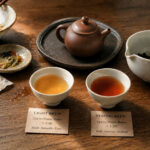
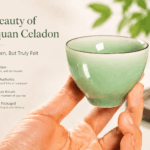
She has brought tea into many different settings: teahouses, cultural events, museums, brand spaces, Chinese New Year gatherings, and activities connected with Confucius Institutes and Chinese cultural centres. Sometimes tea has appeared alongside traditional music; at other times, it has been presented with tai chi, the guqin, or the guzheng. She has paired tea with desserts and restaurant meals, and has designed tea settings for fashion events and brand spaces, including Dolce & Gabbana and Fendi. In doing so, she has placed Chinese tea within entirely different visual and social environments.
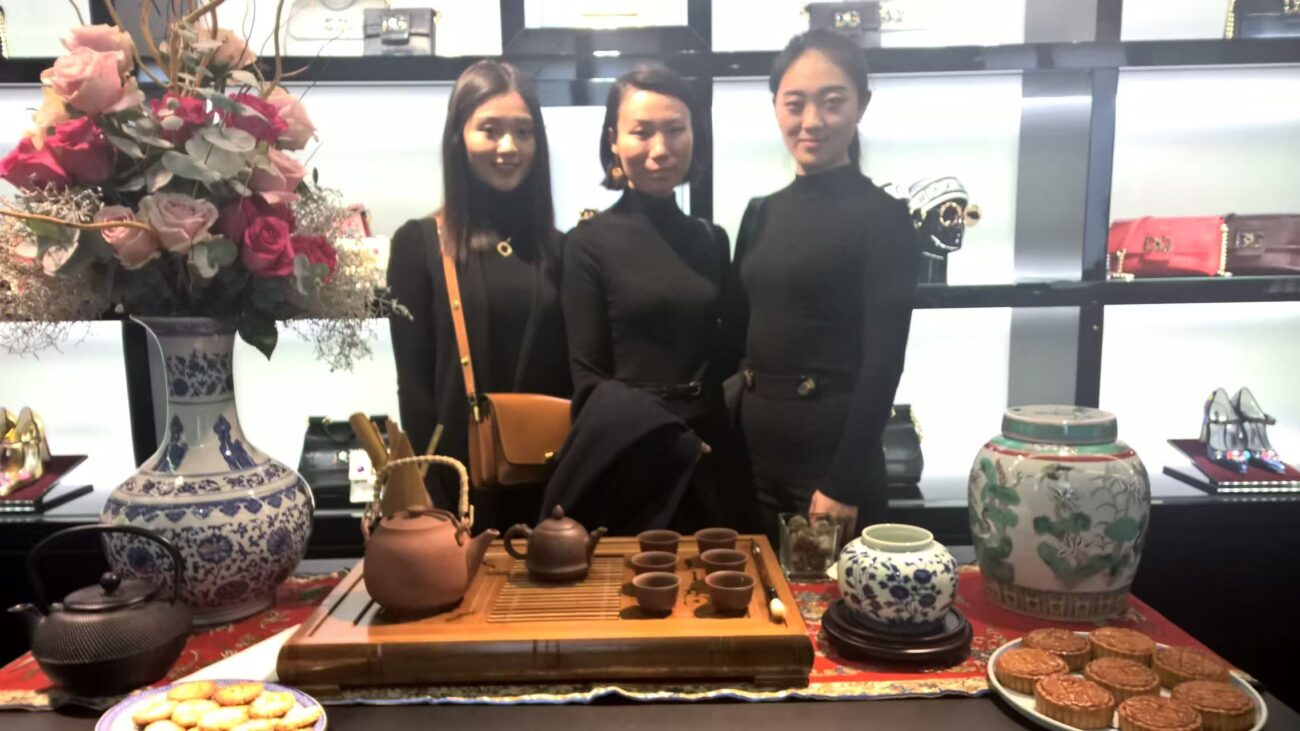
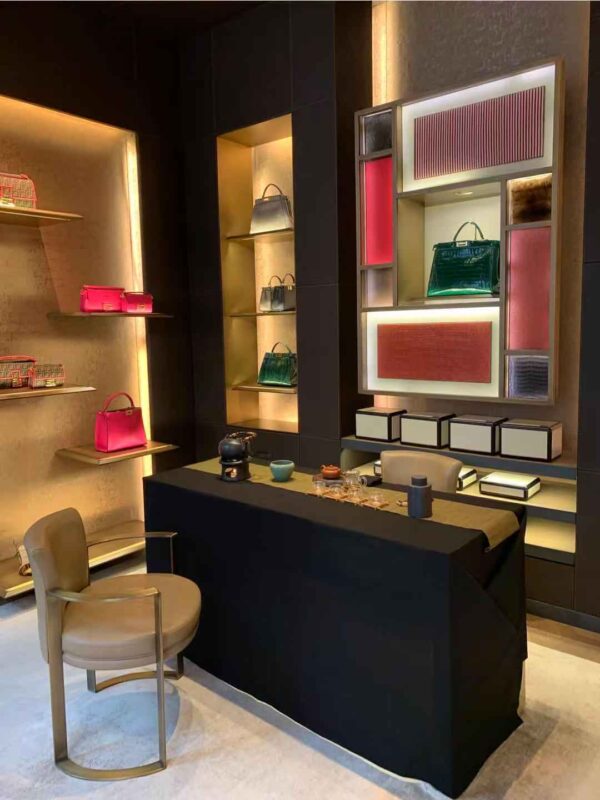
Chinese tea entering different cultural and brand spaces in Milan.
These projects may sound beautiful, but bringing them to life is not easy. The tea must be selected, the teaware transported, and the table arranged. The colours and character of the space must also be considered. When the guests arrive, she needs to welcome them, explain the tea, and observe their responses. Sometimes she is the person brewing; sometimes she is the organiser. At other times, she has to find someone to help at short notice and teach them how to brew the tea consistently.
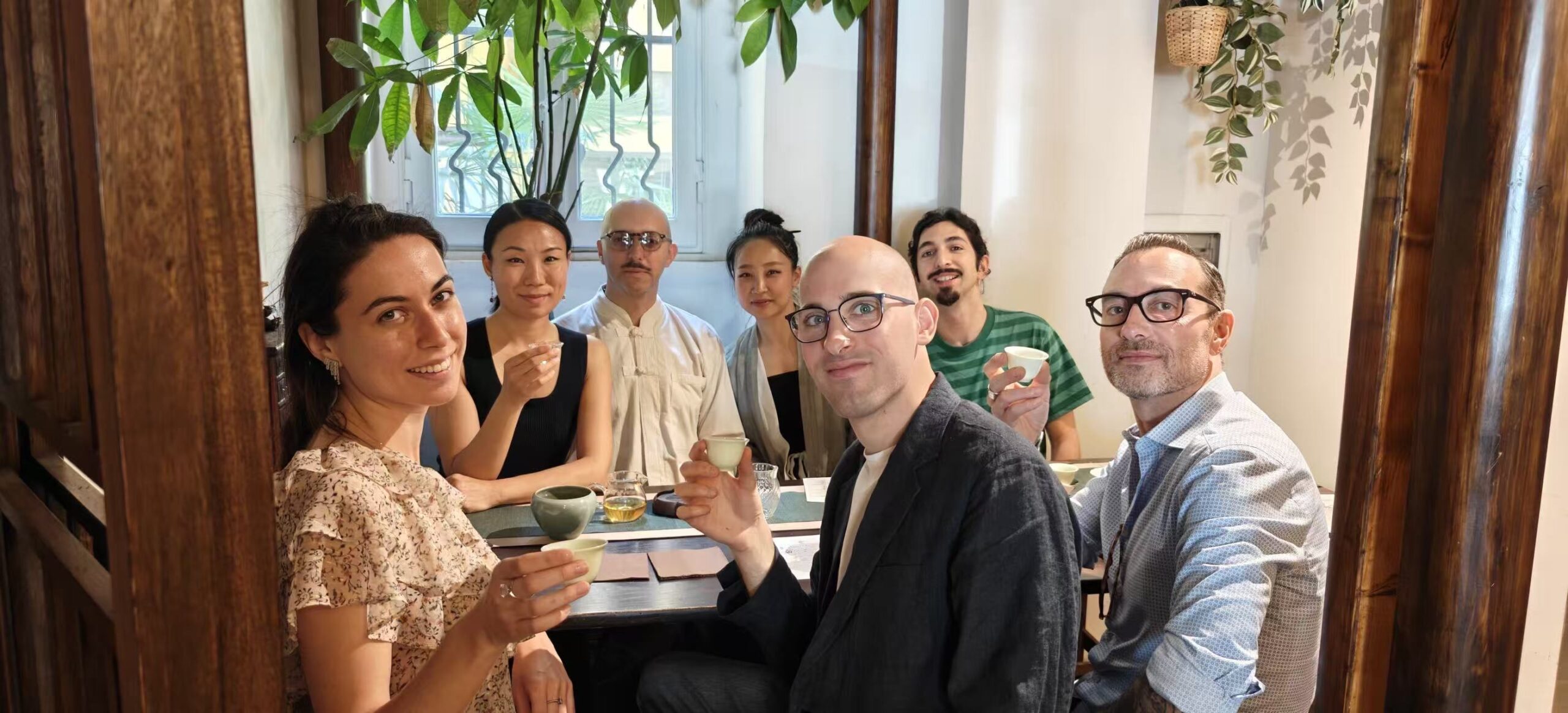
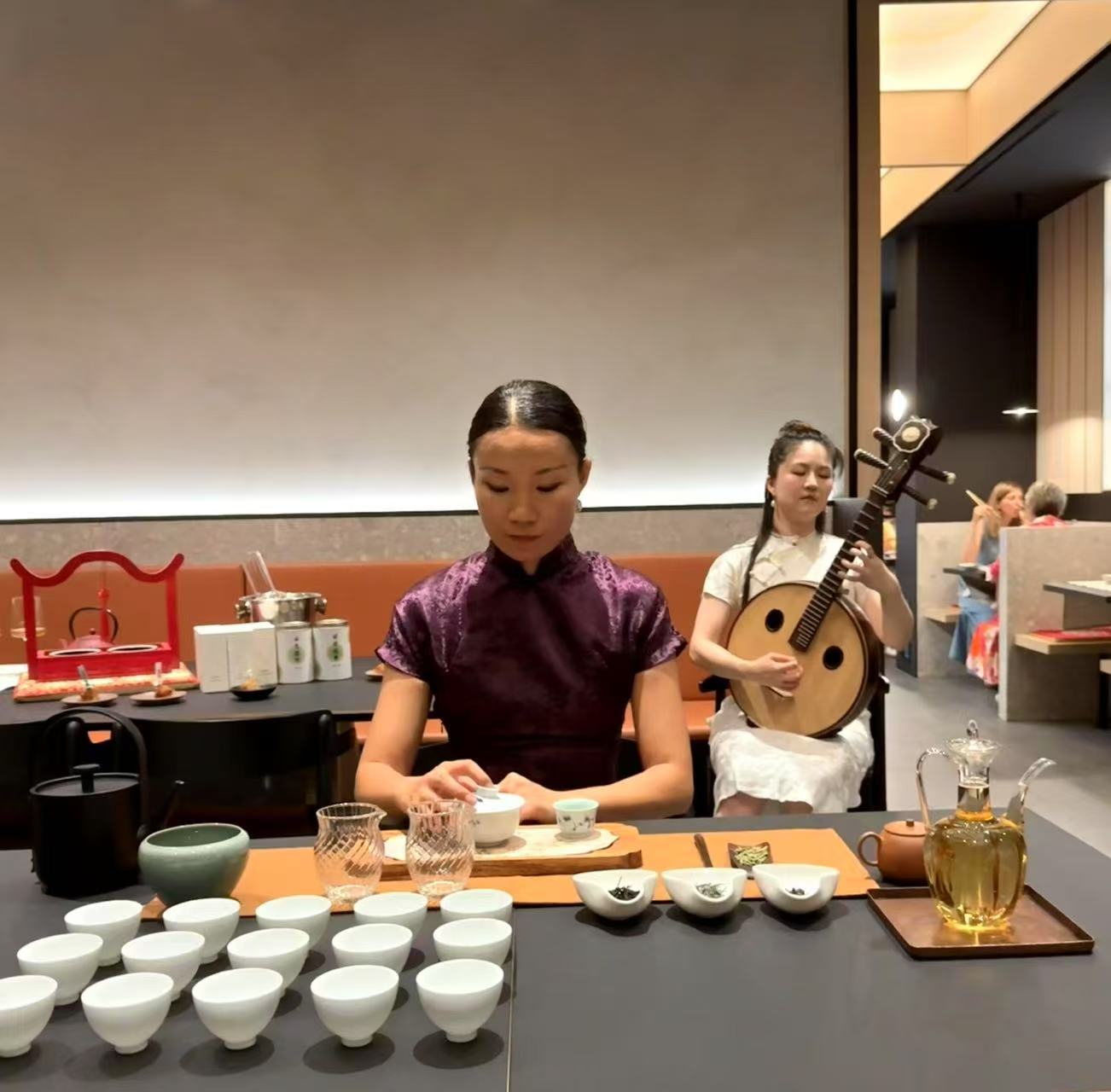
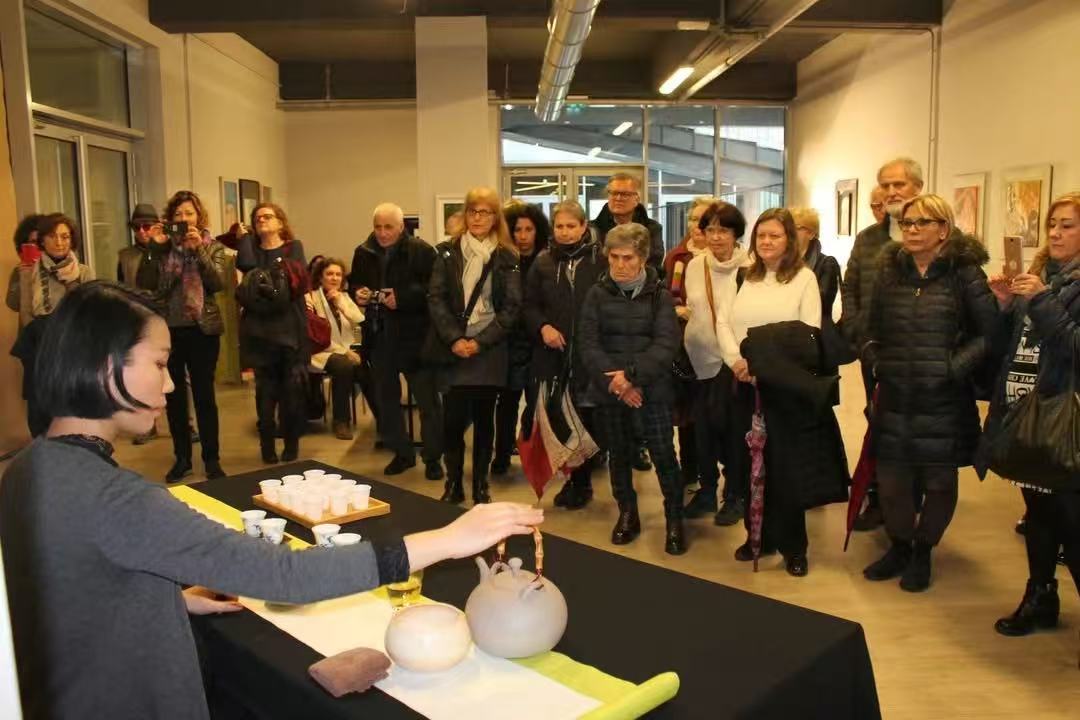
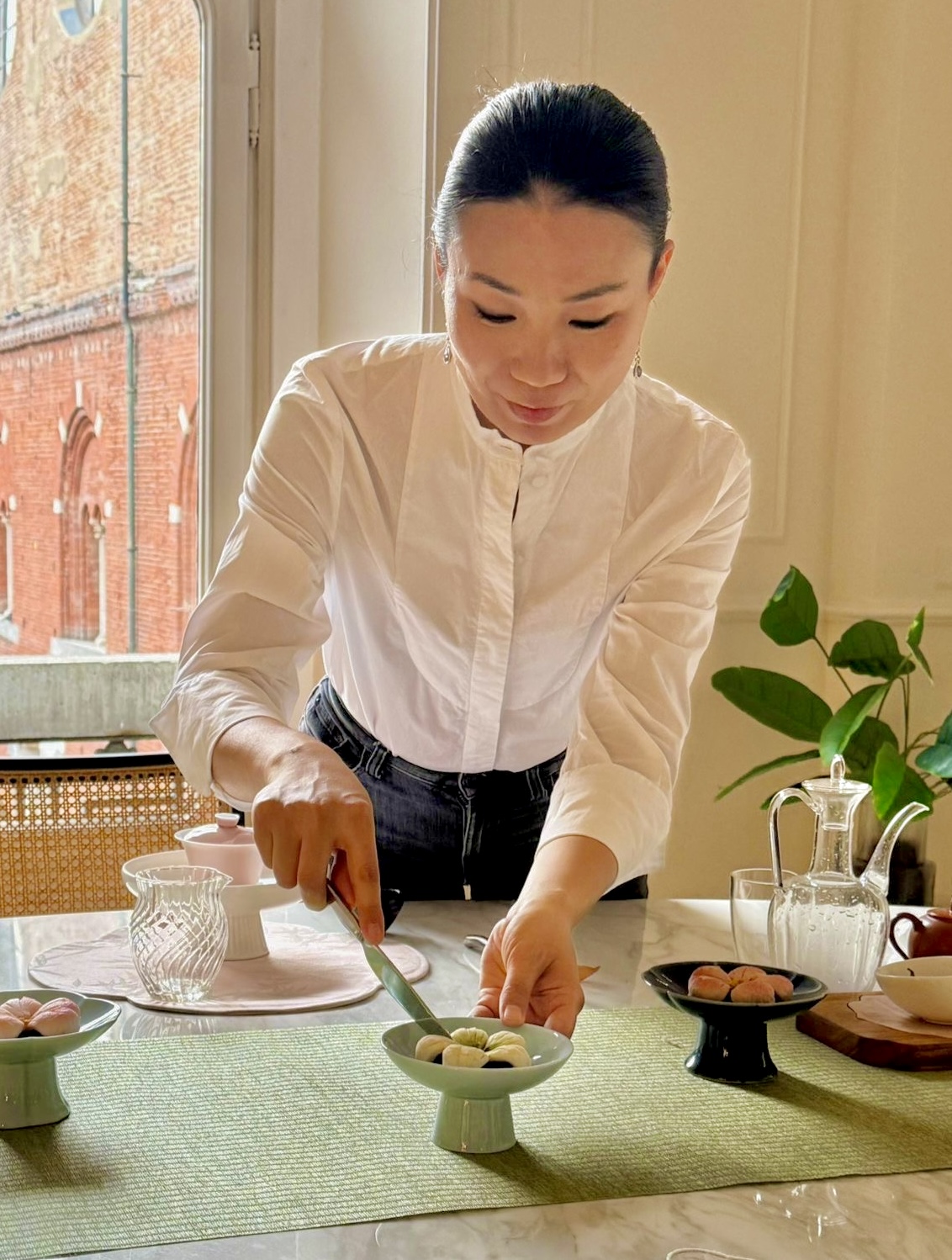
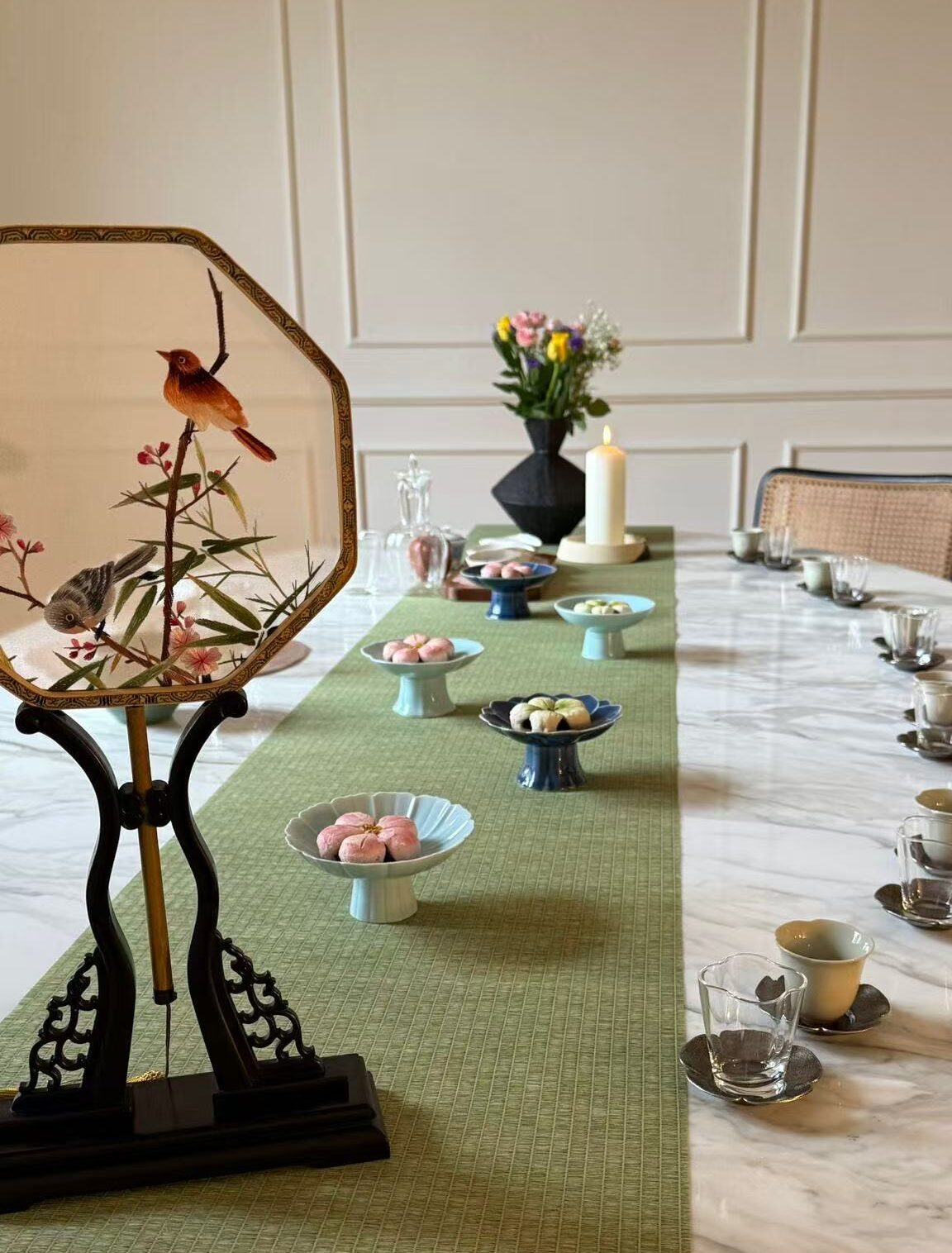
What she creates is not a “Chinese-style performance.” It is closer to finding a suitable place for Chinese tea within Milan’s many different spaces, so that it can become part of everyday life in Italy.
Listening to these experiences, I was struck by the range of things she could do. I eventually realised that describing her simply as a “tea blogger” was not accurate.
“You work unbelievably hard,” I told her.
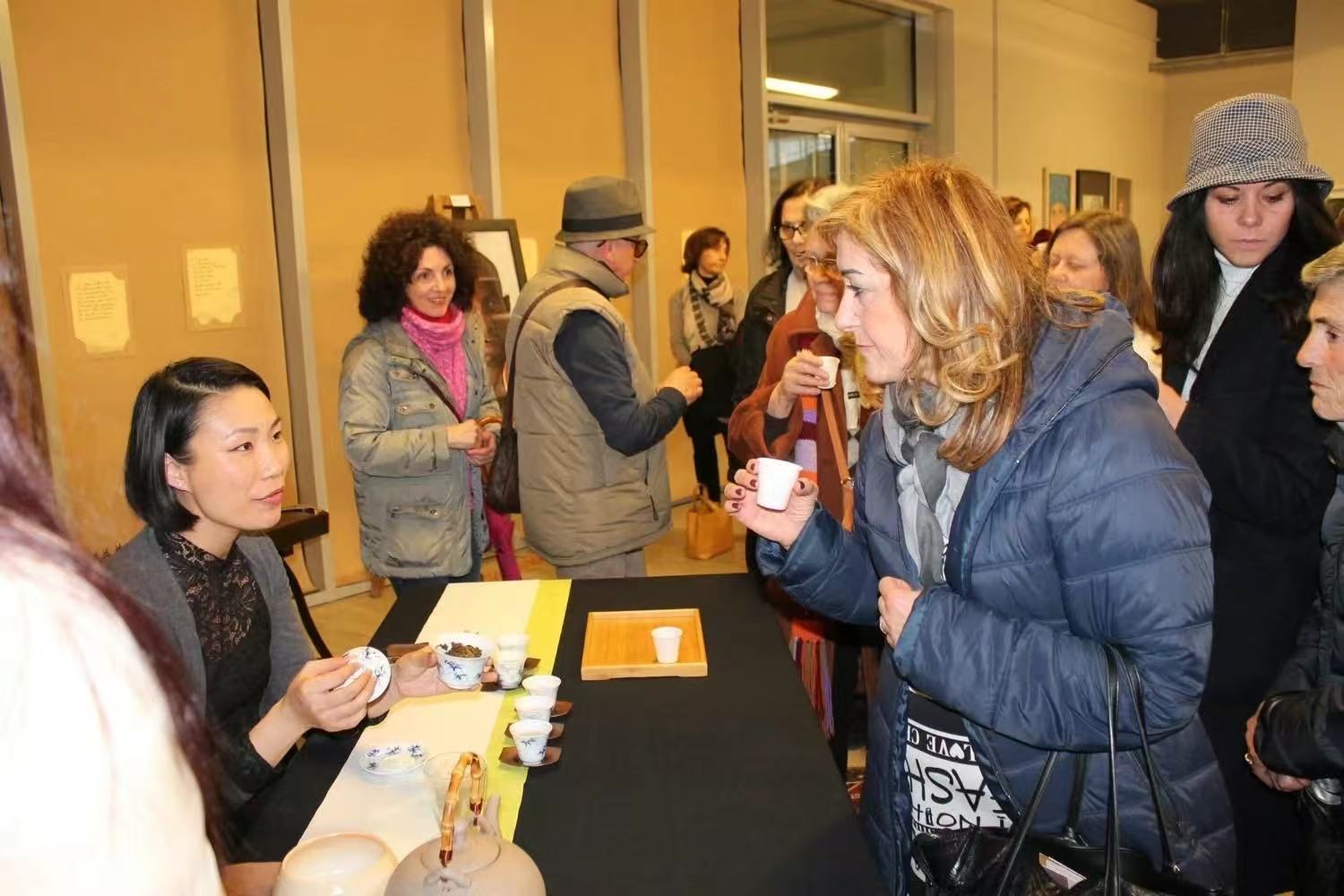
She laughed openly. “Do you know that I finished hosting a tea event the day before I gave birth?”
She had spent the whole day standing in high heels while heavily pregnant, yet she spoke of it as if it had been an ordinary day in her work with tea in Milan.
A Key Found in Beijing
Ling has drunk tea since childhood. She grew up in Hunan, where she drank tea with her grandmother and also had some contact with tea making. At the time, tea was simply part of life and required no special explanation. Her family drank it, the people around her drank it, and it was always there.
Many things are like this. When we grow up surrounded by something, we do not necessarily recognise what makes it special.
After graduating, Ling moved to Guangzhou and worked in foreign trade. Her company provided accommodation and meals, so her life was relatively settled and many daily arrangements were taken care of. In 2012, she began working at the Four Seasons Hotel Beijing.
Life in Beijing was different from life in Guangzhou. She had to find her own home, arrange her own meals, and manage many aspects of life outside work. During that period, she was also facing a decision about her future: should she move to Milan?
And if she went, what would she do there?
She felt that some kind of answer was beginning to emerge, although she could not yet grasp it clearly. It was also during this period that she began moving closer to tea in a more serious way.
At the Four Seasons Hotel Beijing, there was a teahouse opposite the department where she worked. She would often arrive early, talk with the tea professionals there, and drink tea with them. Gradually, she began brewing tea herself.
She still remembers one particular Shou Pu’er (熟普洱), or ripe Pu’er tea. There was no elaborate tea setting in the room and no especially formal method of brewing. The tea was placed in a glass, hot water was poured over it, and its flavour emerged. She took a sip and felt her whole body become still for a moment.
Tea, she said, was like a key.
She had once held a very broad ambition: she wanted to become someone who carried cultural and artistic traditions forward. But the idea was so vast that she did not know where to begin. At that moment, she began to feel that tea might offer a way.
“The taste of the tea—that sensory experience—seemed to open a door directly,” she recalled.
I remembered that description. Many years later, when she spoke about tea energy (茶气, cha qi), meditation, and changes she could feel in her body, I would think back to that Shou Pu’er. Her earliest understanding of tea did not come from books. It came from noticing a change in her own state.
But the opening of a door does not mean the road ahead immediately becomes clear.
In 2014, she applied for a position at the Four Seasons Hotel Milano. By then, tea had already found a place in the future she imagined, but she still did not know exactly what form it would take. A new city, a new language, and a new set of relationships lay ahead. Carrying the “key” she had only recently found, she took the first step.
The First Tea Gathering in Milan
After arriving in Milan, Ling did not begin working with tea immediately.
“When I arrived in Milan, the seed was already there,” she said. “Everything that followed happened one step at a time. There were no sudden leaps, and each step seemed difficult.”
She began by studying Italian while working at the Four Seasons Hotel Milano. The following year, Milan hosted Expo 2015.
That same year, Ling met Ye Hanzhong, a master of Chaoshan gongfu tea (潮汕工夫茶), who had travelled to Milan for an event. Excited, she approached him and introduced herself. She told him that she had watched his videos and had followed them while learning about Chaoshan gongfu tea.
After listening to her, Master Ye asked whether it might be possible to organise a tea gathering in Milan where he could share the tradition with others.
That was how Ling’s first tea gathering in Milan began.
She recalled the situation:
“I said, ‘Yes. Give me a few days and I’ll contact the owner of a teahouse’ You have to remember that in July and August, almost everyone in Italy is away on holiday.”
Her Italian was not yet fluent, and she had to solve each problem as it appeared. In the end, she found a teahouse and brought the participants together. Master Ye brewed Chaoshan gongfu tea while Ling sat beside him, watching people drink, ask questions, and talk. The gathering was filled with a shared enjoyment of Chinese tea.
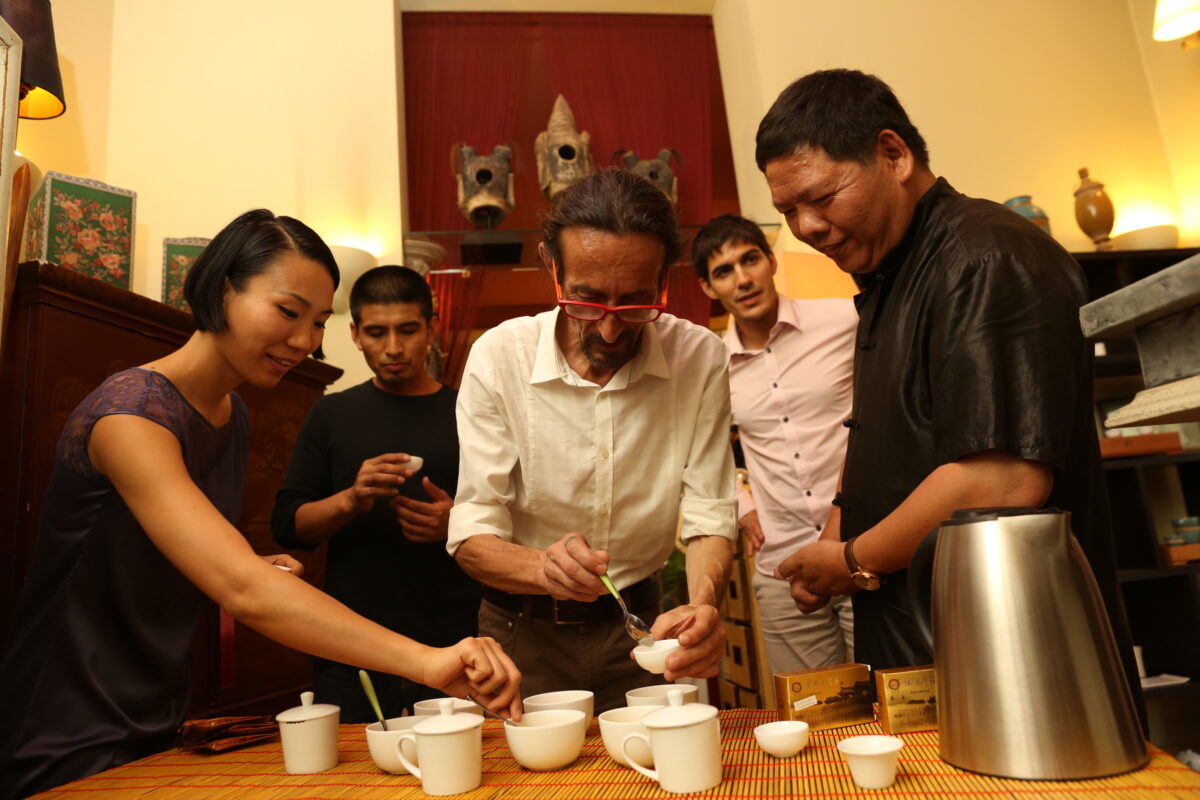
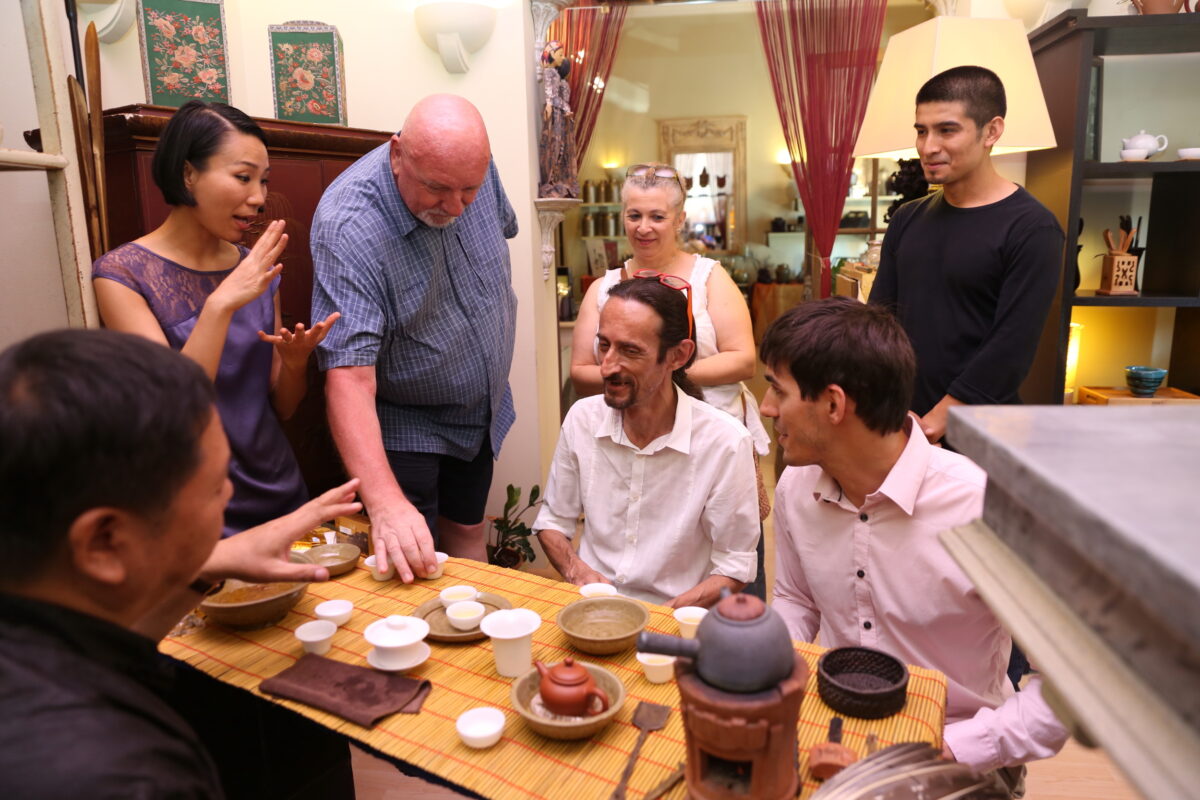
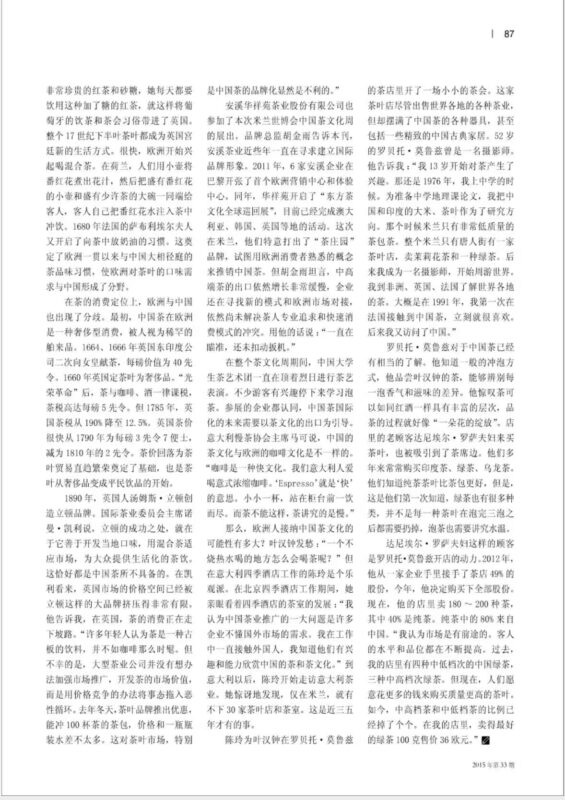
She remembers it as a wonderful experience. Later, this encounter with Chaoshan gongfu tea also became connected with an article published by Sanlian Lifeweek. Even now, she finds the connection remarkable.
By then, tea had become more than an interest. For the first time, she could see clearly that even in another country, she was capable of bringing people and tea together.
When her period of work in Milan came to an end, she decided to return to China to study tea.
Learning Chinese Tea at Its Origins
After returning to China, Ling undertook systematic tea studies in Beijing and Hangzhou. Her training covered Chinese tea practice, tea classification, the fundamentals of tea tasting, tea-table design, and brewing.
Along the way, she was fortunate to meet two important mentors. Outside the tea room, they set aside the role of “teacher” and became warm, attentive friends—like an older brother and sister who offered her generous support. But when they returned to teaching at the tea table, they became extremely rigorous and professional. She admired their seriousness and uncompromising standards, and held them in deep respect.
Ling often says that sincerity matters greatly to her when she listens to someone speak about tea. She was fortunate to meet the right teachers at the beginning of her studies. They taught her more than tea knowledge and brewing techniques. They also showed her the attitude a person should bring to tea, to teaching, and to the person sitting across the table.
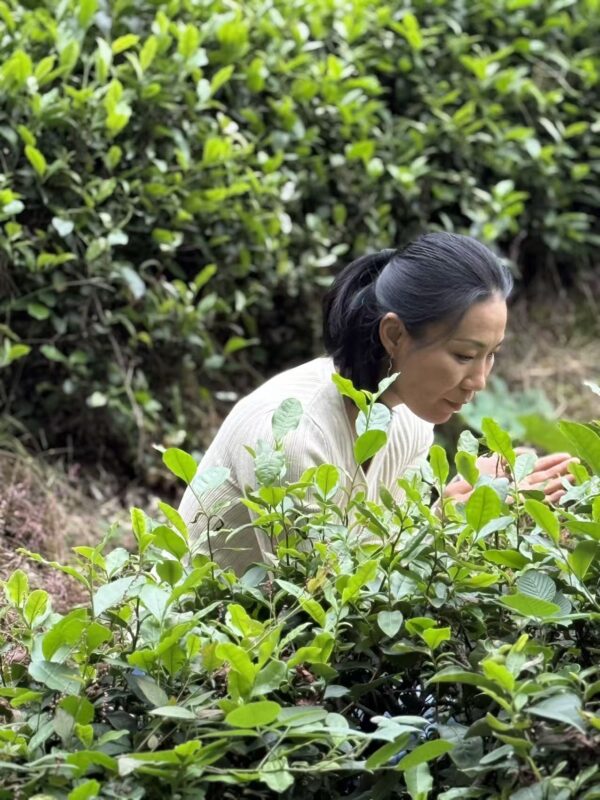
She says that studying tea and drinking tea are two different things. When she studies, she is a student. When she drinks tea, she experiences it as any other tea drinker would, responding to the tea, the people, and the space around her.
If you are drinking only for yourself, it may be enough to decide whether you like a tea. But once Ling wanted to introduce tea to other people, she could no longer stop at “I think this tastes good.” She needed to know where a tea came from, how it was made, and why it carried its particular aromas and flavours.
She also wanted to visit China’s renowned tea origins herself. After drinking the local water, seeing how people there prepare tea in daily life, and experiencing the landscape and local culture, she would feel more confident speaking about that tea to others.
“When I introduce a tea, I want to have visited the place it comes from,” she said. “If I have been there, I can talk about its scenery and its surroundings. What I say becomes more grounded and real.”
These experiences later became the foundation of her tea gatherings in Milan.
Eventually, we travelled to Wuyi Mountain together.
I took Ling to visit Master Liu Dexi, an officially recognised inheritor of traditional Wuyi Yancha-making techniques. Our group included Ling as well as tea bloggers from the United States and Japan. Each person usually spoke about tea through a different language and cultural background. But once we entered the place where tea was being made, language suddenly seemed less important.
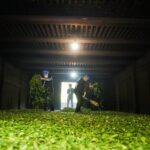
Fresh tea leaves were tossed in bamboo trays. The sound was delicate as the leaves repeatedly touched one another and their aroma gradually emerged. During pan-firing, heat and fragrance rose together. It was not the aroma we normally encountered at the tea table. It was greener, more immediate, and closer to the living leaf.
“When I visited Master Liu and smelled the tea being made, I thought, wow—I had never encountered an aroma like that before,” Ling said. “It was different from the tea aromas I knew as a child. It smelled so good. That fragrance could completely draw you in.”
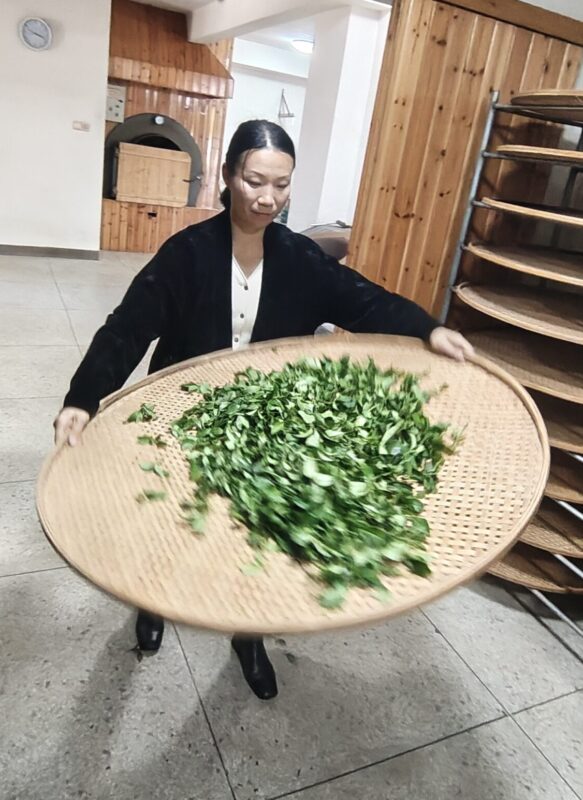
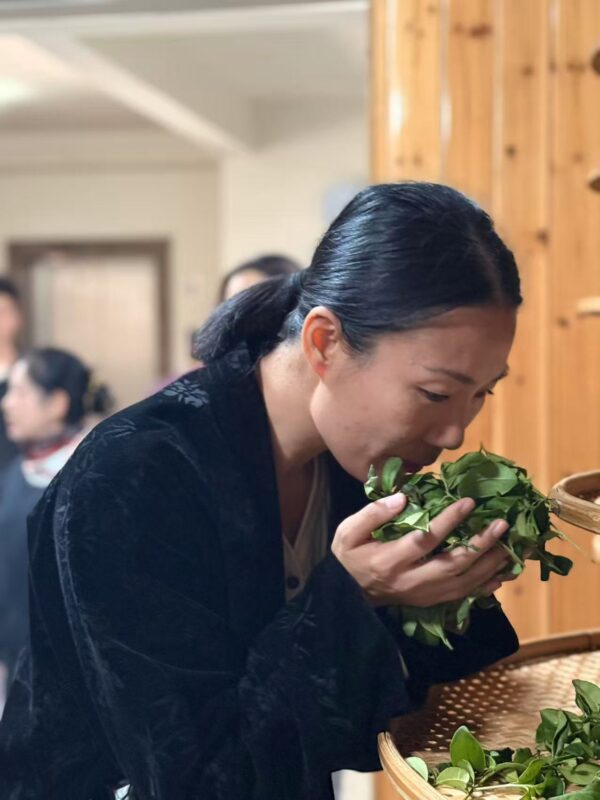
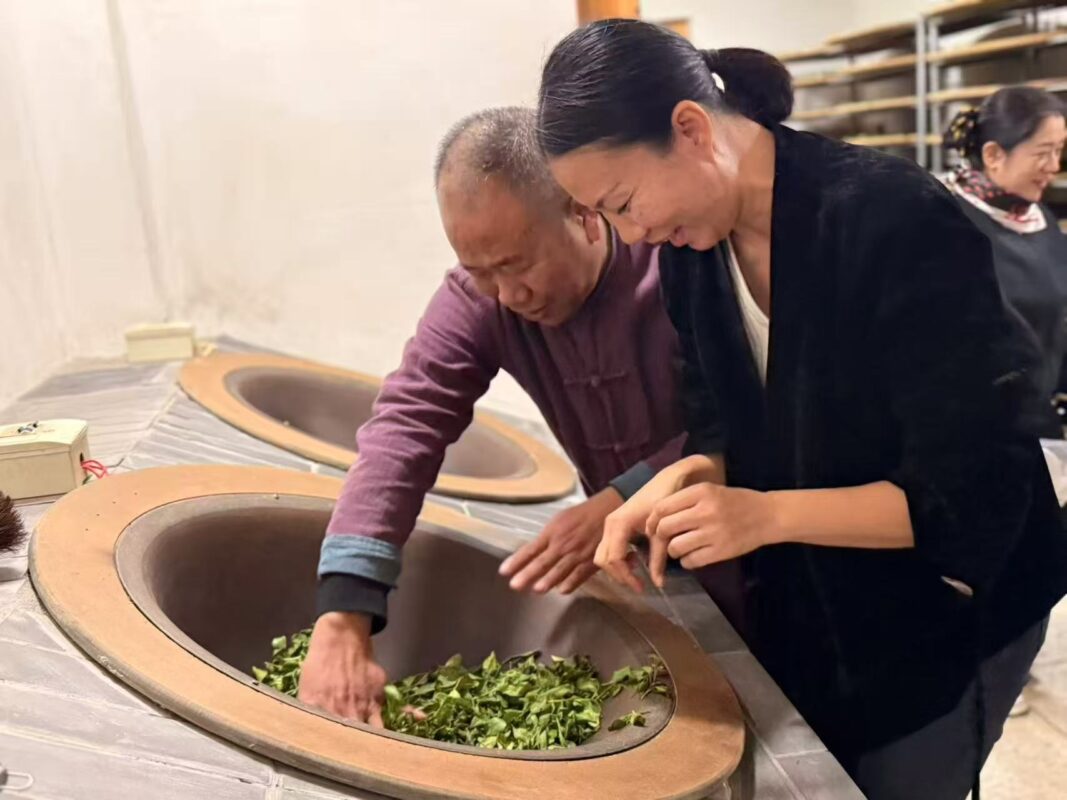
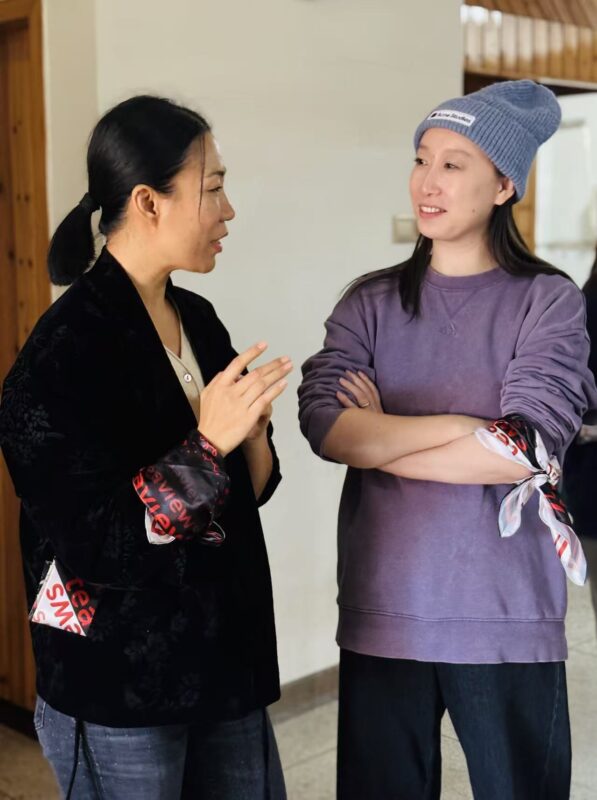
Learning Wuyi Yancha through sound, heat, aroma, and movement.
Ling watched closely. She tried shaking the leaves herself and also worked with them in the heated pan, repeatedly using her hands to understand what Master Liu was teaching her. Knowledge that had previously remained in classrooms and cups of tea became sound, heat, aroma, and movement in her own hands.
That day, we sat beside a window overlooking Mituo Rock in Wuyi Mountain and drank one of Master Liu’s signature teas. We gathered around the table, tasting and asking questions. The American and Japanese tea bloggers were deeply impressed by the way the Yancha (岩茶), or Wuyi Rock Tea, changed across successive infusions. Ling continued to drink and ask questions, while Master Liu answered slowly and carefully.
She later said that she saw a rare kind of sincerity in him.
“What you see in him is someone with a profound devotion to his craft. He respects us even though we are from a younger generation, and he teaches us with great patience. He is very grounded and sincere.”
Sincerity in the people behind a tea matters deeply to her.
When Ling later spoke about Yancha, she said that it was difficult to understand Yan Yun (岩韵), often translated as “rock rhyme”, without actually travelling through Wuyi Mountain.
I understand what she means.
On the page, terms such as growing site, roasting, texture, and yan yun can begin to sound alike. But when you arrive there, smell the tea, and see the leaves changing in someone’s hands, those words finally become part of your own experience.
When Ling returned to Milan and spoke about Yancha again, she was no longer describing only a category of tea. She had seen what that cup was before it became tea.
Let the Tea Arrive First
Not everyone who sits at Ling’s tea table already understands Chinese tea.
“More than half of the people sitting in front of me are drinking Chinese tea for the first time,” she said.
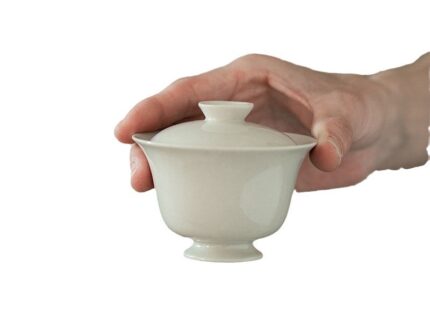
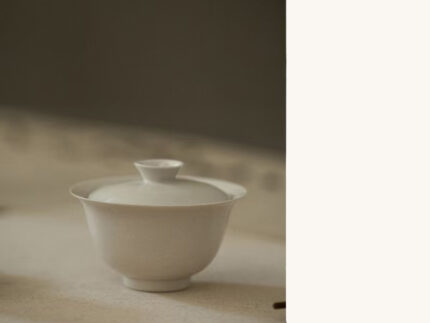
Some people see a gaiwan (盖碗) for the first time and ask why she does not use a large teapot. Some look at the small cups and think of the experience as a ritual. Some compare tea with coffee, while others compare Chinese tea with Japanese or Korean tea. People also ask her, “When you talk about Qi, do you mean energy?
Ling does not rush to correct them.
She still remembers the first time she announced a tea gathering on Instagram and quickly received a booking. The first people to reserve were a couple, one from Romania and the other from Italy. For her, this was a tangible sign that people in Milan were genuinely willing to step into the world of Chinese tea.
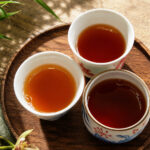
Everyone enters in a different way. Some are drawn first to the aroma. Some begin with the softer character of black or white tea. Others taste a good green tea and discover for the first time that it can be fresh and sweet, with a lingering hui gan (回甘), or returning sweetness.
Ling observes these responses at the tea table.
Introducing Chinese tea in Milan also brings very practical questions. Price is one of them.
Good tea and well-made teaware are not inexpensive for the average tea drinker. Ling explains them by referring to things people already understand. In Italy, for example, a cup of coffee has an established price. Tea, however, is not calculated by a single cup. One portion of leaves can be infused many times and shared among several people.
When the cost is considered in terms of each infusion, each cup, and the time people spend together, the price of good tea becomes easier to understand. It simply requires a different way of calculating value.
Teaware can be more difficult to explain. Someone new to tea may not immediately understand why the vessel matters: why a gaiwan is used, why the cups are so small, or why a particular teapot can affect the brewed tea. If these things are introduced too early, they can easily sound mysterious or obscure.
Ling begins with practical details instead. Is the vessel comfortable to hold? Is it easy to control the strength of the infusion? Does the water pour smoothly? Does the cup make it easier to notice the aroma and temperature?
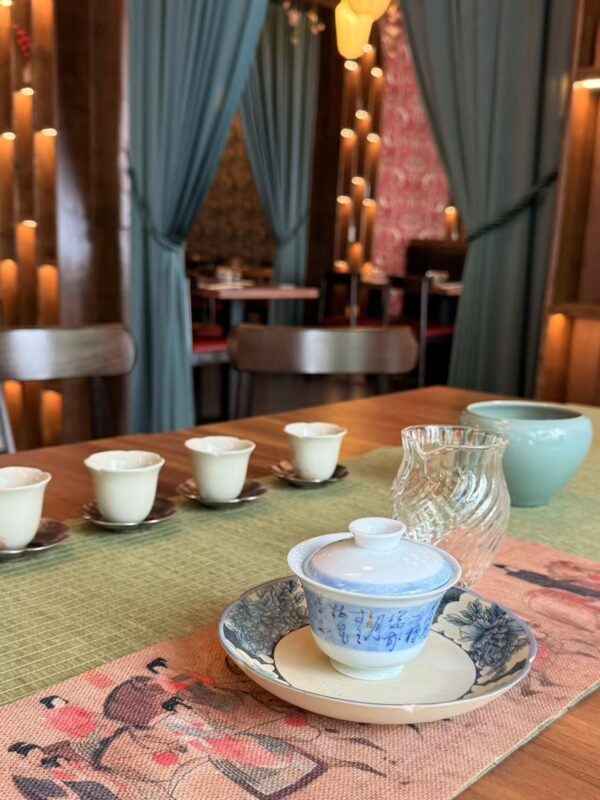
Once someone has drunk tea for longer and their perception has become more refined, she can gradually introduce the subtler relationships between the vessel and the tea.
The same is true of tea energy (茶气, cha qi). Translating Qi as “energy” may seem possible, but the word does not fully convey the experience. The real difficulty lies not in the vocabulary, but in the experience itself.
Much of the translation Ling does is therefore not about replacing a Chinese term with a foreign one. It is about gradually sharing an embodied experience, the memory of a journey, and the landscape and daily life of a tea’s place of origin. All of these things come from roads she has travelled herself.
Through this process, Chinese tea is no longer simply a distant cultural concept to the people sitting at her table.
Through this process, Chinese tea is no longer simply a distant cultural concept to the people sitting at her table.
What I find most interesting about Ling’s work in Milan is not how many events she has organised or how much knowledge about Chinese tea she has shared. It is the way her tea gatherings bring people who might never otherwise have sat together to the same table.
Tea practitioners, tea drinkers, brands, cultural organisations, and people from different countries all meet there. Some already understand tea; others do not. Some pass through only once, while others continue to return. With tea at the centre, they have a reason to meet one another.
What remains after a tea gathering is not necessarily a sale. It may be a new curiosity about tea, another conversation, or a familiar face returning to the table. It may be someone realising that the difference between fine tea from its place of origin and an ordinary teabag can be far greater than they had imagined.
The connections between Ling and Milan’s tea drinkers, between Ling and Chinese tea makers, and between her work and different cultural spaces have all developed gradually. The same is true of her relationship with Teaviews.
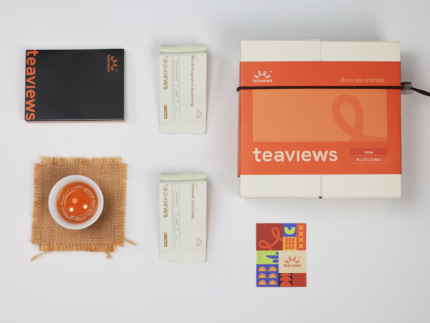
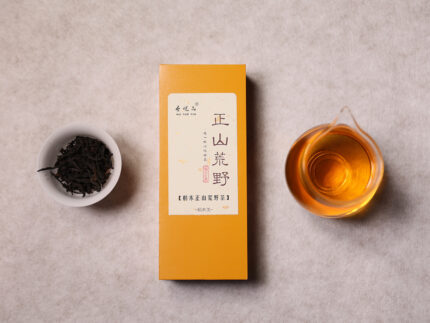
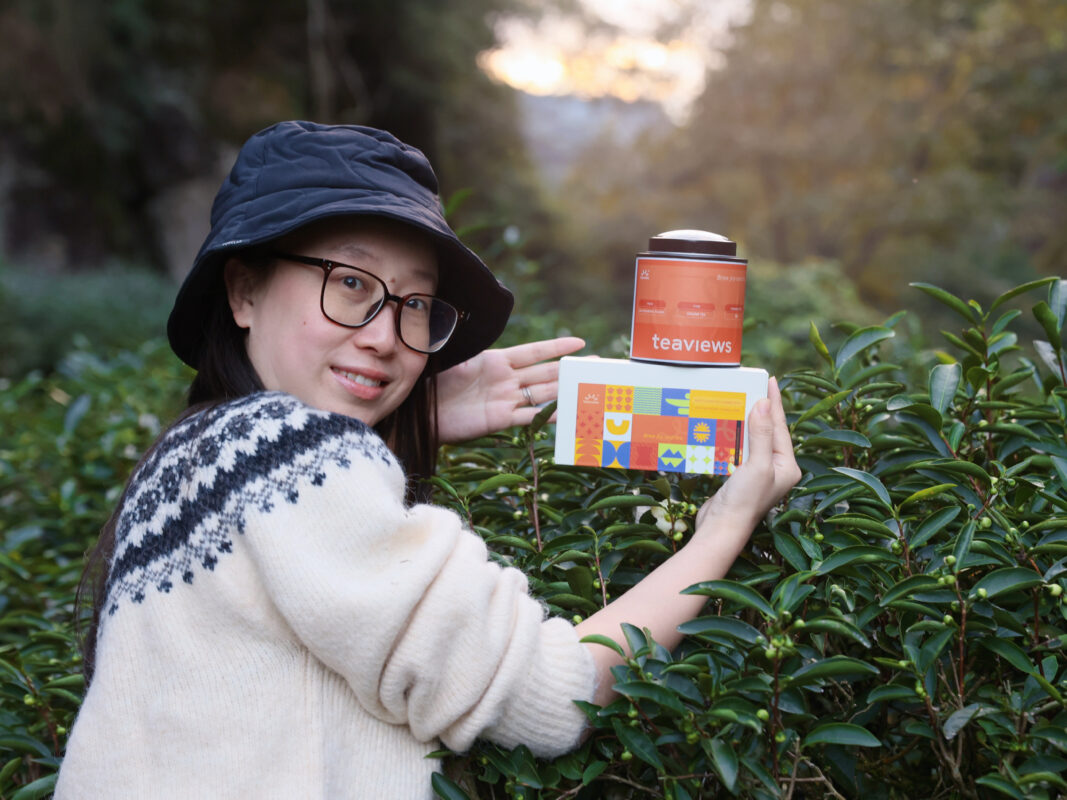
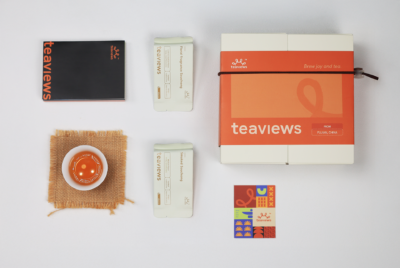
Later, Ling received tea from Teaviews and shared our Tongmu Smoked Souchong (烟熏小种红茶) at a tea gathering in Milan marking Xiaoman (小满), the “Lesser Fullness” solar term. She told her guests that the tea came from another mysterious and beautiful place on the other side of the world.
Teaviews tea arriving in Milan before the Xiaoman gathering.
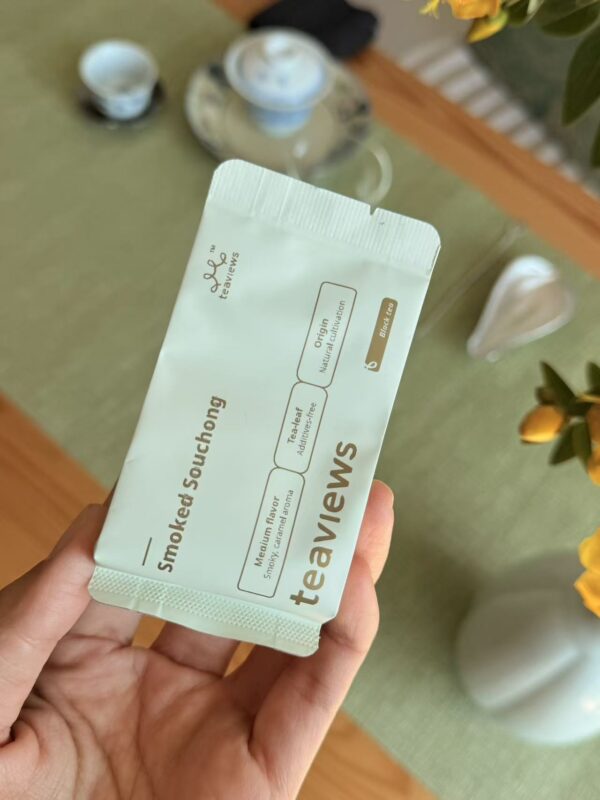
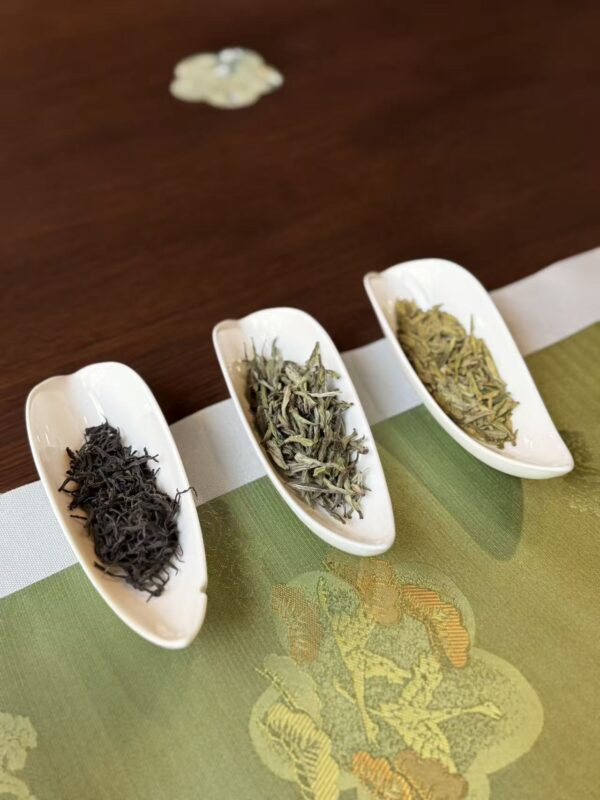
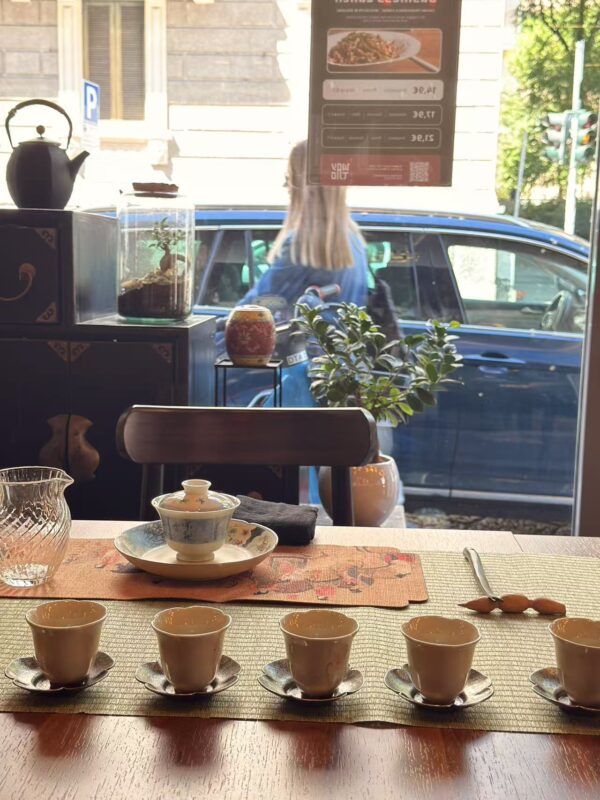
Teaviews tea prepared for Ling Chen’s Xiaoman gathering in Milan.
It did not feel like an ordinary brand collaboration. It felt more like one tea friend sharing tea with others.
We search for tea among China’s tea mountains and tea makers. Ling brews those teas in Milan for real people to taste. This is also part of how Teaviews thinks about tea — beginning with origin, then letting tea meet real people and real moments. Once the tea leaves its place of origin, it still has a long way to travel. Someone will open the package, smell the leaves, and brew the tea. At a tea table in an unfamiliar city, people will ask questions about it in different languages. Through that experience, someone may discover for the first time that Chinese tea is more than a distant cultural symbol.
Wuyi Mountain and Milan are separated by a long distance.
Ling says she often thinks about Wuyi Mountain and its remarkable purity. It was also there that she recognised some of the tension she had been carrying and began to reconnect with her body.
“Who is this ‘I’?” she said. “When you see the present clearly, you understand that your purpose is simply to do the thing in front of you well.”
There is nothing abstract about this. The purpose she speaks of ultimately returns to something very specific: this cup of tea, this tea table, and the person sitting in front of her.
Let the tea arrive first.
Everything else can follow in its own time.
About Ling Chen
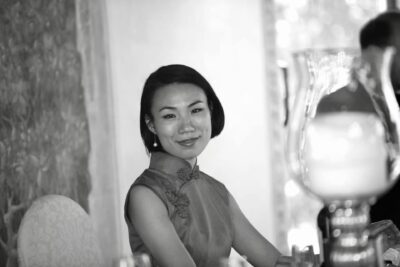
Ling Chen is a Chinese tea culture advocate based in Milan. Through tea gatherings, cultural events, and collaborations with local venues and organisations, she introduces Italian audiences to Chinese tea, its places of origin, brewing practices, and teaware. She is a longtime friend and collaborator of Teaviews, sharing origin-made Chinese tea with people in Milan through direct, face-to-face experiences.
Instagram: @thebeautyoftea