




















Beyond Cold Brew: More Ways to Enjoy White Tea & Jasmine Tea at Home This Summer

Cold brew opened the door. But jasmine tea and white tea can go much further than that.
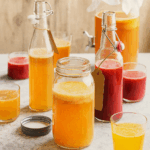
When the weather is very hot, I often find myself wanting tea in a different way. I still want the fragrance, texture and character of the leaves, but I do not always want to sit beside a kettle and brew several infusions. Sometimes I want something already cold in the fridge. Sometimes I want to add fruit, sparkling water, coconut water or milk and see what changes.
That does not mean I want to turn every tea into a sweet café drink. For me, the interesting part is still the tea itself.
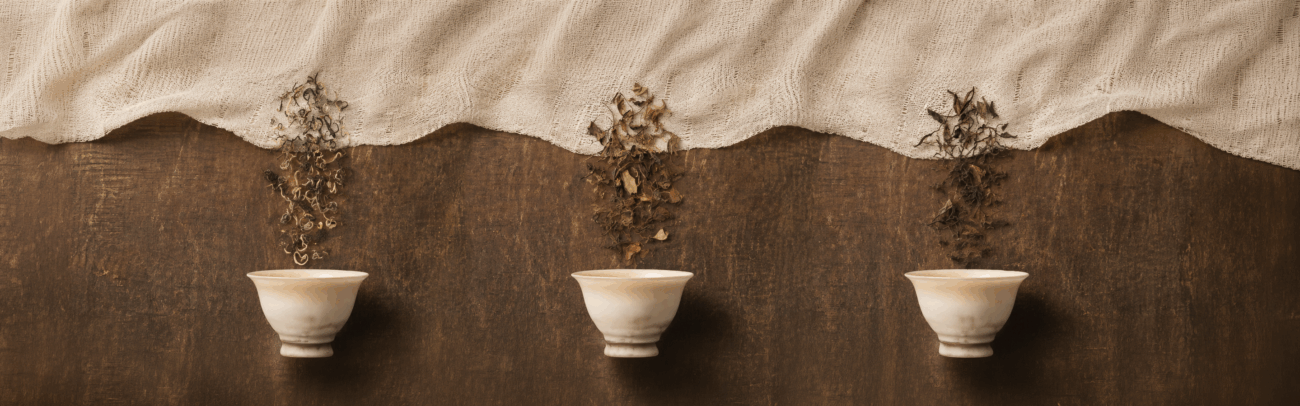
A fragrant jasmine tea, a naturally aged Bai Mu Dan and an aged Gong Mei do not behave in the same way. They have different aromas, structures and levels of body, so they also open different possibilities when we drink them cold.
This summer, while preparing our Summer Cold Brew Tasting, I started thinking less about “cold brew” as one method and more about a wider question:
Once we understand how a tea behaves cold, what else can we make with it at home?
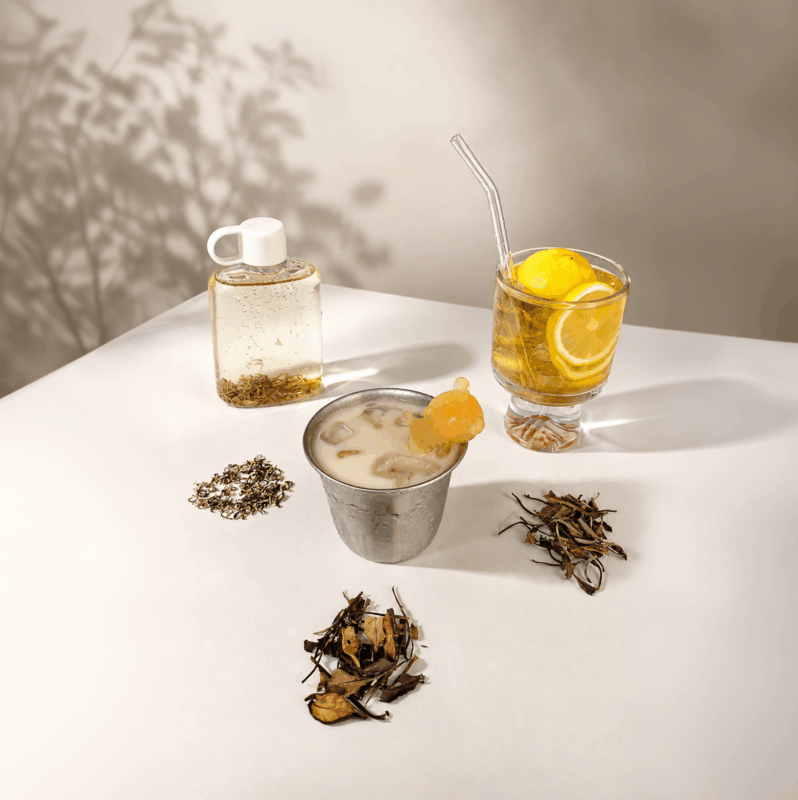
For jasmine tea, the answer may be sparkling water or fresh fruit. For Bai Mu Dan, coconut water can be surprisingly natural. For a fuller aged Gong Mei, milk can work much better than many people expect.
These are not complicated recipes. They are simply different ways of letting the tea enter an ordinary summer day.
Summer Cold Brew Tasting 2026
Our Summer Cold Brew Tasting features Hengxian Jasmine Tea, four-year naturally aged Jianyang Bai Mu Dan and six-year naturally aged Jianyang Gong Mei.
August 18–31, 2026 · Only ten of each size · While quantities last
The two aged white teas are in their final public release and will not be restocked.
Start with the Tea Itself
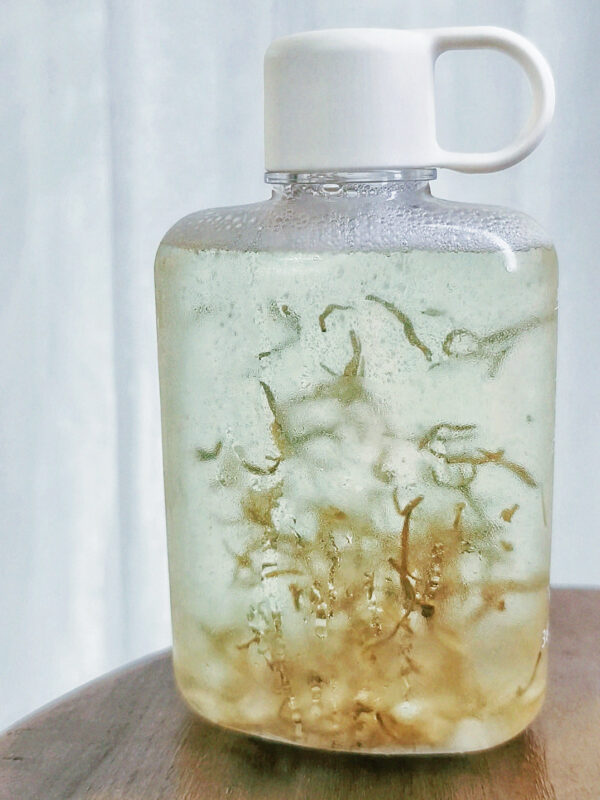
Before adding anything else, I still recommend tasting the tea on its own first.
Cold brewing is useful because it gives you a clear baseline. It shows you how the tea behaves when extraction is slow and the temperature stays low.
If you are new to cold tea, we already have a more detailed guide covering several ways to prepare Chinese tea for summer, including refrigerator cold brew, iced-tea extraction and a stronger tea base that can also be used for milk tea:
How to Make Cold Brew Chinese Tea →
Once you know the basic method, the next step is not simply to repeat it with every tea. It is to notice what each tea gives you and decide what kind of drink suits it.
That is where things become more interesting.
1. Jasmine Cold Brew: The Simplest Starting Point
Jasmine tea is one of the easiest Chinese teas to enjoy cold because its fragrance is already so expressive.
Our Hengxian Jasmine Tea is traditionally scented with jasmine flowers, and when it is brewed cold, the floral character becomes very clean and direct. There is no need to add much.
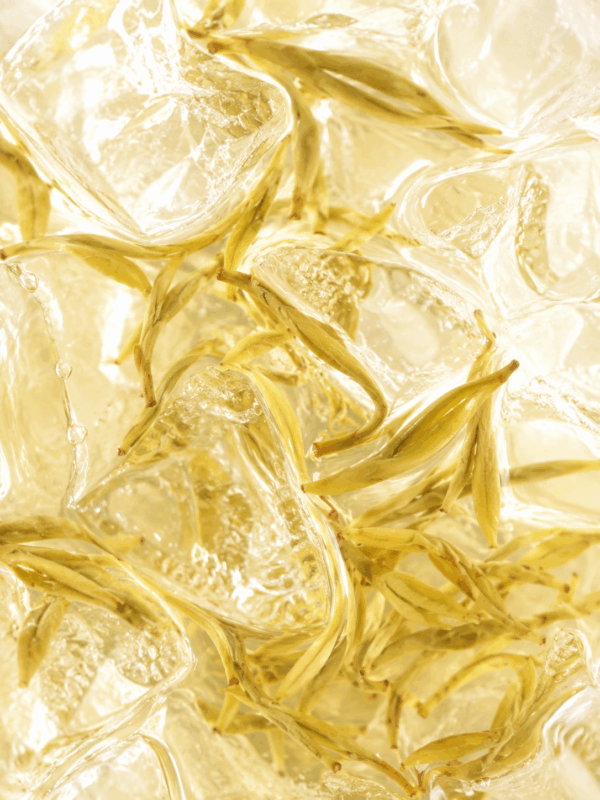
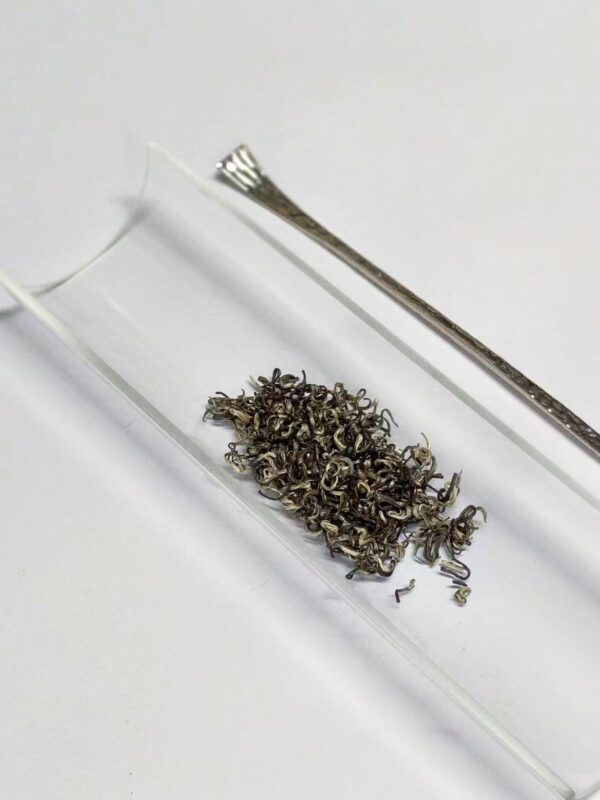
For a long cold extraction, I use a light ratio.
A simple starting point
- 3g jasmine tea
- 400–500ml cold drinking water
- around 2–3 hours in the refrigerator at approximately 4°C
Three grams is enough here because the tea has time to extract slowly. This is very different from making a quick hot infusion.
I would taste it after about two hours rather than automatically leaving it overnight. If you want a stronger result, slightly reducing the water or extending the time is usually more useful than simply adding a large amount of leaf.
The point is to keep the jasmine fresh and clear.
Once you have this base, you can begin to change the texture of the drink without losing the tea itself.
2. Jasmine Sparkling Tea
Sparkling water is probably the easiest next step.
Make the jasmine tea first, chill it well, then add sparkling water shortly before drinking.
A good starting point is roughly:
2 parts jasmine tea to 1 part sparkling water
You can adjust from there.
What I like about this combination is that the bubbles make the floral aroma feel even brighter. It becomes a little more lively without becoming sweet.
You can add a thin slice of lemon or lime, but I would not start there. Taste the tea and sparkling water together first.
Jasmine already has enough aroma. If too many extra flavours are added at once, the tea quickly becomes secondary.
For me, this works especially well when I want something refreshing with lunch or dinner but do not want a sweet drink.
3. Jasmine Fruit Tea
Jasmine tea also works very naturally with fruit, but this is one of those drinks where less is usually better.
If there are too many fruits, too much syrup and too much ice, eventually it becomes difficult to tell what tea was used in the first place.
I prefer fruit that sits close to the floral character of jasmine, such as peach, white grape, lychee or pear. A small amount of citrus can also work.
The tea should be made first. Then add fresh fruit shortly before serving.
This way, the fruit changes the tea without completely replacing it.
If you want more detailed fruit-and-tea pairing ideas, we have also tested three complete Chinese iced-tea recipes using different teas and fruits, with suggestions on how to think about the relationship between the character of the fruit and the character of the tea:
Top 3 Fruity Chinese Iced Teas for Summer →
That distinction matters to me. I do not think the same fruit should simply be added to every tea. The combination becomes much more interesting when there is a reason the two work together.
4. Bai Mu Dan with Coconut Water
This is one of the combinations I found especially interesting this summer.
At first, white tea and coconut water may sound slightly unusual together. But once you taste them, the pairing makes sense.
Bai Mu Dan is soft and relatively gentle. It can have floral sweetness, a light honeyed quality and a smooth texture. Coconut water is also light, naturally sweet and much less dominant than milk.
That gives the tea room to stay present.
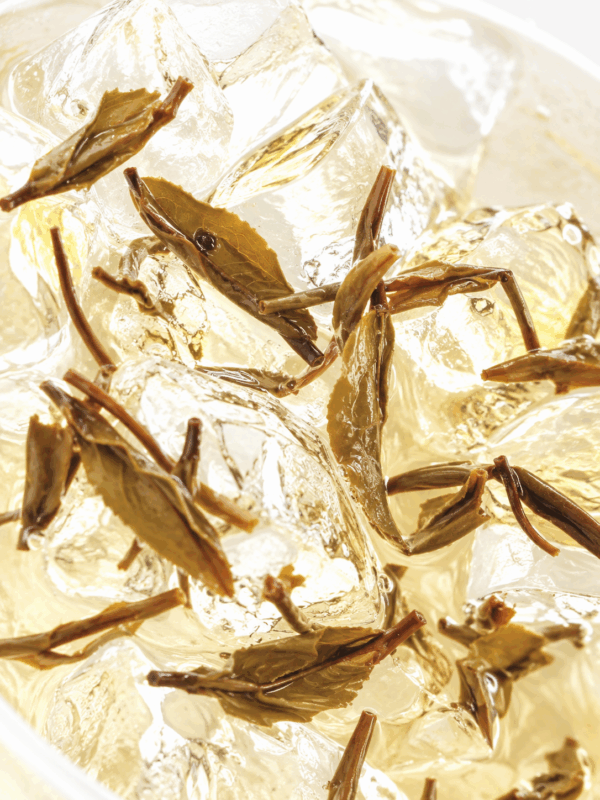
I would cold-brew the Bai Mu Dan first, then start with:
1 part Bai Mu Dan cold brew to 1 part chilled unsweetened coconut water
This is only a starting point.
Coconut water varies a lot between brands, especially in sweetness. If the coconut flavour is too strong, increase the proportion of tea.
For me, a good version should still taste clearly of Bai Mu Dan. The coconut water should change the body and sweetness, not erase the tea.
With our four-year naturally aged Jianyang Bai Mu Dan, this works especially well because the tea is already softer and more settled than a very young white tea.
I like drinking the Bai Mu Dan alone first and then trying the coconut-water version beside it.
The comparison tells you much more than simply following the recipe.
5. Bai Mu Dan Fruit Tea
Bai Mu Dan can also work with fruit, but I would approach it differently from jasmine tea.
With jasmine tea, aroma comes first.
With Bai Mu Dan, I pay more attention to softness, texture and gentle sweetness.
Because of that, I prefer mild fruits rather than anything very sharp or heavily perfumed.
Peach, pear, white grape and a little lemon can all work.
You do not need much.
Sometimes one or two slices of fruit are enough to change how the tea feels.
I think this is also a useful reminder when making drinks at home: not every homemade tea needs to taste like something from a chain café.
The aim does not have to be “stronger” or “sweeter.”
Sometimes the more interesting question is simply whether the fruit helps you notice another side of the tea.
6. Gong Mei Milk Tea
White tea and milk are not an obvious combination, but this is exactly why I wanted to try it.
Milk tea is usually made with black tea because black tea has enough body and tannin to remain present after milk is added.
But white tea is not one single structure.
A young, delicate white tea and a naturally aged Gong Mei can behave very differently.
Our six-year naturally aged Gong Mei has more depth and body than the Bai Mu Dan, so it can stand beside milk much more easily.
We have already made this version ourselves, and this is the video I would embed here:
The important part is the tea base.
If the tea is brewed too lightly and then mixed with a lot of milk, the result is simply milky water with some tea colour.
That is not what I am looking for.
The tea needs enough concentration to remain recognisable after milk is added.
Our cold tea guide also explains how to make a stronger tea base suitable for iced tea and milk tea:
How to Make Cold Brew Chinese Tea →
Once the base is ready, add milk gradually and taste as you go.
I also would not add sugar automatically.
Aged Gong Mei can already have a rounder, date-like sweetness of its own. Sometimes that is enough.
The reason I would choose Gong Mei rather than Bai Mu Dan for this drink is simple: it has more body.
The Bai Mu Dan is better when I want something light and soft. The Gong Mei is better when another ingredient needs the tea to hold its ground.
That difference is much more useful than saying that “white tea” in general is good or bad for milk tea.
7. Tea Ice Cubes
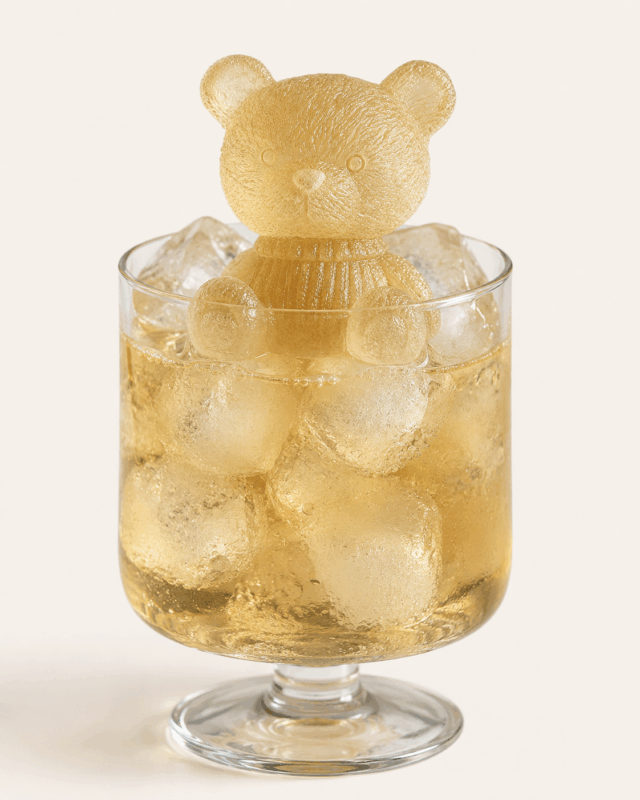
This is the simplest idea in the article, but I use it because it solves a real problem.
Normal ice keeps the drink cold, but it also keeps diluting it.
If you freeze tea instead, the drink becomes stronger rather than weaker as the ice melts.
You can freeze jasmine tea for sparkling jasmine, Bai Mu Dan for coconut-water tea, or Gong Mei for cold milk tea.
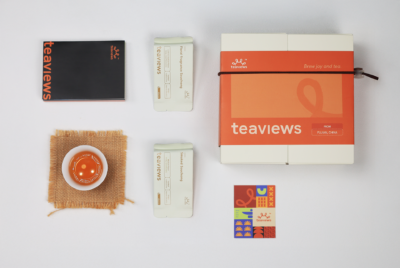
For this summer tasting, we also chose a small bear-shaped ice mould as one of the gifts.
Partly because it is useful, and partly because I do not think tea always needs to look serious.
Chinese tea has history and tradition, but it can also be part of a very ordinary, playful summer afternoon.
Which One Should You Try First?
I would not make all of them at once.
Start with the tea you already enjoy, then choose a direction that makes sense for its character.
|
If you prefer |
Try |
Tea |
|---|---|---|
|
Fresh floral aroma |
Cold brew |
Jasmine tea |
|
Something fizzy |
Sparkling tea |
Jasmine tea |
|
Light fruit flavors |
Fruit tea |
Jasmine tea |
|
Soft natural sweetness |
Coconut water tea |
Bai Mu Dan |
|
Gentle fruit tea |
Fruit tea |
Bai Mu Dan |
|
More body and creaminess |
Milk tea |
Aged Gong Mei |
|
Very cold tea without dilution |
Tea ice cubes |
Any of the three |
The important thing is not the list itself.
It is the difference between the teas.
Jasmine tea naturally leads me towards fragrance.
Bai Mu Dan leads me towards softness.
Aged Gong Mei gives me enough structure to work with milk.
That is how I would choose the drink.
Does Mixing Good Chinese Tea with Fruit or Milk Waste the Tea?
I understand why some tea drinkers hesitate.
When a tea comes from a specific origin and has been carefully made, there is often a feeling that the most respectful way to drink it is in a traditional way.
I value that kind of brewing too.
A gaiwan and several infusions can show you details that a cold drink cannot.
But I do not think respecting tea and experimenting with tea are opposites.
For me, the important question is whether we are still paying attention to what the tea is doing.
Can you still tell the difference between Bai Mu Dan and Gong Mei?
Does the jasmine remain clear after sparkling water is added?
How much coconut water is too much before the white tea disappears?
Why does Gong Mei stand beside milk better than Bai Mu Dan?
These questions are also a way of understanding tea.
They simply begin from a different situation.
Chinese Tea Does Not Have to Stay in One Setting
This is something I think about often when working on Teaviews.
Chinese tea carries origin, craft, local knowledge and many beautiful traditions of preparation. I do not want to remove any of that.
But I also do not think people should feel that they need to learn an entire system before tea can become part of their life.
You can learn gongfu tea.
You can use a gaiwan and pay attention to each infusion.
You can also open the fridge on a hot afternoon, pour Bai Mu Dan into coconut water and drink it while making lunch.
You can freeze jasmine tea into small ice cubes.
You can make Gong Mei milk tea at home.
The tea has not lost its origin because the setting has changed.
For me, the more interesting question is whether we can understand where a tea comes from and still allow it to enter new homes, habits and cultures.
Cold brew was one way to start.
It does not have to be the last.
Explore the Teas We Are Drinking Cold This Summer
For our 2026 Summer Cold Brew Tasting, I chose three origin-made Chinese teas that behave very differently when served cold.
Hengxian Jasmine Tea
Fresh, floral and expressive.
This is the one I would use first for cold brew, sparkling tea or a light fruit tea.
Four-Year Naturally Aged Jianyang Bai Mu Dan
Soft, mellow and gently sweet.
This is the tea I would try with coconut water or mild fruit.
Six-Year Naturally Aged Jianyang Gong Mei
Deeper, rounder and fuller in body.
This is the one I would choose for white tea milk tea.
The two aged white teas are part of their final public release and will not be restocked.
August 18–31, 2026 · While allocated quantities last
Explore the Summer Cold Brew Tasting →
And if you try one of these teas in another way, I would genuinely like to hear about it.
Part of the reason we are doing this summer project is not only to show how we drink these teas, but also to see what happens when they enter someone else’s kitchen.
— Charlotte
Founder, Teaviews
Frequently Asked Questions
How much jasmine tea should I use for cold brew?
For a long refrigerator cold brew, 3g of jasmine tea in around 400–500ml of water is a useful starting point. Brew it for approximately 2–3 hours at around 4°C and taste before extending the extraction.
Can jasmine tea be mixed with sparkling water?
Yes. Brew and chill the jasmine tea first, then start with roughly two parts tea to one part sparkling water. The proportion can be adjusted depending on how strongly you want the jasmine character to remain.
Can white tea be mixed with coconut water?
Yes. Bai Mu Dan works particularly well because it has a relatively soft body and natural sweetness. Start with equal parts cold-brewed Bai Mu Dan and unsweetened coconut water, then adjust according to taste.
Can white tea be used for milk tea?
Yes, but the type of white tea matters. A fuller, naturally aged Gong Mei can carry milk better than a more delicate white tea. Use a stronger tea base and add milk gradually so that the tea remains recognisable.
What fruit works well with jasmine tea?
Peach, white grape, lychee and pear all work naturally with jasmine tea. Small amounts of citrus can also work, but it is better to keep the fruit restrained if you want to preserve the floral character of the tea.
What fruit works well with Bai Mu Dan?
Mild fruits such as peach, pear, white grape and a little lemon work well with Bai Mu Dan. Because the tea is softer than many black teas or roasted oolongs, it is better to use less fruit rather than more.
What is the difference between Bai Mu Dan and Gong Mei for summer drinks?
Bai Mu Dan is generally softer and lighter, so it works well with coconut water and mild fruit. A naturally aged Gong Mei can have more depth and body, which makes it more suitable for milk tea.