
















Quick Answer
Tea is not a medicine, and it does not “treat” digestion the way a drug is expected to. But many people do feel that tea helps after meals, and that help is often practical and easy to recognize in the body.
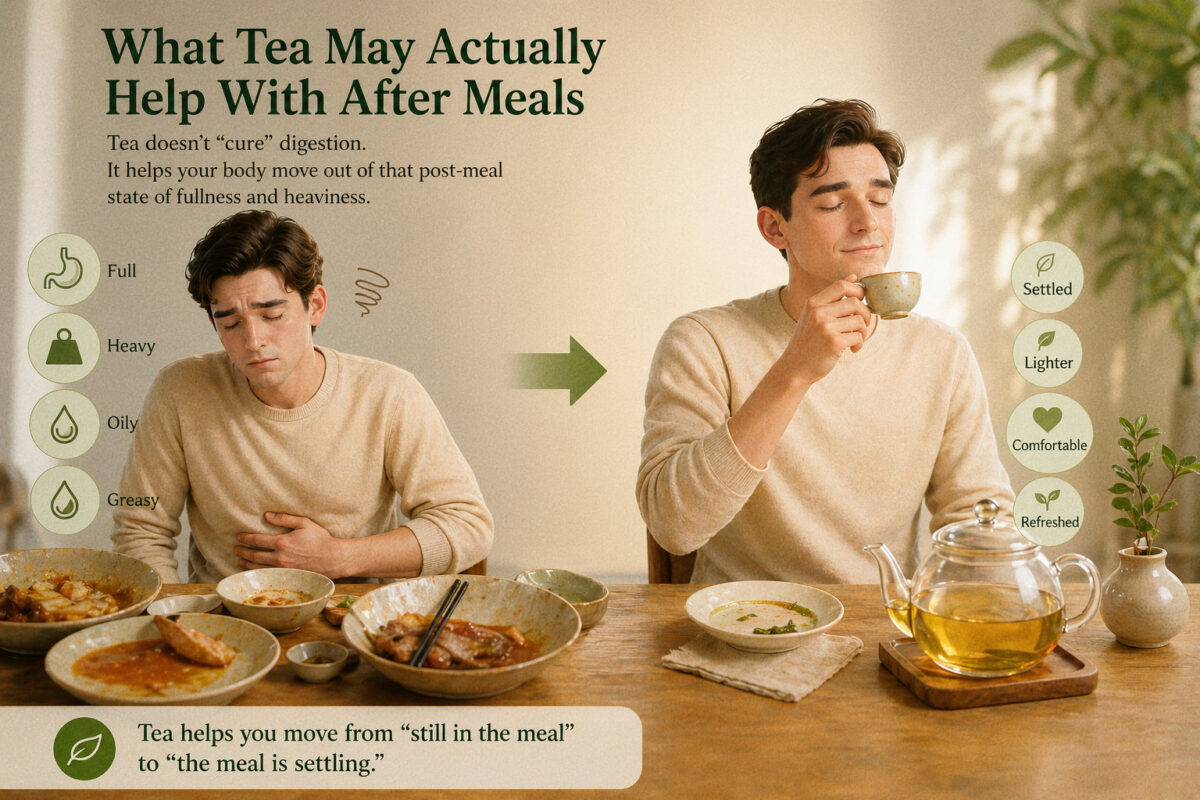
What tea often does is not instantly “digest the meal,” but help the body move out of that post-meal state of fullness, heaviness, oiliness, and lingering food intensity.
For many tea drinkers, this is why tea feels helpful after eating:
· Its warmth and aroma help the body ease out of the concentrated state of eating
· More oxidized, fermented, or roasted teas often feel less sharp and less irritating on a full stomach
· And certain teas simply match certain kinds of meals better
So when people say tea helps after meals, what they often mean is this:
it helps digestion without adding more burden.
What “Help” Really Means After a Meal
This is the point many articles leave vague.
When people ask whether tea helps digestion, they are usually not asking whether tea can cure a digestive problem.
More often, they mean things like:
- Does tea feel easier than drinking something cold right after eating?
- After a rich or oily meal, does it make the stomach feel less heavy?
- Does it help the meal feel finished instead of still sitting there?
- Does it feel better than soda, sweet drinks, or nothing at all?
If that is what “help” means, then many tea drinkers would say yes.
Tea does not need to act like medicine to be useful after meals. For many people, what matters is that the mouth feels less greasy, the stomach feels less blocked, and the body can move more naturally out of the “just ate” state.
If you want the deeper explanation behind this feeling, read [Why Tea Feels Settling After Meals: Warmth, Bitterness and Gut Response]
Why Warm Tea Often Feels Better Than Cold Drinks
For many people, this is the most immediate difference.
Right after a meal — especially a meal that was oily, heavy, or late in the day — iced drinks can feel too sudden. The first sip may feel refreshing in the mouth and throat, but for a stomach already working at full speed, it can feel like cold water thrown onto a running engine, almost like forcing it to brake too quickly.
Warm tea feels different. It follows the body instead of interrupting it.
And it is not only the temperature. Aroma matters too.
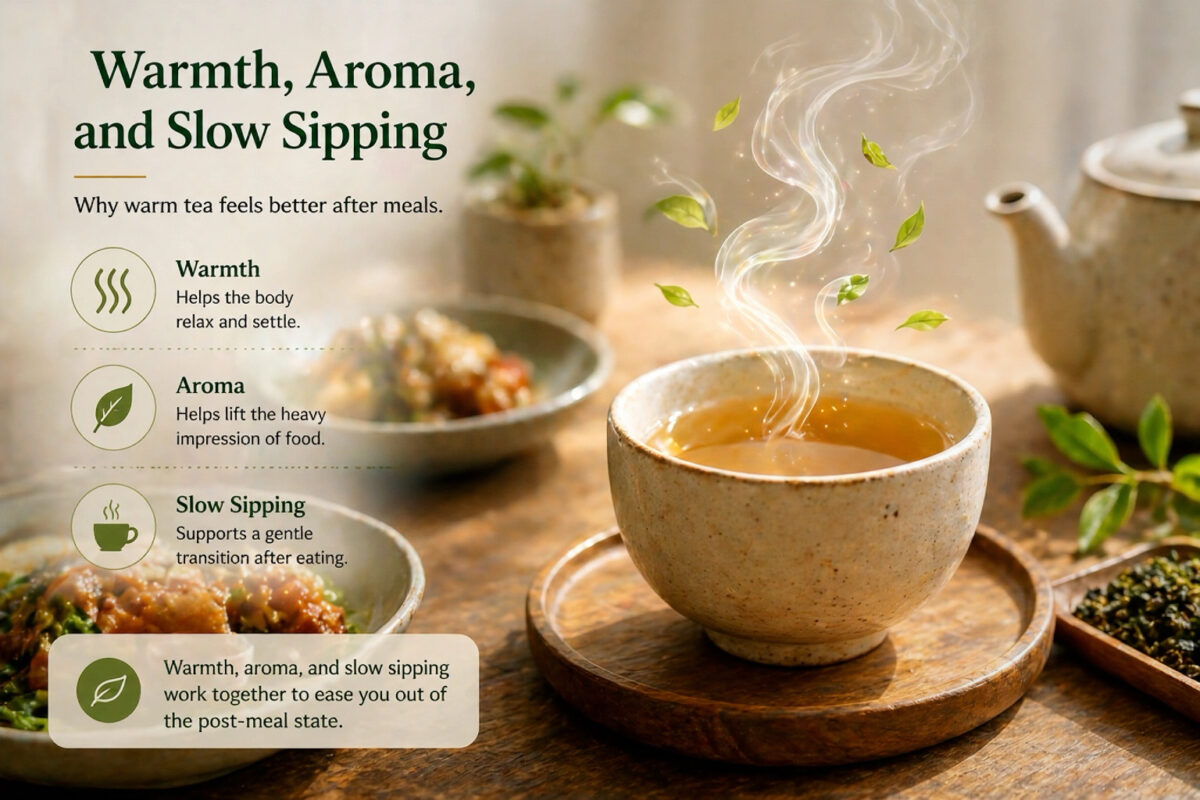
After eating, the mouth, nose, and body are still full of the meal. Warm tea releases fragrance upward, and that fragrance helps pull the body out of the dense sensory state of eating. The greasy, meaty, or heavy impression in the mouth starts to lift. The body begins to shift from “still in the meal” toward “the meal is settling.”
That is why tea does not feel the same as simply drinking hot water.
What many people respond to is the combination of:
heat + aroma + the slower rhythm of sipping
Together, these make the after-meal transition feel less abrupt.
Why More Oxidized, Fermented, or Roasted Teas Often Feel Easier After Meals
Not all tea feels the same after food.
Many tea drinkers naturally prefer teas that are more oxidized, more fermented, or more roasted after meals. The reason is simple: these teas are usually less green, less sharp, and less immediately astringent. On a full stomach, they often feel easier to drink without adding another layer of irritation.
There is also a basic tea-processing logic behind this.
As tea goes through oxidation, fermentation, or roasting, some of its greener, harsher, more drying edges tend to soften. In black tea, compounds such as theaflavins and thearubigins become more prominent. In some post-fermented teas, microbial activity is part of the process that changes both flavor and mouthfeel.
Tea polysaccharides not only make the tea feel thicker in the cup, but are also often understood as helping oils, proteins, and stomach acid work together more smoothly.
This does not make fermented tea a medicine. But it helps explain why many drinkers feel that black tea, roasted oolong, ripe pu-erh, and dark tea are easier to return to after a rich meal.
Put more directly: when the stomach is already full, most people do not want another layer of harshness. More fermented or roasted teas often avoid adding that extra burden.
Why Different Teas Suit Different Foods
Many tea drinkers begin to really understand “tea after meals” through pairing.
Tea is not one thing, and food is not one thing. Different teas feel different after different meals.
For example:
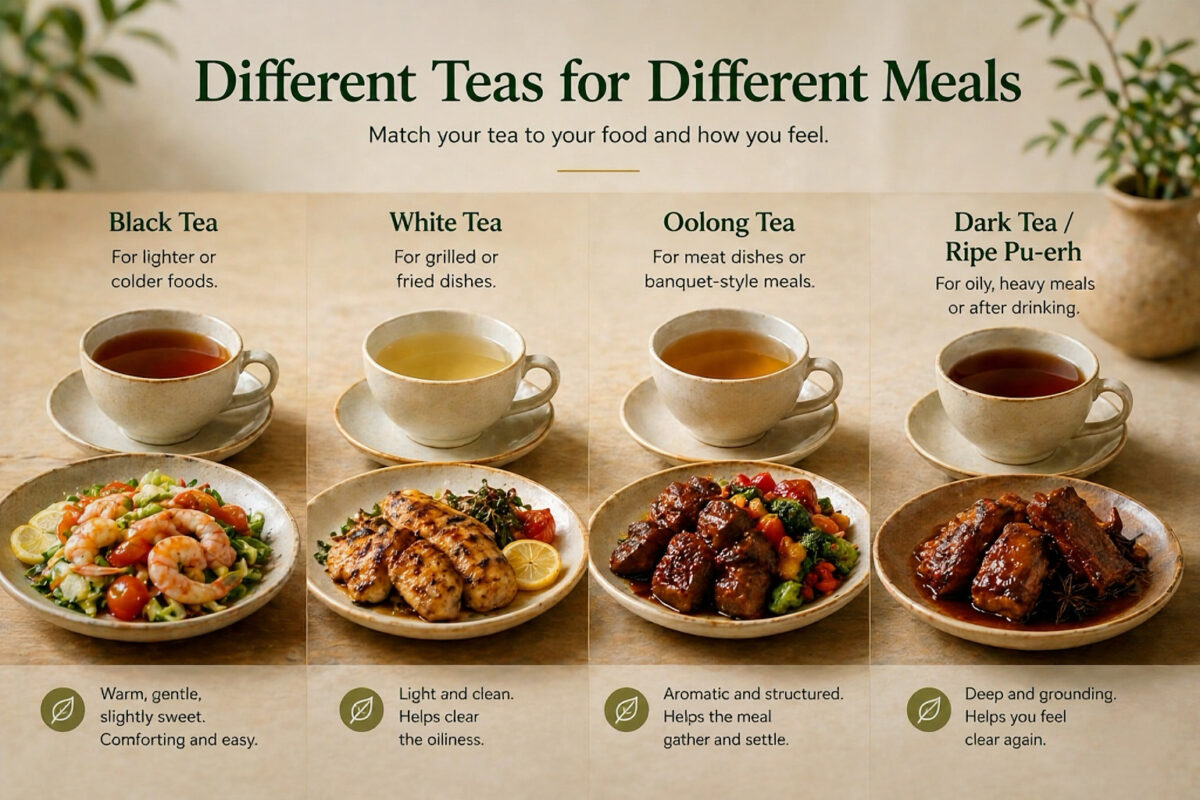
- Black tea often feels especially comforting after lighter or colder foods because of its warmth and gentle sweetness
- White tea can work well after grilled or fried dishes when you want to clear some of the oiliness without making the body feel overstimulated
- Oolong tea often suits meat dishes, banquet-style meals, or more complex cooking, because it carries both aroma and structure, helping the meal gather and settle
- Dark tea or ripe pu-erh is often preferred after oily, heavy meals, and even after drinking alcohol, because this is when the body usually no longer wants cold, sweet, or stimulating drinks. Compared with those, these teas feel deeper, more inward, and more capable of helping a person come back from that thick, greasy, foggy state
This does not have to be treated as a strict rule. It is better understood as a pattern of fit.
Over time, many drinkers simply discover that after certain meals, certain teas sit better in the body.
Does the Type of Tea Matter?
Usually, yes — especially after a heavier meal.
Once people notice that not all tea feels the same after eating, the next question comes naturally:
So what should I actually drink?
Roasted oolong, black tea, white tea, ripe pu-erh, and dark tea can all create different after-meal feelings. Some suit oily food better. Some fit cleaner meals. Some help a heavy meal settle more naturally.
If you want a clearer comparison of where to begin, the next article to read is:
[Best Tea After a Heavy Meal]
When Tea May Not Feel Helpful
Tea is not comfortable in every situation.
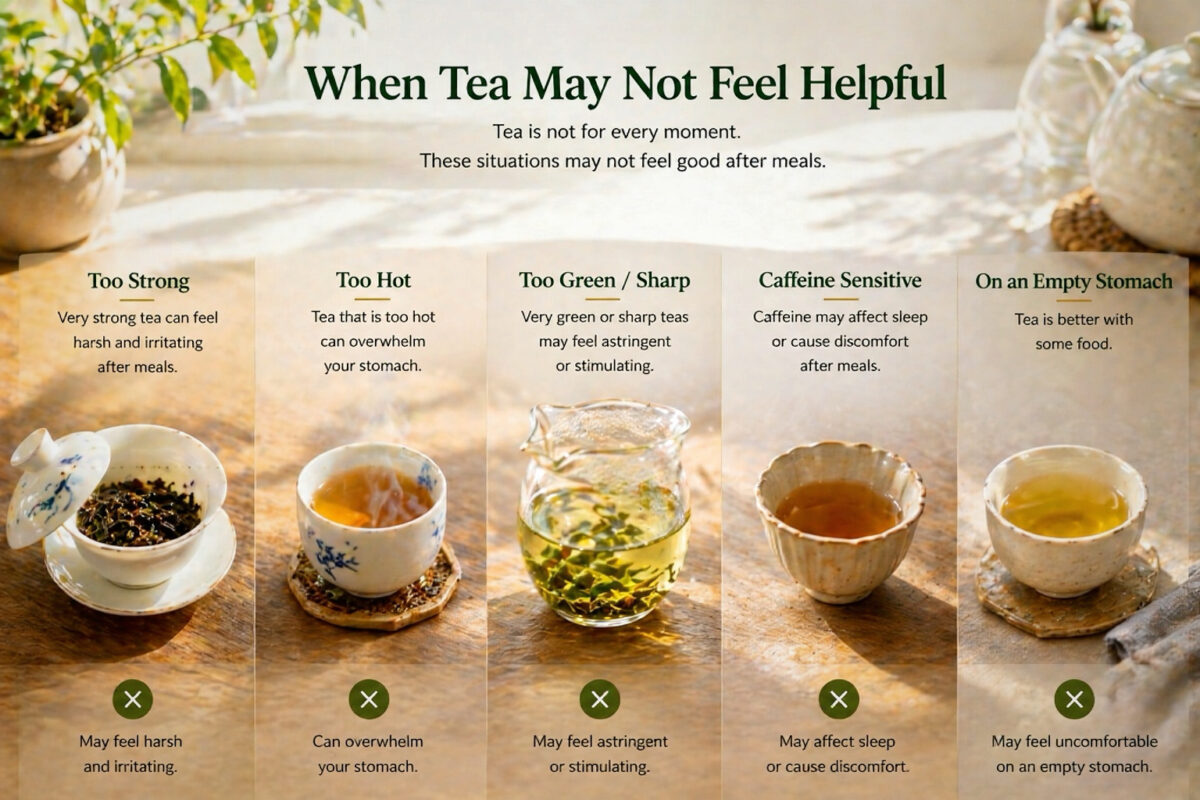
It may feel less helpful when:
- it is brewed too strong
- it is taken on an empty stomach rather than after a meal
- the drinker is sensitive to caffeine
- the tea itself is too green, too sharp, or too stimulating for that moment
- or the tea is so hot that it makes the body tighten instead of relax
This is important.
Because sometimes people do not dislike tea after meals.
They simply dislike tea that is too strong, too hot, or the wrong kind for the condition they are in.
So the real question is often not only:
Does tea help?
But also:
Which tea, brewed how, at what temperature, and after what kind of meal, helps me most?
Where to Begin
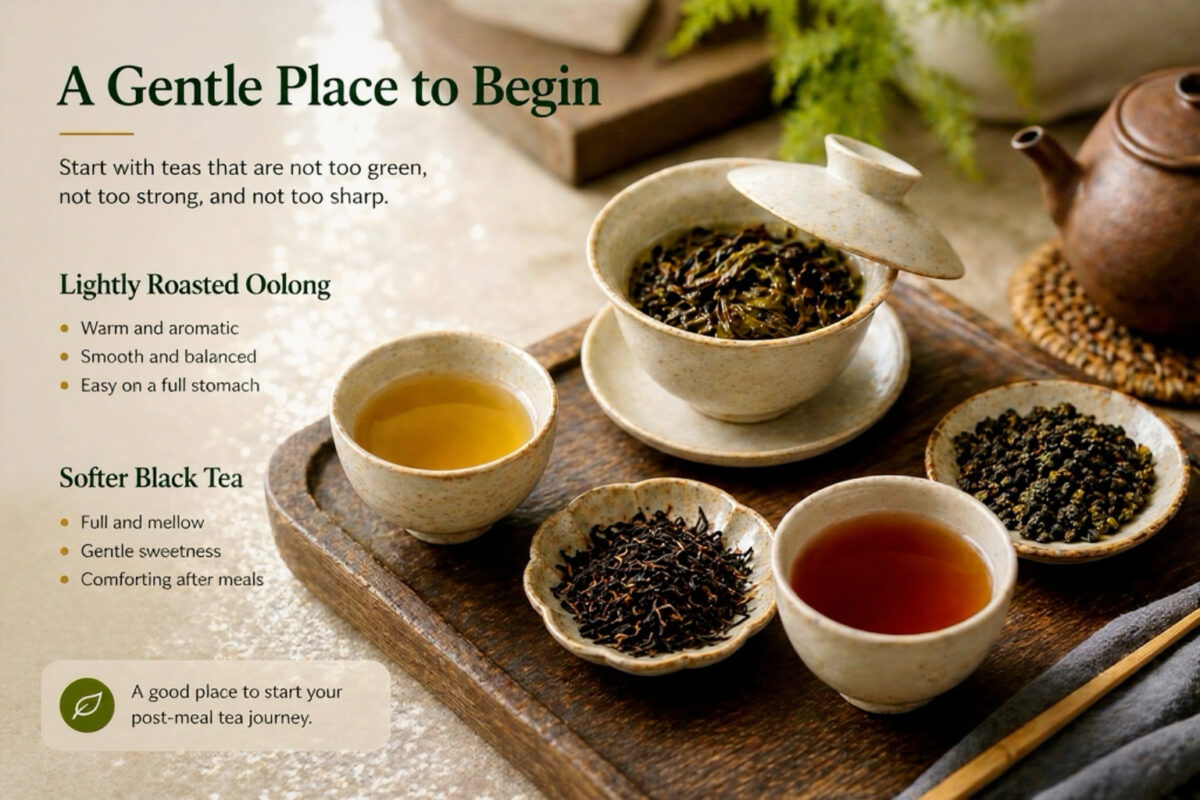
If you are trying tea after meals for the first time, start with a tea that is:
- not too sharp
- not too green
- not too aggressive
- and easy to keep drinking after the meal
For many people, lightly roasted oolong or a softer black tea is a very comfortable place to begin. These teas are usually easier to return to after food than very green, very floral, or highly stimulating teas.
If you want to understand the differences within roasted tea more clearly, instead of guessing from one random tea, the Yancha Baseline Set gives you a more beginner-friendly place to start. It lets you compare several Wuyi tea styles side by side, so you can notice which one your body actually prefers after meals.
Final Thought
Tea may not “solve” digestion like medicine, but that is not the main reason most people drink it after meals.
What it often does is simpler:
- it helps the oily, heavy impression in the mouth fade sooner
- it helps the body come down from the “just ate” state
- it offers something warm, aromatic, and less burdensome than cold, sweet, or overstimulating drinks
- and it helps the meal end more gradually, not so abruptly and not so heavily
For many tea drinkers, that is what “help” really means.
And once that is clear, the next useful question is no longer:
Does tea help after meals?
but rather:
Which tea should I come back to after this kind of meal?
FAQ
Does tea really help digestion after meals?
Tea is not a medicine, but many people feel it helps after meals because it can make the body’s transition after eating feel easier, less abrupt, and less burdensome.
Why does warm tea feel better than iced drinks after a meal?
Warm tea does not interrupt the body as suddenly as a cold drink can. It also brings aroma and a slower drinking rhythm, which help the body settle out of the dense sensory state of eating.
What kind of tea is best after a meal?
Many tea drinkers prefer roasted oolong or softer black tea after meals because these teas are often easier to drink on a full stomach. After heavier, oilier meals, some people also prefer dark tea or ripe pu-erh.