











Tea for Stress and Inner Balance: How Chinese Tea Gently Calms the Body

In modern life, stress has become a constant background noise.
It does not always appear as breakdown or emotional collapse. More often, it shows up as restlessness, shallow breathing, an inability to truly slow down, and a body that never fully settles.
Many people recognize this feeling clearly. You fall asleep, yet your mind remains active, filled with vivid dreams. You wake up tired, as if your body has been charging all night but never reached full power. You eat a proper meal, yet your body or mind still craves sweetness or stimulation. Or you find yourself in a lively social setting, suddenly drifting away for a moment, hearing nothing, unsure where your attention has gone.
In traditional Chinese thought, Jing(精), Qi(气), and Shen(神) are understood as three distinct yet interconnected aspects of vitality. When sensitivity between them is disrupted, both perception and physical balance can begin to feel off. (This way of understanding balance is closely connected to Wuxing — the Five Elements — which we explore more fully in another article.)
This is why, in Chinese tea culture, calm is not about suppressing emotions or forcing stability.
It is something to be recovered, a rhythm to be returned to.
Rather than pushing the body in a certain direction, Chinese tea has traditionally focused on restoring balance and flow. Tea is not a quick solution, but a daily practice that gently guides the body back toward its center.
The Nature of Stress in Modern Life
Most stress today does not come from a single event.
It accumulates quietly through constant stimulation, irregular schedules, and the absence of real pauses. Even our trained sense of rationality often learns to ignore subtle discomfort, pushing it deeper rather than addressing it.
The body is not always exhausted.
More often, it is overstimulated.
When the nervous system remains in a heightened state for extended periods, rest becomes less effective. Sleep feels lighter, digestion unsettled, and even moments of silence can feel uncomfortable rather than restorative.
In this state, the idea of inner balance becomes essential.

How Chinese Tea Understands Calm Differently
Chinese tea culture has endured across centuries not because it eliminates stress, but because it does not fight it directly. It does not aim to numb the body or dull the senses.
Instead, it focuses on restoring natural movement.
Traditional Chinese philosophy views the human body as a complete and intelligent ecosystem, much like nature itself. We are not lacking energy. Rather, when certain aspects fall out of balance, gentle movement and awareness allow adjustment to begin.
Calm, in this context, is not heaviness or slowness.
It is a grounded, clear, and steady state of being.
When choosing tea for this purpose, intensity is not the priority. Temperature, aroma, and the rhythm of drinking matter more. The act of preparing tea is as important as drinking it. Attention slows, movements become deliberate, and the body naturally responds to this shift.
In this process, tea becomes a quiet signal to the nervous system: it is safe to slow down, to soften, to begin with just a small step. (We reflected more on this quiet transformation through the imagery of the Five Elements in another essay.)
How Chinese Tea Gently Calms the Body
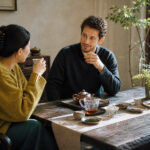
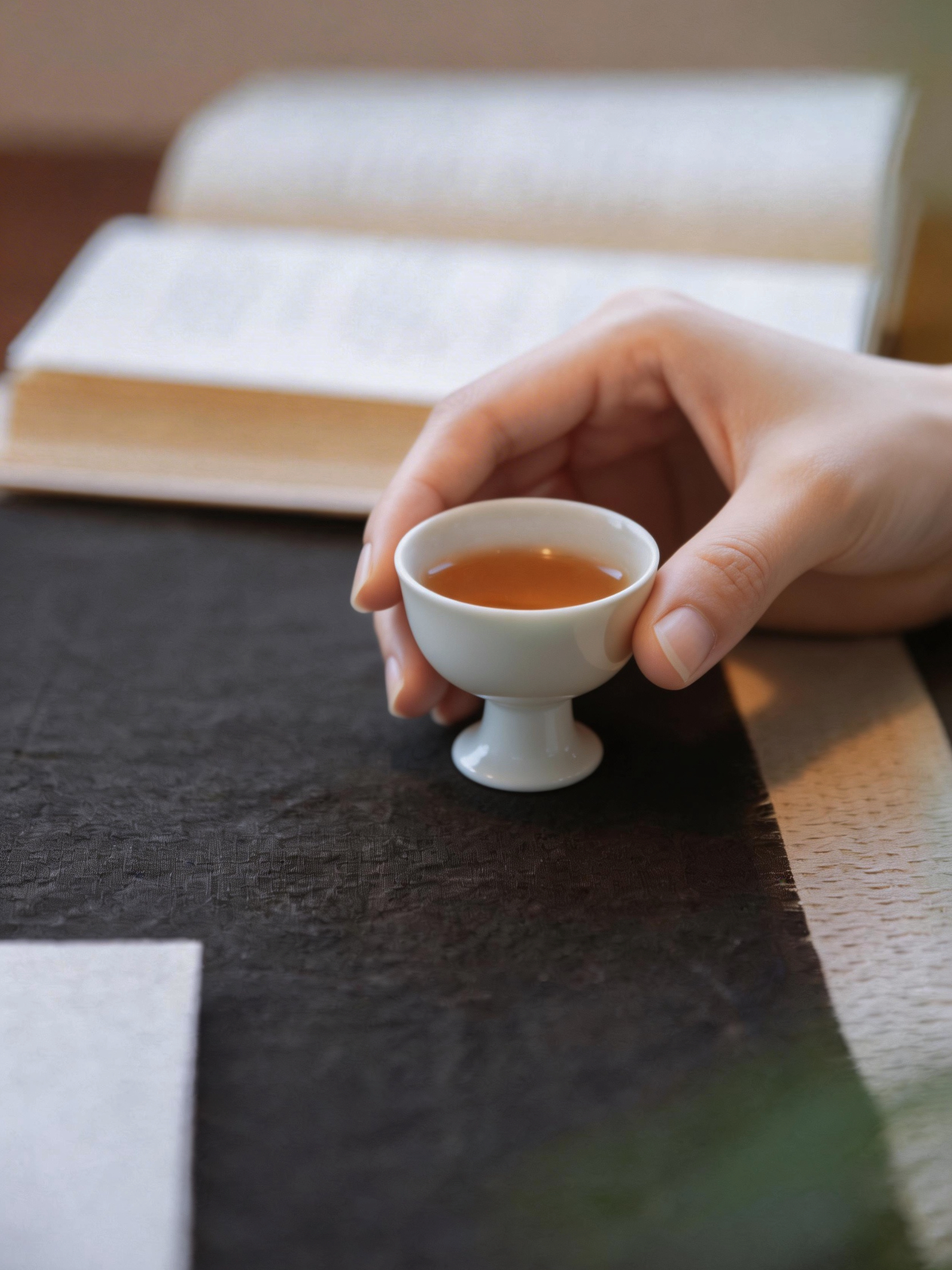
The warmth, aroma, and quiet rhythm of tea create a physical pause the body can recognize.
The calming quality of tea does not come from a single factor.
It emerges from several subtle elements working together.
Warmth and Temperature
Warm tea allows the body to relax without shock. Unlike iced or highly stimulating drinks, warmth encourages ease and softness.
Aroma and Breath
Tea aroma naturally deepens breathing. As attention moves toward scent, breath slows without conscious effort.
Rhythm and Repetition
Brewing tea creates rhythm. Waiting, pouring, and sipping introduce pauses that interrupt mental urgency.
Calm is not forced. It appears when the body is given enough space.
Teas Traditionally Chosen for Inner Balance
Not all teas affect the body in the same way. In Chinese tea culture, certain teas are more often chosen when balance is the intention.
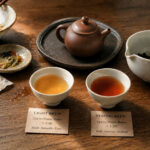
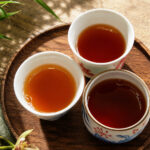
Oolong Tea
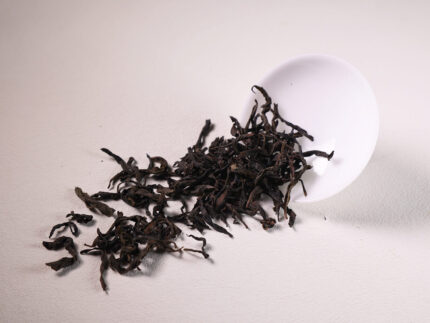
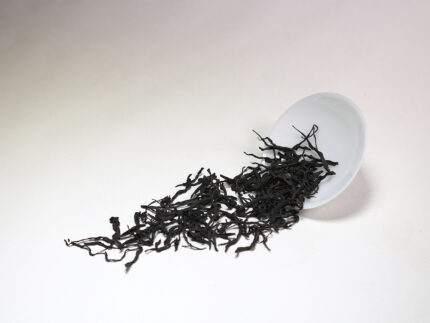
Oolong tea undergoes complex and repeated processing, allowing its compounds to transform gently. It sits between stimulation and calm, offering clarity without sharpness and grounding without heaviness.
Roasted and Aged Teas
Teas that have been roasted or aged tend to feel warmer and more anchoring. They are often chosen when the body feels scattered or tense.
A Note on Green Tea
Green tea is refreshing and lively, but it is not always ideal for stress. Its activating nature may increase restlessness for some people, especially when consumed on an empty stomach.
Choosing tea for balance is not about rigid rules. It is about listening to the body, like selecting a key not for its appearance, but for whether it opens the door.
Making Tea a Daily Practice for Inner Balance
Calm does not come from occasional moments.
It develops through simple, consistent repetition that reshapes habitual patterns.
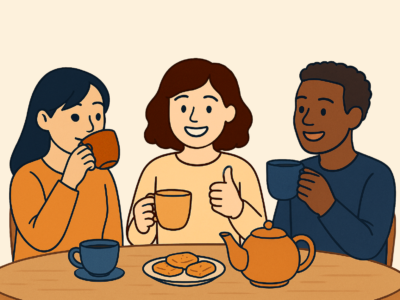
A tea practice does not need to be elaborate. One thoughtfully prepared cup is enough.
Many people find tea especially supportive during transitions: between morning and afternoon, or afternoon and evening. These moments naturally ask the body to shift gears. Tea supports these transitions gently, rather than forcing momentum.
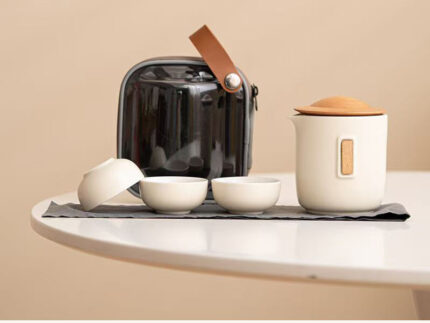
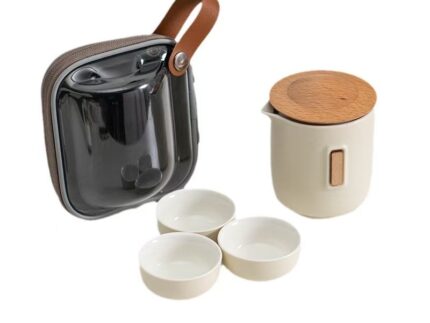
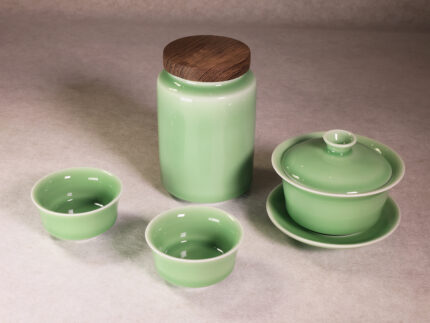
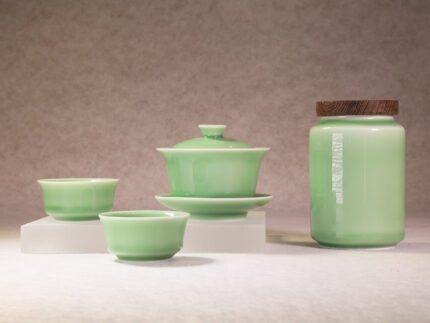
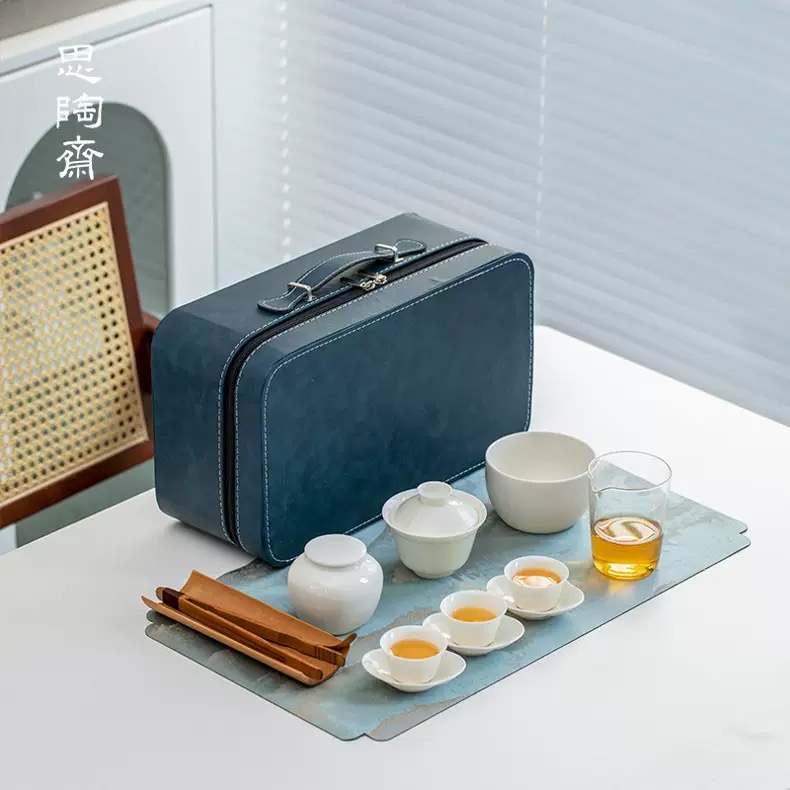
Over time, tea becomes associated with slowing down. The body begins to recognize the ritual itself as a signal of ease. Many people who grow to love tea also become absorbed in arranging their tea table or tea space. In creating something visually and sensorially pleasing, attention settles, and a quiet, immediate sense of satisfaction emerges.
This experience is different from producing value at work or scrolling endlessly on a screen. It may seem purposeless, yet deeply calming. Many describe these moments as a natural alignment of Jing, Qi, and Shen.
Returning to Balance, One Cup at a Time
Chinese tea does not promise instant calm.
What it offers is something more sustainable. Like a mirror, it reflects the body’s real state and sensations.
Through warmth, rhythm, and attention, tea supports the body’s natural ability to regulate itself. Stress does not need to be defeated. It softens naturally as balance is restored.
In a world that constantly accelerates, choosing tea is a quiet decision to return to center.
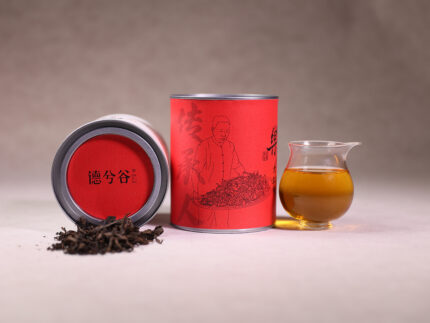
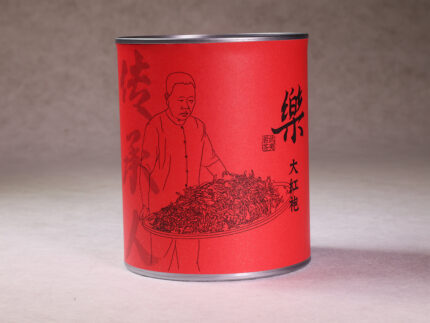
One cup at a time. Just beginning with a small step. (If you’re curious how this applies to specific teas, we explored this through Dahongpao in a separate piece.)
FAQ:
Is Chinese tea meant to reduce stress?
Chinese tea is traditionally not used to suppress stress, but to support balance and rhythm, allowing calm to emerge naturally over time.
Can tea be part of a daily practice for inner balance?
Yes. Many people enjoy tea as a gentle pause in daily life, especially during natural transitions when the body shifts pace.
Does the type of tea matter when seeking calm?
Different teas are experienced differently. Oolong, roasted, and aged teas are often chosen for their grounding qualities, while lighter teas may feel more stimulating for some people.